Revolutionary New ‘Living Plastic’

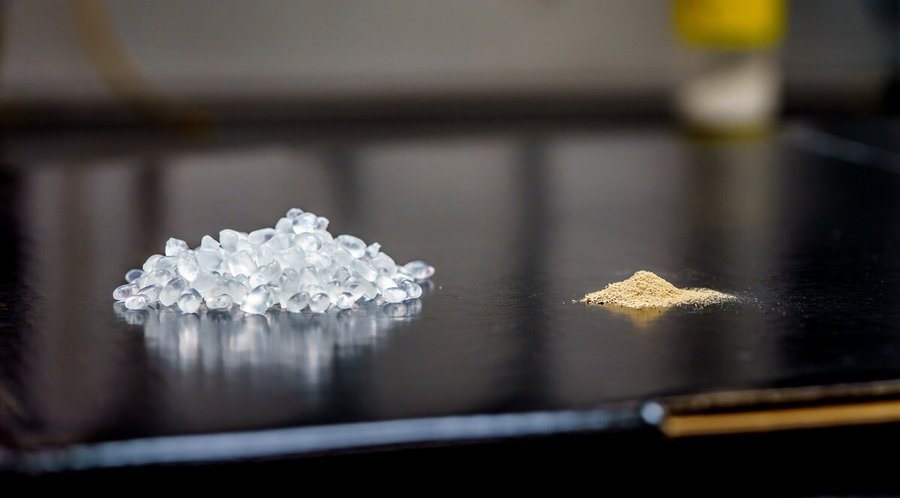
Scientists claim to have developed a method to enhance the durability and biodegradability of plastics by incorporating bacterial spores that have undergone evolutionary selection. This innovation, dubbed “living plastic,” can decompose within approximately five months without requiring additional microbial assistance.

Led by researchers from the University of California San Diego (UCSD), the team engineered this living plastic using thermoplastic polyurethane (TPU), a common material in various consumer products like footwear and cushions.

The plastic contains bacterial spores that, when exposed to nutrients found in compost, activate and break down the material at the end of its life cycle. Specifically, the spores originate from Bacillus subtilis, a strain known for its ability to degrade plastic polymers.

By utilizing bacterial spores instead of active bacteria, which are more resilient to harsh conditions, the team ensured the material’s stability. This biodegradable plastic was created by combining Bacillus subtilis spores with TPU pellets and extruding them into thin strips.

In experiments conducted in both microbial-rich and sterile compost environments, the plastic strips degraded by up to 90% within five months without the presence of additional microbes. This self-degradation property enhances the versatility of the technology, making it applicable even in microbe-free settings.

While further research is needed to assess any residual effects after degradation, the team believes that any remaining bacterial spores are likely harmless. Bacillus subtilis is a safe strain commonly used in probiotics and agriculture.

The study, published in Nature Communications, also highlights the evolutionary refinement of the bacterial spores to withstand the high temperatures involved in TPU manufacturing. This process not only enhances the material’s mechanical properties but also ensures its suitability for industrial-scale production.

Moving forward, the researchers aim to expand the range of biodegradable materials that can be produced using this technology. However, the widespread adoption of such innovations hinges on their cost-effectiveness and scalability in mass production—a challenge that the team is actively addressing.

World’s 1st Jet Suit Race

It is pretty crazy when a new technology is developed that looks like it came straight out of science fiction. Gravity Industries’ jet suits are certainly one of those.

Gravity Industries is a pioneering company known for developing advanced jet suits. Founded by Richard Browning, who aimed to challenge perceived boundaries in human flight, the company has achieved significant attention for its innovative approach to personal aviation. Their jet suit uses multiple miniature jet engines to achieve controlled flight, allowing the pilot to maneuver through the air with impressive agility.

The technology has been demonstrated in various settings, including military, emergency response, and entertainment scenarios, showcasing its versatility and potential applications. Gravity Industries continues to refine and develop their suits, focusing on enhancing performance, safety, and practicality for broader uses.

I first learned about Gravity Industries a few years ago when they tested out their suits in quick response emergency paramedic situation for difficult terrain during both day and night. A very cool use-case.

They recently held the worlds first ever jet suit race in Dubai. Not only does this look super fun, but the technology is seriously impressive. The technology has a lot of promise and likely has a very promising future as they continue to perfect it.

Giant Raptor Dinosaur Footprint Fossil Found

An apex predator can vary greatly in size, ranging from creatures like the raccoon-sized quolls of Australia to the formidable Bengal tiger. Scientists have gained valuable insight from a colossal dinosaur footprint recently unearthed in China.

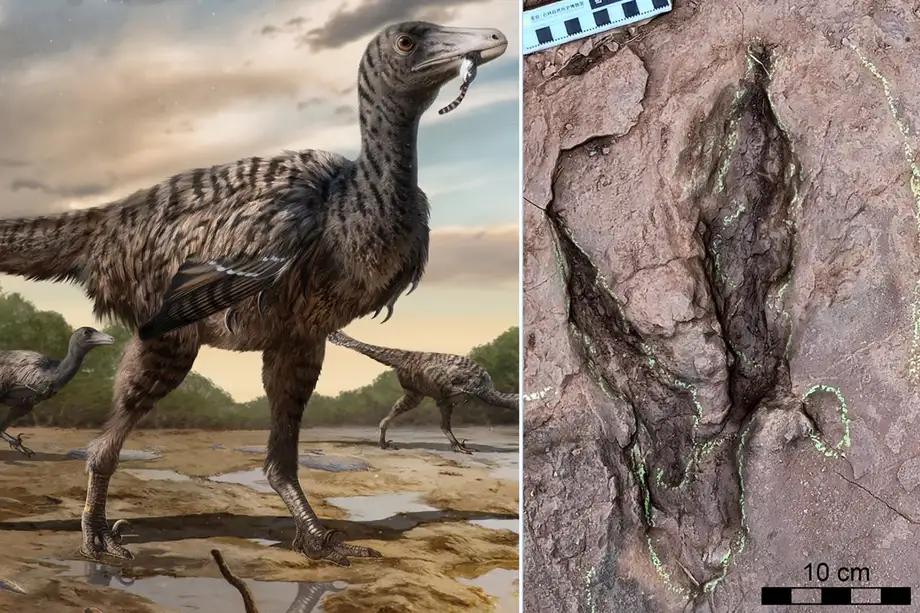
This footprint isn’t remarkable solely due to its size—larger ones have been found before—but because it’s the largest fossilized footprint of a raptor ever documented. Discovered in Fujian province, China, it belongs to a new genus named Fujianipus, meaning “foot of Fujian,” and its species is yingliangi. This raptor ranks among the largest ever identified, closely approaching the size estimates for Utahraptor.

Raptors, formally known as Deinonychosaurids, entered popular culture with the release of Jurassic Park in 1993. Despite being portrayed as sizable predators in the film, real raptors were typically small in stature.

Scott Persons, an assistant professor of paleontology at the College of Charleston and a member of the research team, explained, “Raptors excelled at being small. As predators the size of house cats or coyotes, they thrived globally for millions of years.”

The track was discovered in an area spanning about 17,000 square feet in Fujian, containing over 240 identifiable dinosaur tracks. These tracks likely formed as dinosaurs traversed mud near a riverside.

Lida Xing, a Chinese paleontologist leading the project, noted, “Raptor tracks are distinctive, but these are unlike any previously found.”

Raptor tracks typically display only two toe imprints because the middle digit sported a long curved talon, which the animal raised above the ground to avoid damage.

Measuring 14 inches from claw to heel, the five imprints suggest that Fujianipus stood around 6 feet tall at the hip and was approximately 16 feet long, more than double the length of the average velociraptor.

Additionally, based on the toe proportions, researchers believe this animal was a troodontid, a small, relatively intelligent, feathered hunting theropod from the Late Cretaceous period.

While many raptors remained small, Fujianipus evolved to be significantly larger, likely occupying a niche as a large, swift predator in its ecosystem.

Thermal Insulating Powder

A Filipino engineer named Dexter De Castro, developed a remarkable thermal insulating powder inspired by NASA’s technology. This innovative powder, when applied as a coating or paint, effectively reduces indoor temperatures by a substantial margin, ranging between 30 to 60 percent.

De Castro’s inspiration stemmed from the thermal coating utilized on NASA’s space shuttles, comprising pre-cracked ceramic tiles enriched with silica, alumina, and nano ceramic particles. He ingeniously adapted this concept to formulate his own insulating powder.

Crafted from a mixture of soil and silica clay or white clay, De Castro’s insulating powder offers a cost-effective solution to combat indoor heat. He applied the powder to walls directly exposed to heat and observed a notable reduction in temperature after just two coatings.

Encouraged by these promising results, De Castro’s insulating powder was used in various residential projects, earning commendation from satisfied clients. Available for purchase at P1,620 ($32.43) per bucket and P330 ($6.61) per kilogram, the powder presents a more affordable means to enhance indoor comfort.

Europe’s Biggest Music Extravaganza

The Eurovision Song Contest, often simply called Eurovision, is an annual international song competition held primarily among the member countries of the European Broadcasting Union. Each participating country submits an original song to be performed on live television and radio, then casts votes for the other countries’ songs to determine the winner. This unique contest offers a platform not only for showcasing emerging musical talents but also for promoting cultural exchange and mutual respect among nations.

This years contest is being hosted by Sweden. Each year, the event is hosted by the previous year’s winning country. The contest has three live shows: two semi-finals and a grand final.

The competition, first held in 1956, was based on Italy’s Sanremo Music Festival. It was created as a means to unify the newly established television networks across Europe following World War II. From its humble beginnings with just seven participating countries, Eurovision has grown immensely in scope and spectacle. It now features participants from over 40 countries, including nations beyond Europe such as Australia.

Eurovision is known for its eclectic mix of music genres and often flamboyant performances. It has launched the careers of many notable artists, including ABBA and Celine Dion, who first captured international attention by winning Eurovision for Sweden and Switzerland, respectively.

Beyond the competition, Eurovision has become a beloved annual tradition that brings together millions of viewers worldwide.

The first semifinal happened on Tuesday. The second semifinal will be Thursday, May 9, at 3 p.m. EST. The grand final will be Saturday, May 11, at 3 p.m. EST.

You can stream the show on Peacock in the US.