The Invisible Farmers We Never Knew About

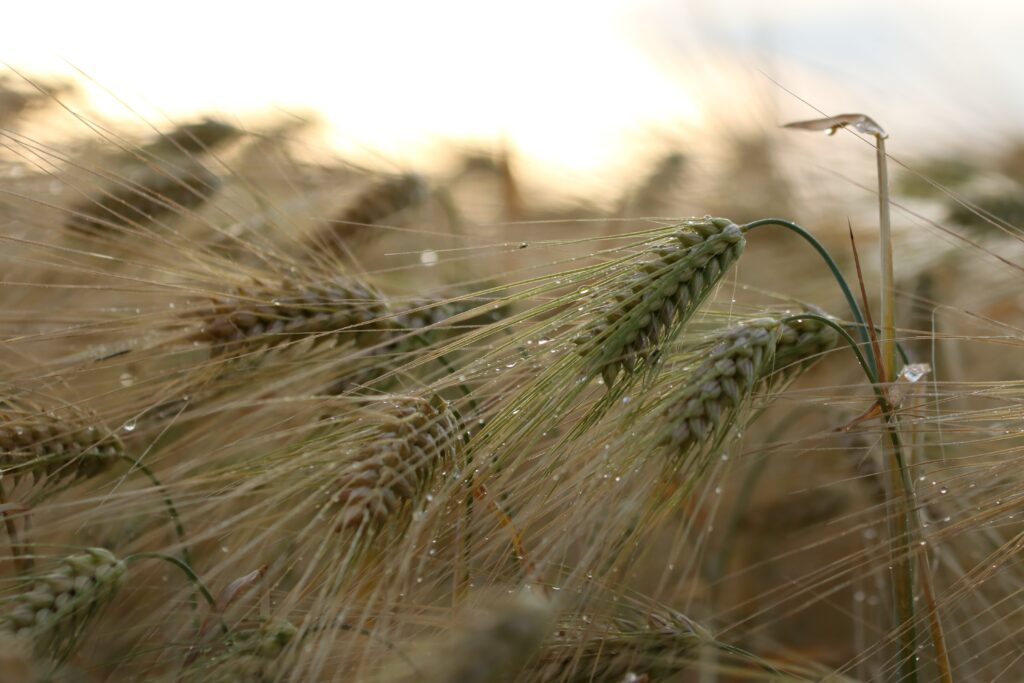
Modern agricultural science has indeed cultivated some super-powered plants, and while we humans have proudly taken credit for these agricultural marvels, new research led by molecular microbiologist Jacob Malone from the John Innes Center in the UK suggests we’re not the only cultivators in the game. According to this study, plants themselves are adept at shaping their own ecosystems to ‘farm’ their preferred microbial species.

The research focused on barley (Hordeum vulgare), a staple crop behind much of the world’s beer production, revealing that it actively manages the microbial communities around its roots by adjusting the sugars it secretes. This insight sheds light on an often-overlooked aspect of agricultural science: the microbiome of the soil in the rhizosphere—the area directly surrounding a plant’s roots.

Beneficial microbes are critical for a plant’s survival, offering enhanced nutrient uptake, disease suppression, and immune activation. However, the relationship with microbes like Pseudomonas is competitive; these microbes can colonize a wide range of hosts, prompting plants to actively engage in attracting beneficial microbial communities.

The study, which involved two barley cultivars, Chevallier and Tipple.

The team grew these barley varieties in a controlled environment and analyzed their rhizospheres. They found that the Tipple variety attracted significantly more Pseudomonas bacteria, likely due to higher levels of simple sugars in its root secretions. In contrast, the Chevallier variety supported a more diverse microbial community and exerted more control over its soil fungi, promoting certain species while almost completely excluding others.

Published in PLOS Biology, this research paves the way for future studies to explore how these dynamics play out in actual farm fields and the extent to which they can be harnessed to enhance agricultural sustainability and productivity.

Massive Solar Flare Event

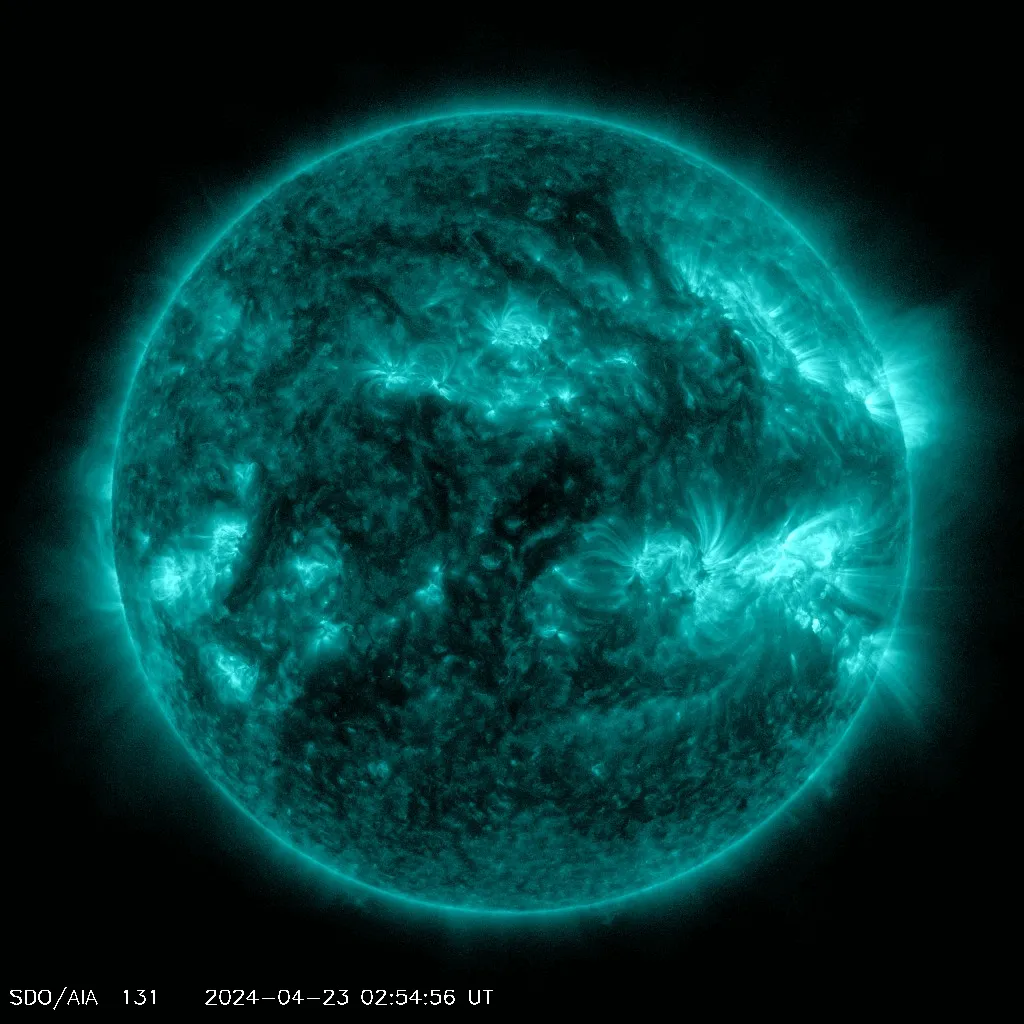
Last Week, NASA’s Solar Dynamics Observatory (SDO) captured a rare spectacle involving four nearly simultaneous solar flares from three separate sunspots and a magnetic filament connecting them. This event, impressive in its scope, may pose risks to satellites, spacecraft, and terrestrial electronic systems.

The sun, though it appears a turbulent inferno, follows a somewhat predictable 11-year cycle of magnetic activity, akin to Earth’s seasonal variations. This cycle, still not fully understood by scientists, is on the verge of reaching its peak phase, known as the “solar maximum,” later this year.

According to Spaceweather.com, the event is classified as a “super-sympathetic flare.” This phenomenon occurs when magnetic loops hidden in the sun’s corona trigger simultaneous flares across vast distances. In this instance, despite the hundreds of thousands of miles between them, the flares erupted within minutes of each other, affecting roughly a third of the sun’s surface facing Earth.

Earth-facing events like this means electromagnetic debris from the event could impact our planet, potentially manifesting as brilliant auroras near the poles or disrupting satellite operations and ground-based communication systems like radio and GPS. The effects are usually brief.

Such multi-flare events are rare—the last comparable occurrence, dubbed the Great Eruption, happened in 2010. However, they do point out our modern world’s vulnerability to the sun’s whims. For instance, a solar storm in 2022 dislodged about 40 Starlink satellites from their orbit.

Pretty awesome I would say, but in a slightly scary way. With the solar maximum coming up, I am sure we will get so many breathtaking images out of it. Particularly with the new advanced solar telescope that was able to take detailed pictures of the sun like never before last year.

A Far Away World

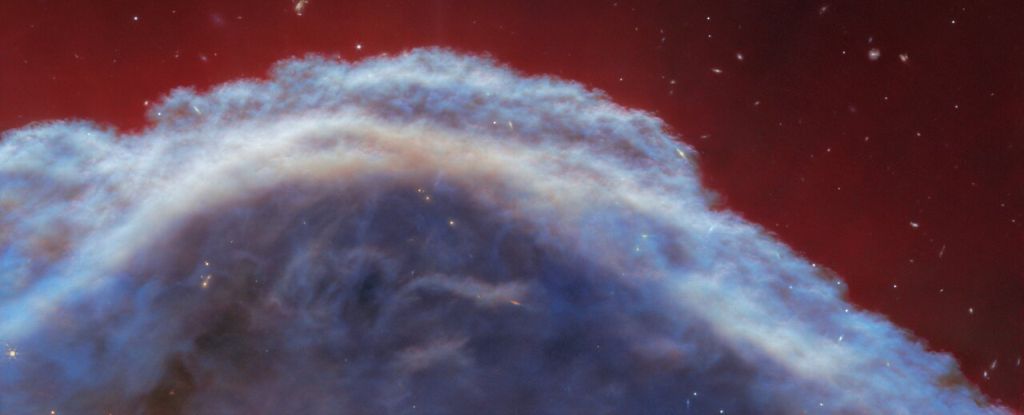
The James Webb Space Telescope has unveiled stunning new details of the Horsehead Nebula, a well-known celestial feature, through mid- and near-infrared observations. These new images reveal previously unseen aspects of this space cloud, showcasing intricate tendrils and filaments with exceptional clarity atop the nebula’s ‘horsehead’ silhouette.

Astronomers utilized a combination of 23 filters to achieve this remarkable resolution, enabling them to observe emissions from tiny grains less than 20 nanometers wide. These include interstellar polycyclic aromatic hydrocarbons and the light scattered by larger grains, along with ionized hydrogen within the nebula.

Located approximately 1,300 light-years from Earth in the Orion molecular cloud complex, the Horsehead Nebula is characterized by its dense dust and gas, making it appear almost shadow-like in optical light. Often, it stands out as a dark silhouette against the brighter, glowing gas surrounding it, enhancing its horse-like appearance.

If you are interested in reading more, or want to see the full images, check out this article here!

New Tech Company Gets $3 Billion Valuation

Island, an enterprise browser company, might just be the most valuable startup you’ve never heard of. Recently, the company announced a $175 million Series D investment, valuing it at a staggering $3 billion. To date, Island has raised a total of $487 million.

What makes Island so valuable? Doug Leone, a partner at Sequoia and an early investor in Island, attributes his interest to the company’s founding team and its innovative approach.

Leone explained to TechCrunch that founders Dan Amiga, a technical expert from Israel, and Mike Fey, a seasoned security executive from the U.S., envisioned a secure enterprise browser built on Chromium. This browser would appear normal to corporate users but offer enhanced security features to prevent malicious activities.

Chromium is an open source web browser that many browsers, including Google Chrome, is built on top of.

This innovative browser aims to reduce overall security costs by eliminating the need for separate tools like VPNs, data loss prevention, and mobile device management—integrating these functions directly within the browser itself.

Ray Wang, founder and principal analyst at Constellation Research, notes that Island is not only pioneering in the enterprise browser category but also enhancing employee security while maintaining a familiar user environment.

Mike Fey acknowledges the challenges of introducing a proprietary browser in large companies, especially those with extensive app ecosystems, like a Fortune 100 company with 20,000 apps. However, because Island’s browser is based on the widely-adopted Chromium standard, it bypasses lengthy IT testing processes, facilitating easier adoption. “The browser world standardized on Chromium. This idea couldn’t have come to fruition before that,” Fey remarked.

Despite the clear value proposition, Fey admits that it often requires effort to convince executives of the financial benefits. “You have to explain where the ROI [return on investment] comes from. What am I getting? Where’s it coming from? And the ROI has to be very understandable and very believable and large,” he stated.

How substantial? Fey cites an example where one company saved $300 million annually by reducing their data center resources, thanks to the efficiencies gained from using Island’s browser.

Child Saves Family from Burning Home

During a break from school, Olivia was having a playdate with a friend while her mother, Laura-Lee Patterson, looked after her younger siblings at home. Hearing Olivia’s urgent cries, Laura-Lee woke up from a doze and realized the seriousness of the situation.

Following Olivia’s lead, the family evacuated the house, with neighbors gathering outside to offer support. Laura-Lee recalls the surreal feeling of confusion and shock as they fled the burning home, with the gravity of the situation sinking in only after they were safe.

The aftermath was a mix of relief and sadness. Olivia was upset about losing her belongings, and the family faced challenges in coping with the trauma. Adjusting to temporary accommodations and comforting their children became the new focus, with Laura-Lee noting the lasting impact on Olivia’s typically cheerful demeanor.

As they navigate the aftermath of the fire, the Patterson family is grateful for the support from friends, firefighters, and the community, acknowledging that the kindness they’ve received means more than any material possession.