Harry Potter Book Cover Art Expected to Break Auction Record


J.K. Rowling’s novel “Harry Potter and the Philosopher’s Stone,” published in 1997, marked the genesis of a global phenomenon. Now, the original illustration for the first edition of the book is set to be auctioned.

Expected to fetch up to $600,000 at Sotheby’s auction next month, it holds the highest presale valuation ever for a Harry Potter-related item, as reported by the auction house.

The cover art, a watercolor creation by author and illustrator Thomas Taylor, depicts the iconic image of Harry Potter, complete with his distinctive features of dark, tousled hair, round glasses, and lightning bolt scar, preparing to embark on his journey to Hogwarts School of Witchcraft and Wizardry aboard the Hogwarts Express.

Originally auctioned at Sotheby’s in London in 2001, the illustration fetched a staggering £85,750 (approximately $106,000), surpassing its estimated value by four times, according to a Sotheby’s press release.

Now, over two decades later, it returns to auction with the potential to not only surpass its previous sale value but also set a new record for any Harry Potter-related item, the auction house notes.

The current record for an item related to the book series stands at $421,000, held by an unsigned first edition of “Harry Potter and the Philosopher’s Stone,” sold at Heritage Auctions in Dallas, Texas, in 2021, according to Sotheby’s.

The illustration will be up for auction on June 26 at Sotheby’s in New York, alongside other works of English and American Literature.

Surprising Scientific Mystery Solved

Not every year sees a big discovery in Earth’s basic natural sciences, but MIT has made one using precise measurements, shedding new light on something many thought they knew well: evaporation.

This discovery might clarify puzzling data about clouds in scientific literature, potentially refining climate models and aiding industries.

In their study, MIT found that evaporation can happen just with light, no heat required, a surprising finding tested rigorously 14 times to validate. One key finding was that the air cools briefly above the evaporating water, proving heat isn’t necessary.

Professor Gang Chen noted various potential applications, including better understanding cloud effects on climate. The study also noted that evaporation is strongest when light hits at a 45° angle or is green, despite water being most transparent to green light.

They suggest that light particles hitting water molecules at certain angles can cause evaporation, calling it the photomolecular effect, akin to the photoelectric effect discovered in 1887.

As seen in satellite and flight data, clouds absorb more sunlight than expected which has been a mystery for decades and could possibly be linked to this effect.

The team thinks this effect could also explain anomalies in solar desalination research.

Since publishing in Proceedings of the National Academy of Sciences, Chen has been contacted by companies interested in using this effect for various purposes, from drying paper to evaporating maple syrup.

Startup’s Secret for 80% Less Food Waste

Food waste in the U.S. is a significant issue, with about one-third of all food produced ending up in landfills. This is compounded with the additional waste from production, packaging, storage, and transportation.

Meal delivery services like HelloFresh, Blue Apron, and EveryPlate are attempting to mitigate this problem by providing consumers with exact portions needed for specific recipes, reducing waste. However, a New York-based startup called Hungryroot is taking an even more personalized approach by leveraging artificial intelligence to offer a curated grocery experience tailored to individual customer preferences.

Hungryroot customers complete a detailed questionnaire covering their food preferences, allergies, health goals, and cooking habits. The company’s AI then uses these responses to suggest recipes and groceries that exactly match the customer’s needs. This approach not only personalizes the shopping experience but significantly cuts down on food waste.

Additionally, Hungryroot’s AI helps reduce waste in its own operations. For example, if the AI determines that a customer is indifferent between broccoli and Brussels sprouts and there is an excess of broccoli in stock, the system will suggest broccoli to help balance inventory levels. This process has led to 80% less food waste at Hungryroot’s facilities compared to traditional supermarkets.

The business model has not only been environmentally beneficial but also profitable, attracting investors and proving financially sustainable. “They have been profitable for three or four years now, which is unusual for a lot of these e-commerce, food businesses,” Jeremy Liew of Lightspeed Venture Partners noted, attributing the profitability to operational efficiency and customer satisfaction.

Hungryroot has raised a total of $75 million from various investors including L Catterton, Crosslink Capital, KarpReilly, and Lerer Hippeau.

Its great to see another positive use-case for AI.

Amazing 93 Year Old Athlete

John Starbrook, affectionately known as “the Legend” among his friends, exemplifies the remarkable benefits of staying active well into one’s later years. At the age of 93, he is possibly the oldest water polo player at Hampton Pool in southwest London, and likely across the UK.

His sporting journey extends back nearly eight decades, beginning just after he left school at the end of World War II. Over the years, Starbrook has maintained a vigorous routine that includes swimming three times a week and participating in various sports, which he credits for his robust health in his 90s.

Starbrook’s athletic prowess was evident early on when he competed in national swimming championships as a young man. Although he didn’t win, the experience fueled a lifelong passion for water sports. This passion was highlighted when, at 80, he celebrated by swimming across the Gulf of Corryvreckan, a challenging stretch of water between the Scottish islands of Jura and Scarba.

Apart from his aquatic exploits, Starbrook has an impressive marathon history, having completed 52 marathons, including international races in places like Denmark and Barbados. Even more amazingly, all those marathons are from after he took up running at the age of 53.

His fastest marathon, a very respectable 4 hours and 14 minutes, was achieved in Snowdonia, a feat he humorously credits to being chased by sheep. His marathon journey continued well into his eighties, with his most recent 26-miler occurring in 2019 when he was 88.

Despite some skepticism from doctors and even his own family about the sustainability of his intense physical activity, Starbrook has continued to thrive, demonstrating the profound impact of a lifetime of fitness.

Type 1 Diabetes Drug Protects Pancreas

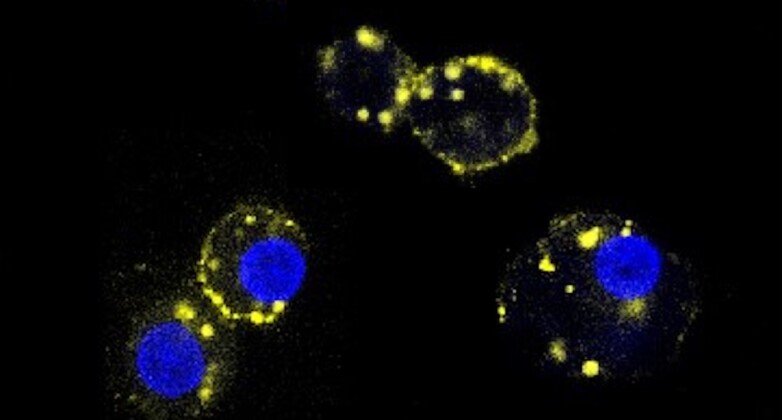
Johns Hopkins scientists have reported promising results regarding an experimental antibody drug that could potentially prevent and reverse the onset of type 1 diabetes in mice, potentially extending their lifespans. The drug, known as mAb43, is distinguished by its direct targeting of insulin-producing beta cells in the pancreas, aiming to protect them from attacks by the body’s immune system cells.

Researchers highlight mAb43’s specificity for these cells, suggesting it could be used long-term in humans with minimal side effects. Monoclonal antibodies like mAb43 are produced by replicating animal or human cell lines.

Published in the May issue of Diabetes, these findings offer hope for a new treatment for type 1 diabetes, an autoimmune condition affecting around 2 million Americans with no current cure or prevention method.

Unlike type 2 diabetes, where the pancreas produces insufficient insulin, type 1 diabetes occurs because the immune system targets and destroys pancreatic cells responsible for insulin production, disrupting blood sugar regulation.

Dr. Dax Fu, leading the research team at the Johns Hopkins University School of Medicine, explains that mAb43 binds to a specific protein on beta cells’ surfaces, providing a shield against immune system attacks.

Initial trials involved administering weekly doses of mAb43 to non-obese mice predisposed to type 1 diabetes. By 35 weeks, all treated mice showed no signs of diabetes. Even when doses were delayed until later stages, only one out of five mice developed diabetes, with no adverse effects noted.

Moreover, mice treated with mAb43 lived significantly longer than untreated mice, showcasing the drug’s potential longevity benefits.

Further analysis revealed that mAb43 prompted beta cells to multiply while reducing inflammation in the pancreas, suggesting a potential reduction in insulin dependence with continued use.

The researchers are now focused on developing a humanized version of mAb43 for future clinical trials to assess its safety and efficacy in preventing type 1 diabetes.