After the Biggest Netflix Show Ever

Go just a few years back and K-dramas and Korean film was a healthy but niche film and TV genre. Then along came Netflix’s Squid Game which currently sits as Netflix’s most viewed show (based on the first 91 days on Netflix).

Since Squid Game’s massive success, K-dramas have gained even more popularity in the U.S and across the world. This coincides with increased interest in foreign films and media. The amazing success of the small budget Japanese film Godzilla: Minus One is one example of this growing interest.

Her comes the big question for both fans of Korean media and those simply looking for well made entertainment. What do we have to look forward to in 2024?

I you want to see a list of upcoming Korean films and K-dramas, check out this site.

Non-Surgical Treatment for Crohn’s Disease

A recent clinical trial focused on treatment strategies for Crohn’s disease. The trial explored the effectiveness of early advanced therapy, especially with the drug Infliximab. The study included 386 patients newly diagnosed with active Crohn’s disease and revealed a tenfold reduction in the need for urgent abdominal surgery with immediate Infliximab treatment.

Conducted by researchers from Cambridge, the study explored the drug infliximab, known for its ability to block the inflammatory cytokine TNF-alpha. Previously, concerns about its cost and side effects limited its use to patients with recurrent flare-ups unresponsive to milder treatments.

The trial compared two groups: one following the standard UK treatment plan and another receiving immediate infliximab after diagnosis. Published in The Lancet Gastroenterology and Hepatology, the results demonstrated that 80% of those receiving immediate infliximab therapy maintained control of their symptom and inflammatory marker throughout the year, compared to only 15% in the standard treatment group.

Patients in the infliximab group also experienced a higher quality of life, reduced steroid medication use, and fewer hospitalizations. Notably, urgent abdominal surgery was required by only one in 193 patients in the immediate infliximab group, compared to one in 20 in the conventional treatment group.

This breakthrough challenges the conventional approach of reserving advanced therapies for severe flare-ups, providing a potential new treatment avenue for Crohn’s patients. While there are more affordable anti-TNF drugs, like adalimumab, further research is needed to determine their clinical effectiveness. The researchers anticipate that this marks the beginning of a transformative treatment journey for individuals battling Crohn’s disease.

US Economy Grew Solid 3.2%

The U.S. economy expanded at a 3.2% annual rate from October to December, driven by strong consumer spending, according to a revised report from the Commerce Department. This update slightly adjusts the growth rate down from an initial 3.3% estimate.

After experiencing a vigorous 4.9% growth rate from July to September, the final quarter’s GDP growth marks a slight decrease. Nonetheless, the U.S. has maintained a growth rate above 2% for six consecutive quarters, so far surpassing concerns that high interest rates might lead the economy into a recession.

In contrast to predictions of a downturn, the economy saw a 2.5% growth throughout 2023, improving upon the 1.9% growth observed in 2022.

Consumer expenditures, which form about 70% of U.S. economic activity, increased at a 3% annual rate in the last quarter of the year. Additionally, state and local government spending surged at a 5.4% annual rate during the same period, marking the fastest increase since 2019. A rise in exports also played a significant role in the quarter’s economic growth.

The report further indicated a softening in inflation pressures. The Federal Reserve’s preferred inflation gauge — the personal consumption expenditures price index — climbed at a 1.8% annual rate in the fourth quarter, a decrease from the 2.6% rise seen in the previous quarter. Excluding the more volatile food and energy sectors, core inflation saw a slight uptick to 2.1% from a 2% rise in the third quarter.

Looking ahead to 2024, the U.S. economy is expected to continue its growth trajectory. The International Monetary Fund projects a 2.1% expansion for the U.S., which is over double its growth predictions for other major advanced economies, including Japan, Germany, the United Kingdom, France, and Italy.

Additionally, it’s an election year and we all know how those typically impact the economy…

Exoskeleton Allows People to Walk Again

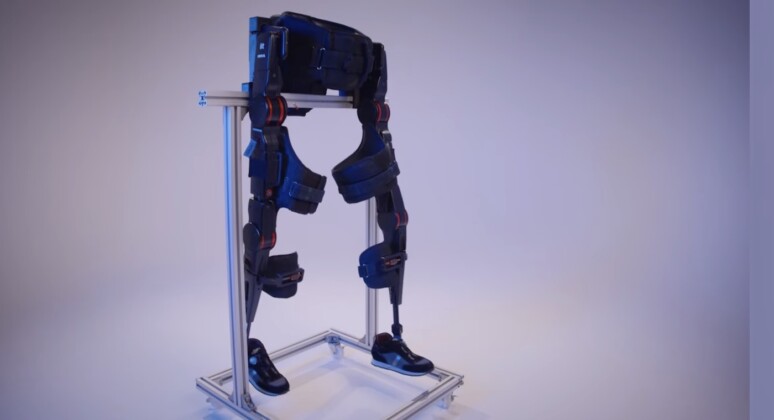
Italy has produced a new robotic exoskeleton aimed at enhancing the lives and mobility of individuals with disabilities or injuries. Named ‘Twin,’ the exoskeleton, developed in collaboration between the Italian Institute of Technology and the National Insurance Institute of Workplace Injuries, was unveiled at the Museum of Science and Technology in Milan.

The device operates through battery-powered motors at the knee and hip joints, offering three modes: Walk mode, Retrain mode, and TwinCare mode. Walk mode is designed for individuals paralyzed from the waist down, facilitating leg movement with adjustable gait and walk speeds. Retrain mode assists users with partial leg control, providing support to build strength and mobility. TwinCare mode aids those with injuries in only one leg, synchronizing the exoskeleton’s movement with a functional leg using software on an Android tablet.

In development since 2013, the Twin has a battery life of approximately 4 hours. Constructed with lightweight, interchangeable aluminum alloy modules, it can be disassembled for transport or upgrades. Although still in the prototype stage and requiring crutches for balance, the technology showcases significant progress in developing advanced solutions for individuals with disabilities.

Can Animals Really Smell Fear in Humans?

The intriguing question of whether animals can detect human fear through scent has long captivated scientists and pet owners alike. Directly questioning animals like dogs or cats about their sensory experiences is, of course, not feasible, leading researchers to devise innovative experiments to probe this mystery.

Studies have strategically minimized human interaction to exclude influences from facial expressions or body language, focusing instead on animal reactions to human scents under different emotional states. A notable investigation into this phenomenon involved observing horses’ responses to human sweat collected while individuals watched either comedic or horror films, as detailed in a 2023 study published in Scientific Reports.

Participants provided sweat samples after viewing each genre, which were then presented to horses. The aim was to ascertain if the animals could distinguish between scents associated with happiness and fear. “At first we weren’t sure if the horses could differentiate between the odors,” explained Plotine Jardat, the study’s lead author and a doctoral student at the University of Tours in France, in a conversation with Live Science.

The horses indeed demonstrated a remarkable ability to discern between the two emotional scents. Joyful scents prompted the horses to sniff predominantly with their left nostrils, a behavior Jardat interpreted as indicative of the brain’s hemispheric engagement in processing the odors. In contrast, scents of fear led to a different reaction, with horses sniffing longer and using both nostrils, suggesting a nuanced sensory analysis.

Jardat stated, “It’s not like when the horses smell another animal that they have the word ‘fear’ cross their minds,” clarifying that while horses may not conceptualize fear as humans do, they can distinguish between different human emotional states through scent.

The study speculated on the role of chemosignals, specific chemical compounds in human sweat, such as adrenaline or androstadienone, which may shift during emotional states and carry information between species. Future research aims to explore the effects of detecting fear on horses’ emotional and behavioral responses.

This research parallels a 2018 study in Animal Cognition, where Labrador retrievers were exposed to sweat samples from humans who had watched either scary or happy video clips. The dogs’ behaviors varied significantly depending on the emotional scent, with happiness prompting more social interaction with strangers, and fear leading to seeking comfort from their owners or attempting to exit the room.