Trillion Dollar Credit Card Debt Not Bad?

In 2023, American consumers accumulated an unprecedented level of credit card debt, surpassing the trillion-dollar mark. Luckily, this number is not as dire as it first seems to be.

Although there’s a noticeable increase in credit card debt in nominal terms, when adjusted for inflation, it’s almost 20% lower than its late 2008 peak, as per WalletHub’s analysis using data from the New York Fed. Economists believe Americans are well-prepared to manage their debt.

Russell Price, chief economist at Ameriprise Financial, explained to CNN, “Consumers still have a lot of money left over to be able to spend, so the credit card data is often misinterpreted. The dollar value of credit-card debt is at an all-time high, but so is population, employment and consumer income.”

He also highlighted that the data does not account for the approximately 55% of borrowers who settle their balances in full each month, a point also noted by the New York Fed.

Looking at the larger economic scene, the US job market remains robust, and wage increases are outpacing inflation. January saw the addition of 353,000 jobs, maintaining the unemployment rate at 3.7%. The stock market is stable, sentiment regarding the economy has notably improved recently, and holiday spending was robust.

This sustained job market vitality enables Americans to continue managing their debts, save money, and maintain spending levels.

Therefore, despite the upsurge in credit card debt and existing economic challenges, the overarching view suggests that Americans and their economy are, to date, resilient.

Thousand Dollar Breakfast Club

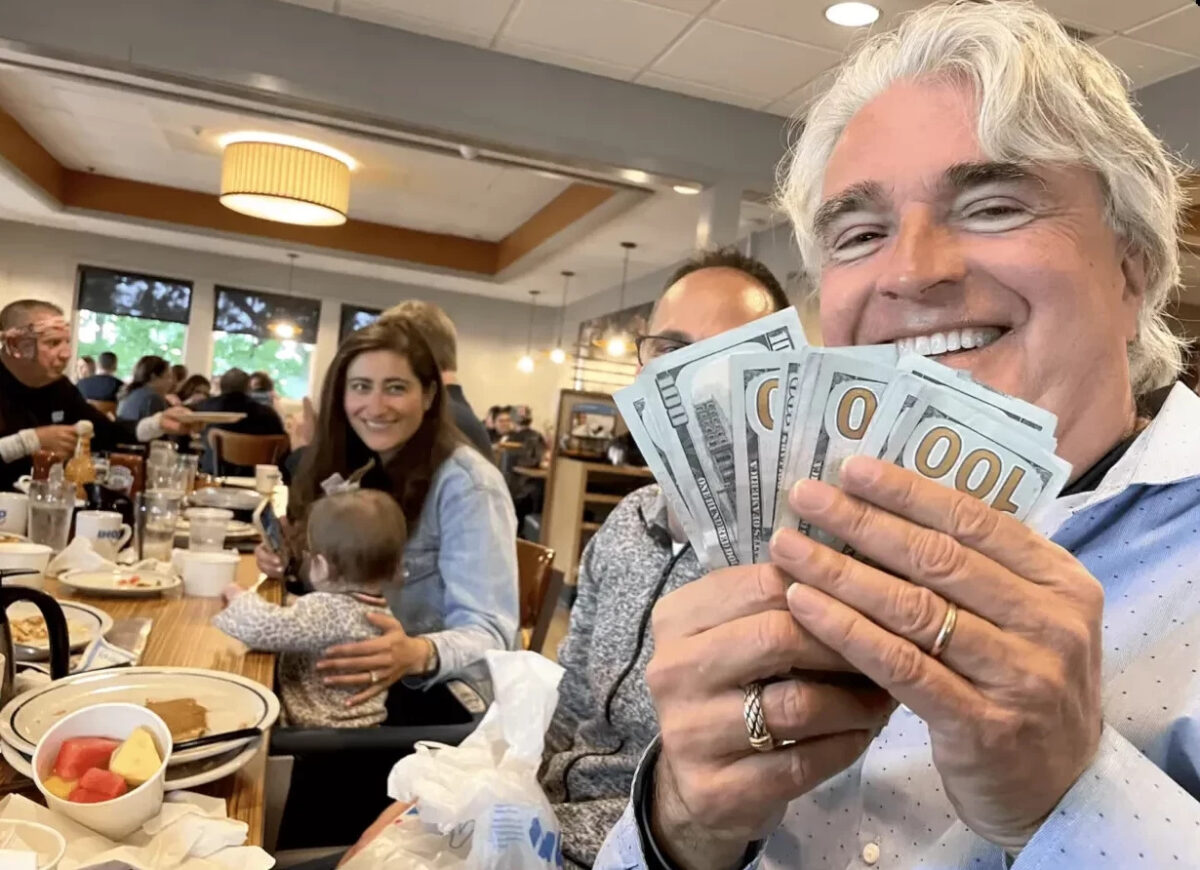
In the Boston area, a unique gathering of individuals, some long-time friends and others recent connections, meet every few months for breakfast. The occasion is marked by an extraordinary act of kindness: they collectively tip their server a substantial gift, aptly reflected in the group’s name, the Thousand Dollar Breakfast Club.

The initiative was started by Richard Brooks, an attorney, with encouragement from his wife Laurie. While group’s name suggests a $1,000 gift, they often exceed this amount, with one lucky server recently receiving a $2,050 tip. The sum varies depending on the number of participants, with each member contributing $100 towards the tip.

Brooks, 64, shared his personal connection to the gesture with Nice News, saying, “I was a waiter, so I know what it’s like to get a tip. And I still remember my first tip that was big, and it was a whopping $20. And I still remember it because I was paying myself through school.”

The concept for the Thousand Dollar Breakfast Club was inspired by a story Brooks heard from his brother about a similar generous act at a group meal. Brooks, who has a tradition of randomly giving out $100 bills to brighten people’s days, was immediately captivated by the idea. On January 2, 2023, he took to Facebook to create his version of the group, inviting anyone interested to join. The response was swift, with about a dozen people eager to participate.

Their first meeting took place at an iHop three months later, where they left a $1,400 tip. The club has grown in popularity, covered by both local and national media, but Brooks maintains a rotating email list of around 30 people to keep the gatherings manageable.

ChatGPT 5?

There has been no official release of detailed information about ChatGPT-5 by OpenAI yet, but there are some fascinating details and hints about what we can expect from the next generation of AI.

Improved Contextual Understanding
One of the primary areas for improvement in any AI model is the depth of contextual understanding. ChatGPT-5 could potentially offer even more sophisticated interpretation of user inputs, understanding not just the text but the implied meanings, emotions, and intentions behind words. This would make interactions more fluid and natural, reducing misunderstandings and increasing the model’s ability to engage in complex conversations.

Sam Altman, in discussions with the Financial Times, revealed that the upcoming GPT-5 model will be trained on an expanded dataset. This includes not only publicly accessible internet data but also significant proprietary datasets from various organizations, encompassing diverse forms of long-form writing and conversations.

Altman also pointed out the current limitations of GPT-4, noting its restricted reasoning capabilities and inconsistent reliability. He highlighted an ambition for GPT-5: to consistently deliver the kind of high-quality response one might only stumble upon once in 10,000 attempts with its predecessor.

Enhanced Multimodal Capabilities
While ChatGPT versions have primarily focused on text-based interactions, future versions like ChatGPT-5 looks to expand into multimodal AI, capable of understanding and generating responses that include images, audio, and possibly video. This would open up new applications for the technology in creative fields, education, and entertainment.

During an episode of Bill Gates’ “Unconfuse Me” podcast in January, Altman emphasized the significance of multimodality in the development of GPT-5, stating, “Multimodality will definitely be important. Which means speech in, speech out. Images. Eventually video. Clearly, people really want that. We’ll be able to push that much further but maybe the most important areas of progress will be around reasoning ability.”

Personalization and Adaptation
Another big step in future iterations would be the ability to offer personalized experiences. Adapting to users’ communication styles, preferences, and needs over time could enable ChatGPT-5 to become more of a personal assistant. Learning from interactions to provide more tailored information, reminders, and suggestions that align with individual user habits and schedules.

Greater Reliability and Ethical Considerations
As AI becomes more integrated into critical areas of life and business, reliability, safety, and ethical use become increasingly important. ChatGPT-5 would likely incorporate advanced measures to ensure data privacy, user safety, and mitigation of bias. Ensuring the ethical use of AI and preventing misuse would be central to its design and deployment.

Conclusion
OpenAI’s most recent release, GPT-4 Turbo, showcased improvements over GPT-4, including updated knowledge up to April 2023 (as opposed to GPT-4’s 2021 cutoff), the ability to process longer prompts equivalent to a 300-page book, enhanced instruction-following abilities, and the seamless integration of various tools like the Dall-E 3 image generator and the Bing search engine in response to user requests.

While specific details about ChatGPT-5 remain speculative until official information is released, the trajectory of AI development suggests that future versions of ChatGPT will continue to push the boundaries of what conversational AI can achieve.

Famous Booth from “The Sopranos” Sold for $82,600

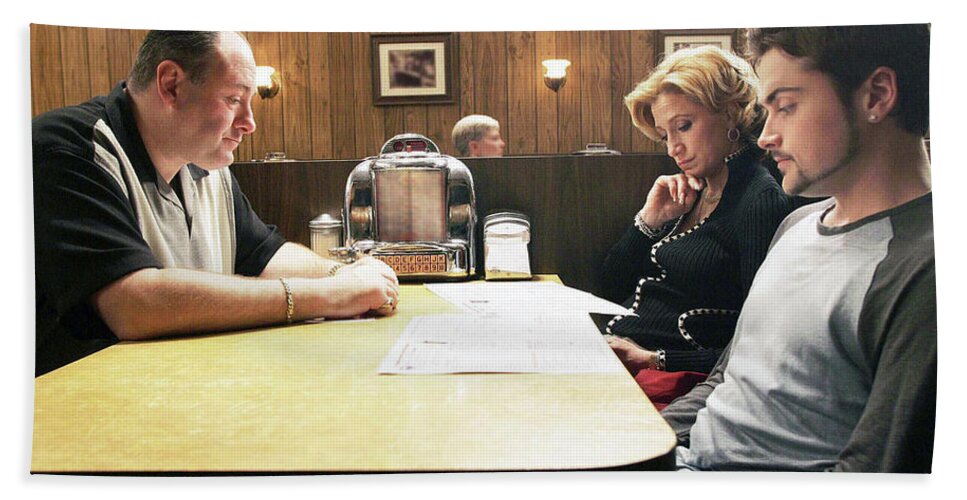
The famed booth from the concluding episode of “The Sopranos” was successfully sold on eBay for $82,600 on March 4th, according to the auction website. The auction, which attracted 238 bids, featured the original booth where the Soprano Family was situated during the iconic final scene.

The booth, complete with both seats, a table, and a divider wall featuring the plaque “Reserved for the Sopranos Family,” was listed for sale by the owners of Holsten’s Ice Cream in Bloomfield, New Jersey. Their decision to part with the famous booth was prompted by ongoing renovations at their ice cream shop, citing the need for an upgrade due to the compromised integrity of the over 60-year-old furniture.

In a recent post, the owners expressed their reluctance to bid farewell to the beloved booth but stressed the necessity of the upgrade. The buyer is responsible for collecting the items from Bloomfield, and it’s important to note that the sale does not include the jukebox, as mentioned on the auction website.

“The Sopranos,” a crime drama created by David Chase, premiered on HBO on January 10, 1999, featuring the anxiety-filled mobster Tony Soprano, portrayed by the late James Gandolfini, and his wife Carmela, played by Edie Falco. The much-debated finale aired on June 10, 2007, leaving the audience in suspense as the Soprano family gathered at a diner while Journey’s “Don’t Stop Believin’” played. The scene concluded abruptly with a black screen, and David Chase has never disclosed the fate of Tony Soprano in that final moment.

Hidden Neutron Star Found in Supernova Debris

Astronomers using the James Webb Space Telescope (JWST) have discovered a neutron star in the remnants of a stellar explosion, putting an end to a nearly decade-long search. Supernova 1987A is the aftermath of a star explosion with an initial mass of 8 to 10 times that of the sun, is situated 170,000 light-years away in the Large Magellanic Cloud. Initially observed in 1987, it became the closest and brightest supernova visible from Earth in about 400 years.

These stellar explosions, like Supernova 1987A, play a crucial role in distributing elements like carbon, oxygen, silicon, and iron across the cosmos. The resulting remnants can become compact stellar objects such as neutron stars or black holes. For 37 years, astronomers were uncertain whether the core of Supernova 1987A formed a neutron star, or collapsed into a black hole.

The recently identified neutron star remained hidden due to a thick layer of gas and dust from the supernova blast. Using the JWST’s infrared capabilities, researchers examined emissions for evidence of argon and sulfur, determining that the ionization of these elements could only be caused by radiation emitted by a neutron star. The brightness of the neutron star was estimated to be about a tenth of that of the sun.

However, questions about the neutron star remain. The ionization could result from interactions with a pulsar wind nebula, created by a rapidly rotating neutron star, or from ultraviolet and X-ray light emitted by the neutron star itself. Further infrared observations with the JWST’s NIRSpec instrument may help distinguish between these possibilities, providing more insights into the nature of the neutron star at the heart of Supernova 1987A. The research was published in the journal Science on February 22.