$3 Michelin Star Taco

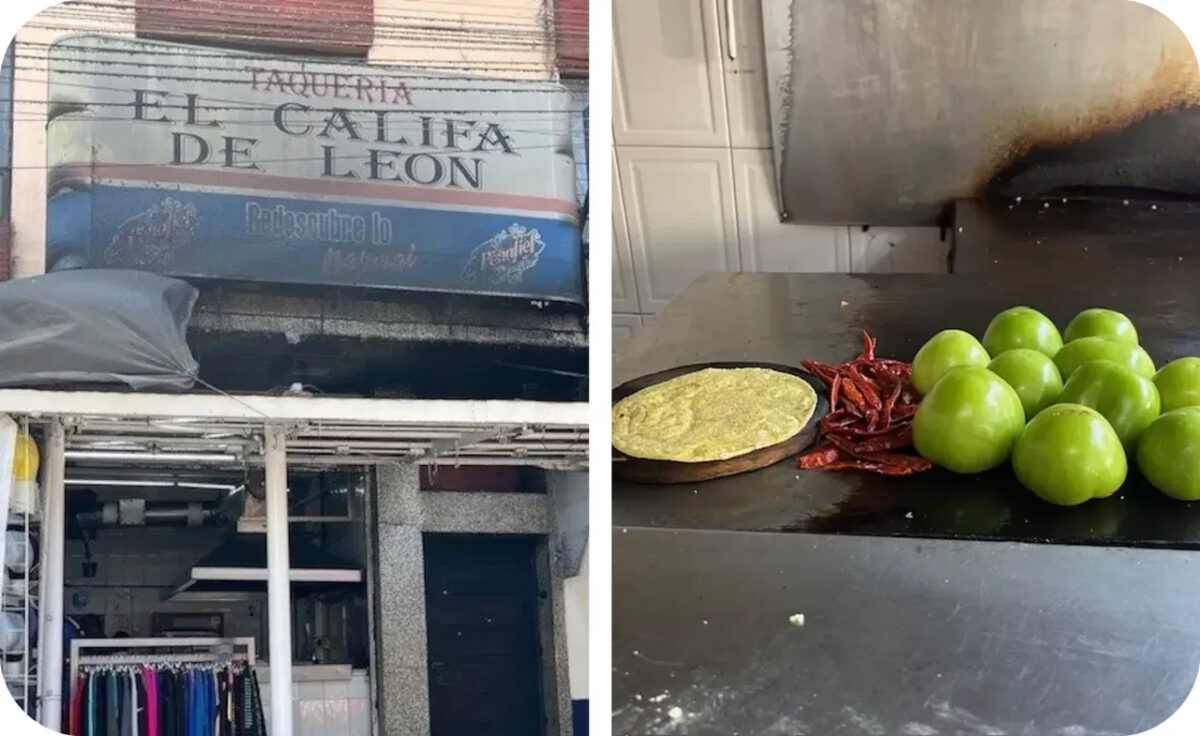
The Michelin Guide, known for awarding stars to top restaurants, has recognized a 100-square-foot taco stand in Mexico with its first-ever star. This stand, Taquería El Califa de León, is located in Mexico City’s San Rafael neighborhood and offers only four menu items with no seating available.

Taquería El Califa de León is the first taco stand in Mexico to receive a Michelin star, highlighted in Michelin’s first guide to Mexico published last week. Chef Arturo Rivera Martínez has been operating from the same stand on Avenida Ribera de San Cosme since 1968, cooking tacos on a 680-degree grill.

The preparation is simple: for the signature taco, Rivera Martínez grills a thin slice of beef with salt and lime juice, cooks a fresh tortilla, and serves them together on a plastic plate. Customers then add their choice of red or green sauce. The tacos, which include beef steak, beef rib, and pork chops, cost between 53 and 82 pesos ($3 to $5).

“The secret is the simplicity of our taco,” Rivera Martínez told the AP. “It has only a tortilla, red or green sauce and that’s it. That, and the quality of the meat.”

Michelin’s inspectors praised the stand’s food, noting, “there is a reason why El Califa de León has endured for more than half a century.”

José Luis Rodríguez Ávila, the stand’s manager, says the best way to eat their tacos is “standing up, elbow to elbow with other people and with a can of soda in hand.”

In its new guide, Michelin awarded two restaurants in Mexico two stars, 16 restaurants one star, and six “green” stars for sustainability. It also named 42 “Bib Gourmands” for affordable dining.

Michelin, originally a tire company founded in 1889, started its guide in 1900 to encourage driving. It began awarding stars in 1926 and continues to send anonymous inspectors to review restaurants. Earning a Michelin star is a significant achievement, comparable to winning an Olympic gold medal, according to chef Maxime Meilleur of La Bouitte in France.
2,200-Year-old Tomb Discovered

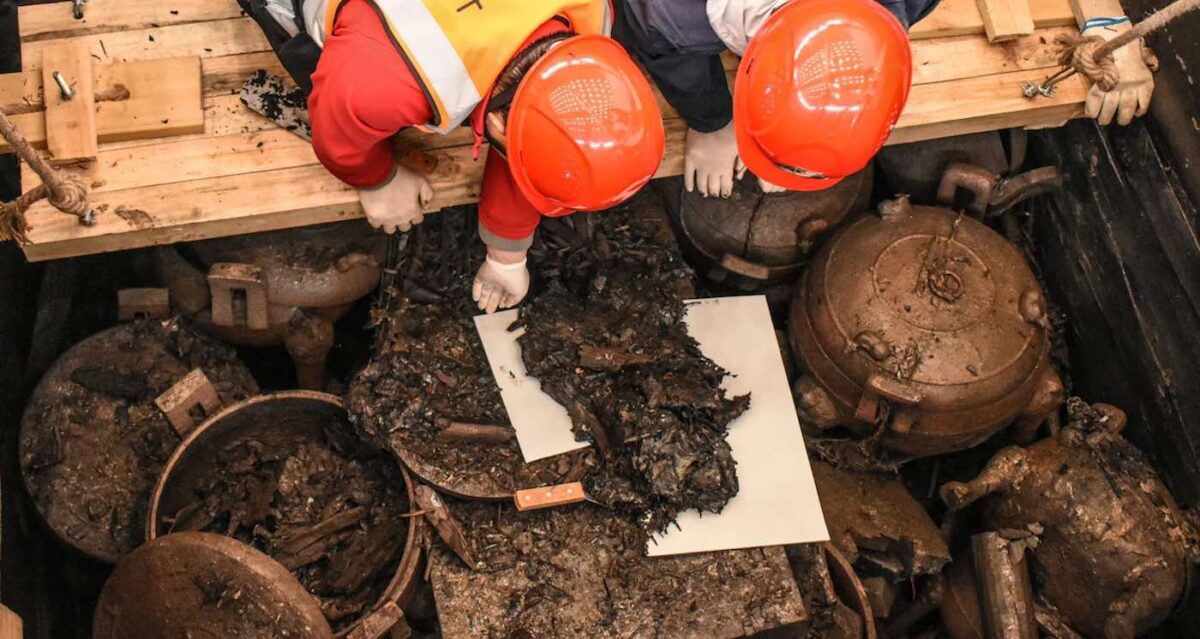
Chinese archaeologists have completed the initial phase of excavations on a royal tomb believed to originate from the state of Chu, dating back 2,200 years. Chu, a significant kingdom in early Chinese history, once dominated the birthplace of Confucius through conquest and annexation.

Situated in Anhui province, the tomb’s exploration commenced in 2019 due to reports of frequent looting attempts. The findings have revealed it as the most intricate funerary structure of its era ever uncovered in China.

Among the unearthed artifacts—over 3,000 in total—are lacquered wood items, bronze vessels, figurines, chariot and horse pits, and sacrificial remains. A woven bamboo mat provided crucial data for radiocarbon analysis, confirming the tomb’s age.

Gong Xicheng, deputy director of the Anhui Provincial Institute of Cultural Relics and Archaeology, noted that the excavation has progressed to the coffin chamber’s interior, raising hopes of uncovering the tomb owner’s identity and resolving the mystery.

Based on historical records, King Kaolie, who reigned from 262 to 238 BCE, is a leading candidate for the tomb’s occupant. Kaolie’s relocation of the Chu capital to Shouxian County aligns with the tomb’s discovery in the same region. Moreover, other Chu kings ruling from Shouxian likely faced circumstances precluding such a grand burial.

Chu’s emergence followed the disintegration of the Zhou Dynasty, a pivotal period in Chinese history marked by the genesis of foundational texts like the I Ching and the early development of Confucianism.

The Universe’s Oldest Star

The James Webb Space Telescope is designed to detect stars from the universe’s earliest periods, just a few million years after the Big Bang.

However, a team of MIT students has found that some of these ancient stars might be much closer, only thousands of light-years away instead of billions.

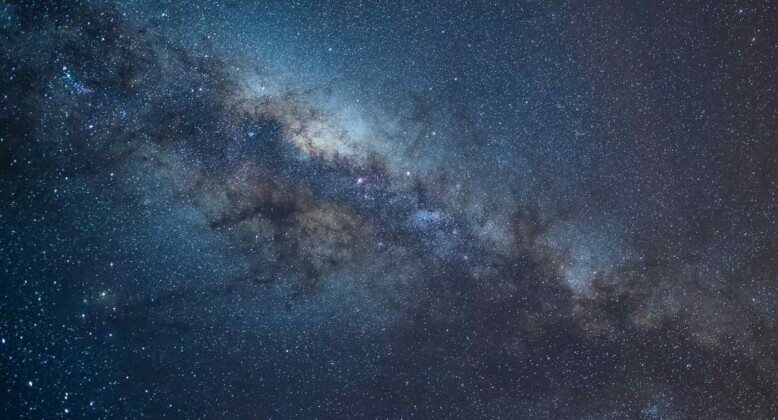
They identified about 65 stars formed 13 billion years ago in the Milky Way’s halo, a discovery that could significantly impact our understanding of the early universe. This research began when MIT physics professor Anna Frebel started a project called Observational Stellar Archaeology, where students analyzed data from the Magellan-Clay telescope at the Las Campanas Observatory.

The Big Bang occurred 13.8 billion years ago, and the first stars, mostly composed of helium and hydrogen with trace amounts of strontium and barium, formed shortly after. Frebel and her students focused on these elements in their data review.

They found 10 stars with low levels of strontium, barium, and iron, similar to ancient stars and dwarf galaxies observed in the distant universe. These stars have about 1/10,000th of the elements found in our Sun.

To support their theory that the Milky Way contains remnants of ancient dwarf galaxies, Frebel and her students examined the orbital data of these stars. They found that the stars moved in retrograde, orbiting in the opposite direction of the Milky Way’s galactic disk and halo. Frebel explained, “The only way you can have stars going the wrong way is if you threw them in the wrong way.”

They also noticed these stars were moving quickly, at hundreds of kilometers per second. Frebel and her team call these stars Small Accreted Stellar System stars, or SASS stars, theorizing they are the remnants of ancient dwarf galaxies absorbed by the Milky Way.

Frebel and her students have developed a straightforward method to identify these stars, providing astronomers with a new way to study the early universe by observing stars closer to Earth. “These oldest stars should definitely be there, given what we know of galaxy formation,” Frebel said. “They are part of our cosmic family tree. And we now have a new way to find them.”

World’s Deepest Ocean Sinkhole

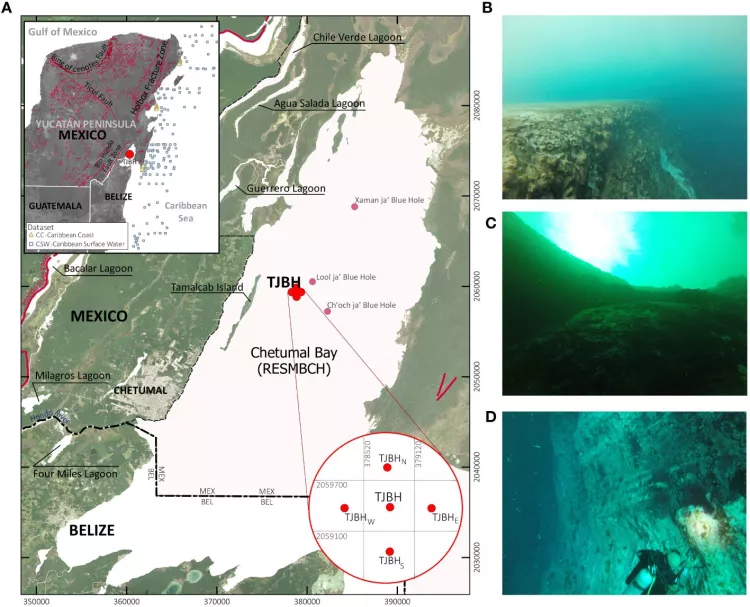
Sinkholes occur not just on land but also underwater, where they are known as blue holes. Researchers have now identified the deepest blue hole on the planet, so deep they have not yet reached the bottom.

This discovery is the Taam Ja’ Blue Hole in Mexico’s Chetumal Bay, previously considered the world’s second-deepest. Researchers reported in the journal Frontiers in Marine Science that a December scuba diving expedition revealed it to be much deeper than initially thought.

“The TJBH is now the deepest blue hole discovered to date, with depths exceeding 420 meters below sea level, and the bottom remains unexplored,” the researchers stated. This new depth, over a quarter-mile below sea level, extends into the mesopelagic zone, also known as the twilight zone due to the limited sunlight.

Earlier estimates placed Taam Ja’s depth at approximately 274 meters below sea level, based on echo sounding, which measures the distance sound waves travel. However, the irregular shapes of blue holes and varying water densities limited this method. The latest measurements, using the SWiFT CTD technique to gauge conductivity, temperature, and depth, indicated the bottom was still beyond reach.

This new depth makes Taam Ja’ significantly deeper than other known blue holes, such as the Sansha Yongle Blue Hole in the South China Sea (301 meters), the Dean’s Blue Hole in the Bahamas (202 meters), and the Dahab Blue Hole in Egypt (130 meters).

While blue holes might seem ominous, the NOAA describes them as “oasis in an otherwise barren seafloor,” teeming with marine life like corals, sponges, mollusks, sea turtles, and sharks. Despite their ecological richness, little is known about blue holes due to their inaccessibility and unpredictable distribution.

Many blue holes have small openings deep underwater, making them difficult for automated submersibles to enter. Initial reports of blue holes often came from fishermen and recreational divers rather than scientists.

Blood Test for Strokes

Stroke is the leading cause of disability worldwide and the second leading cause of death. Early intervention can mitigate severe consequences, and a new diagnostic tool could significantly improve outcomes.

Researchers at Brigham and Women’s Hospital have developed a test that uses blood-based biomarkers and a clinical score to accurately identify patients with large vessel occlusion (LVO) strokes.

“We have developed an accessible tool that could help ensure more stroke patients receive timely, critical care,” said Joshua Bernstock, MD, PhD, a clinical fellow in the Department of Neurosurgery at the hospital.

Most strokes are ischemic, caused by obstructed blood flow to the brain. LVO strokes, a severe form of ischemic stroke, occur when a major brain artery is blocked. These require immediate treatment with mechanical thrombectomy, a procedure to remove the blockage, to prevent brain cell death and severe disability.

“Mechanical thrombectomy can restore patients to their pre-stroke condition,” explained Dr. Bernstock.

However, symptoms of brain bleeds can mimic those of LVO strokes, requiring different treatments. The new test distinguishes between the two conditions in the field.

The research team targeted two proteins in capillary blood: glial fibrillary acidic protein (GFAP), associated with brain bleeds and traumatic brain injury, and D-dimer. Their study demonstrated that combining these biomarkers with field assessment scores (stroke triage for emergency destination, or FAST-ED) can identify LVO strokes and rule out brain bleeds.

“The sooner this intervention occurs, the better the patient’s outcome,” said Bernstock. The study, published in the journal Stroke, showed that the test identified LVO strokes with 93% specificity and 81% sensitivity within six hours of symptom onset. It also ruled out all patients with brain bleeds.

This tool could be especially valuable in low- and middle-income countries where advanced imaging is unavailable. It might also aid in diagnosing traumatic brain injuries. The team is conducting a prospective trial to test the tool’s performance in ambulances and has designed an interventional trial to speed up stroke triage by bypassing standard imaging.

“In stroke care, time is brain,” Bernstock emphasized. “The sooner a patient is on the right care pathway, the better their outcome will be. Our prehospital diagnostic tool is set to be transformative.”