Over 100 Stunning New Species Found

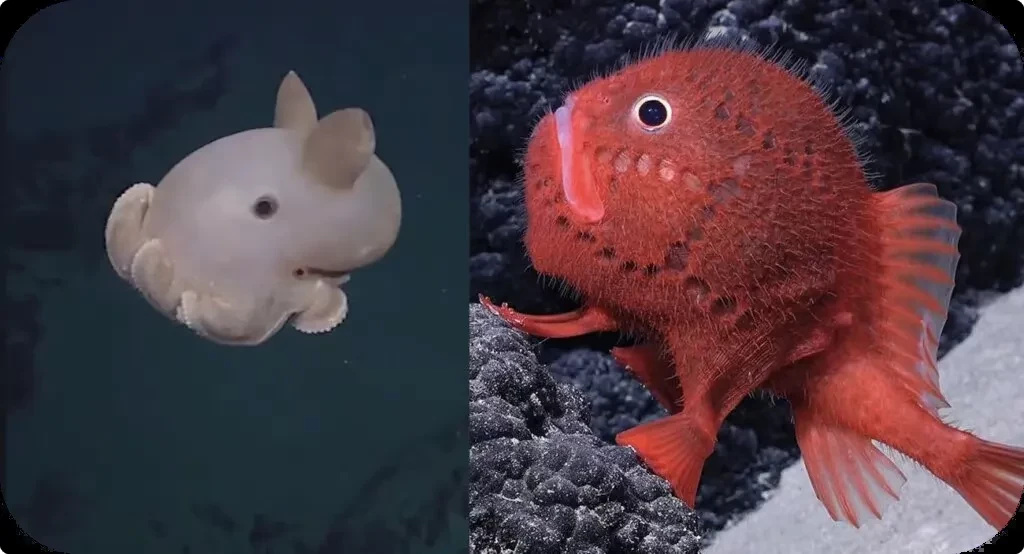
Over a hundred novel species of exotic marine creatures have been unveiled in the vicinity of towering underwater peaks off Chile’s coast. This discovery was made by an international group of researchers who ventured into the uncharted territories of sea mountains, some reaching heights of up to 3,530 meters.

The expedition, spearheaded by the Schmidt Ocean Institute, revealed a diverse collection of species previously unknown to science, including unique deep-sea corals, sponges, sea urchins, amphipods, and squat lobsters.

Utilizing a remotely operated underwater vehicle, the team probed the depths of the ocean floor, encountering marine life in regions as deep as 4,500 meters. They discovered that each underwater mountain hosted a rich variety of ecosystems, many of which were classified as vulnerable, featuring vibrant coral reefs, sponge gardens, and an array of peculiar fish, lobsters, and amphipods.

Dr. Javier Sellanes from the Universidad Católica del Norte in Chile expressed astonishment at the sheer number of new species found, particularly among sponges, expressing that the findings surpassed their expectations. The team is currently examining the physical and genetic characteristics of these specimens to officially classify them as new species.

The captivating journey and its findings can be viewed through the Schmidt Ocean Institute’s video footage below. Make sure to check it out, it is amazing!

Solar Chaos Coming Soon

At first glance, the sun appears as a tranquil, steady beacon in the sky. However, a closer look reveals a star in constant turmoil, oscillating between states of calm and chaotic plasma activity in a cycle that reshapes its surface and magnetic field.

Every 11 years, the sun undergoes a dramatic transformation. Its magnetic field, having become as twisted as an overwound bundle of elastic bands, abruptly reverses, swapping its magnetic poles. This event is the climax of a process leading to heightened solar activity, including the ejection of massive plasma blobs, the formation of vast dark spots, and the release of intense radiation streams.

This phase of increased solar behavior, known as the solar maximum, can trigger solar storms capable of disrupting communication systems, damaging electrical grids, affecting living organisms (astronauts in particular), and endanger satellites.

Recent observations indicate that the upcoming solar maximum might arrive earlier and with more intensity than previously anticipated. Although scientists had forecasted the peak of the current solar cycle to occur in 2025, a surge in sunspots, solar storms, and unusual solar events now suggests that the solar maximum could begin as early as the end of this year.

The solar cycle transitions from a solar minimum, a period of low solar activity, to a solar maximum and back every 11 years. The reasons behind the duration of these cycles remain a mystery, despite their consistent tracking since the first recorded Solar Cycle 1 between 1755 and 1766. The ongoing cycle, Solar Cycle 25, started in December 2019, as confirmed by NASA.

The root of the sun’s cyclical changes lies in its magnetic field, explains Alex James, a solar physicist. During the solar minimum, the sun’s magnetic field is strong and well-ordered, effectively suppressing solar activity by keeping the sun’s plasma contained. Over time, however, this magnetic field becomes entangled, leading to a weakening of its strength and a subsequent increase in solar activity. This activity is marked by the emergence of coronal loops — massive, magnetized structures on the sun’s surface — and the occurrence of solar flares and coronal mass ejections as the magnetic field realigns.

Following the peak of this activity, the sun’s magnetic field undergoes a complete reversal, marking the end of the current cycle and the beginning of a new solar minimum, thus continuing the cycle of solar transformation.

While this is a regular event that happens every 11 or so years, I am very excited for the upcoming solar maximum. The quality of images we have been able to take of the sun over the last few years has gotten so much better. I think we will get a whole new wealth of amazing photographs of our sun in its most active time.

Related: The Sun, Like Never Seen Before

Glow-in-the-Dark Petunias

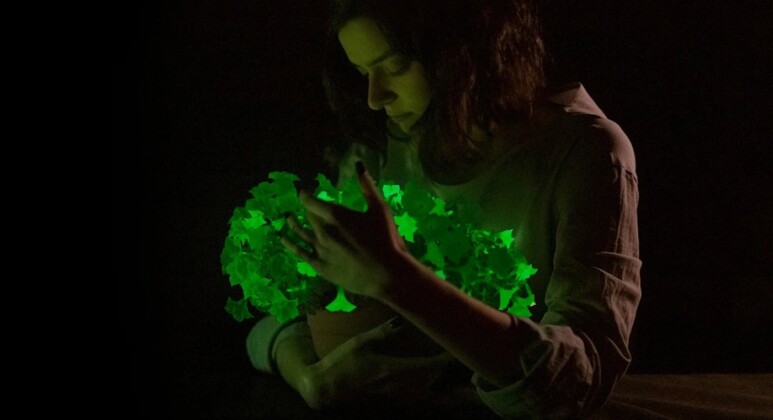
Forest plants don’t naturally glow in the dark like in Avatar, but now we have the ability to genetically modify plants to exhibit bioluminescence. The Firefly Petunia, the first commercially available glowing flower, has received approval from the USDA and is currently open for pre-orders.

Produced by Light Bio, these flowers emit a soft glow similar to moonlight and can be cultivated in pots, baskets, or gardens, achieving a size of 8 to 10 inches with abundant white flowers. Indoors, they can thrive in sunny spots, benefiting from at least six hours of direct sunlight to enhance their brightness.

The concept of bioluminescence was inspired by mushrooms that naturally glow in the dark. Scientists transferred four genes from these mushrooms into a tobacco plant, resulting in continuous bioluminescence throughout the plant’s life.

Lead author Karen Sarkisyan highlighted the potential extension of bioluminescence to other plants, such as periwinkles and roses. Beyond the creation of marketable products, the experiments aim to reveal insights into plant behavior through the emitted light.

The initiative not only explores scientific possibilities but also seeks to rekindle an appreciation for the natural beauty of the plant world. The company envisions that the introduction of bioluminescent plants, such as the Firefly Petunia, will spark interest and curiosity in nature and science, particularly among younger audiences. Through hands-on experiences with living plants designed to emit light, individuals can engage with the fascinating realm of biotechnology.

Saliva Test for Breast Cancer

For middle-aged women, undergoing a mammogram has long been an uncomfortable yet crucial process for early detection of breast cancer. However, a groundbreaking development promises to simplify breast cancer screening to a mere saliva test. Researchers unveiled a novel hand-held biosensor capable of identifying breast cancer biomarkers from just a small saliva sample, as published on February 13 in the Journal of Vacuum Science & Technology B.

Lead researcher Hsaio-Hsuan Wan, a doctoral candidate at the University of Florida, heralds the device for its convenience and efficiency. “Our device is an excellent choice because it is portable — about the size of your hand — and reusable,” Wan stated. “The testing time is under five seconds per sample, which makes it highly efficient.”

This innovative biosensor operates with paper test strips that are coated with specific antibodies targeting cancer biomarkers. Upon applying a saliva sample to the strip, the device sends electrical pulses that prompt the biomarkers to attach to the antibodies. This interaction changes the electrode’s output signal, enabling the device to assess cancer risk swiftly.

Contrasts this with traditional screening techniques like mammograms, ultrasounds, and MRI scans, which are not only expensive but also demand substantial equipment and expose patients to low doses of radiation. Wan highlighted the particular significance of this new technology for developing countries, where advanced diagnostic tools may be scarce. “Our technology is more cost-effective, with the test strip costing just a few cents and the reusable circuit board priced at $5,” she mentioned.

Remarkably, the biosensor can deliver precise results with a mere drop of saliva, detecting cancer biomarkers in concentrations as low as one-quadrillionth of a gram per milliliter. It specifically looks for biomarkers like human epidermal growth factor receptor 2 (HER2), which is linked to 15% to 20% of invasive breast cancers, and CA 15-3, an antigen associated with breast cancer.

In trials involving 21 human saliva samples, the device successfully differentiated between healthy tissue, early-stage breast cancer, and advanced breast cancer, based on these biomarkers. Wan expressed her enthusiasm for the device’s potential impact: “The highlight for me was when I saw readings that clearly distinguished between healthy individuals and those with cancer. We dedicated a lot of time and effort to perfecting the strip, board and other components. Ultimately, we’ve created a technique that has the potential to help people all around the world.”

This is an amazing development that could save many lives!

Paul McCartney Reclaims Stolen Hofner Bass 50 Years Later!

Paul McCartney got back his stolen bass guitar through a journalist-led initiative. The violin-like bass, linked to the German brand Höfner and made famous by McCartney, was taken from the Beatles’ touring van in Ladbroke Grove in 1972.

The Lost Bass Project began without evidence or leads. It clarified it had no intention to blame or press charges, leading some to reveal it was sold to a pub landlord in Ladbroke before reaching a family in Sussex. Eventually, it was found stashed in an attic, like any old heirloom.

“The guitar has been authenticated by Höfner, and Paul is incredibly grateful to all those involved,” stated the Lost Bass Project.

A journalist mentioned on the BBC that people wanted to help McCartney without disclosing involvement in the theft.

“We didn’t expect it to go very far, but it caught the imagination of thousands,” wrote the Lost Bass Project. “Within a week, it was in newspapers worldwide. We did numerous interviews and appeared on several TV news broadcasts.” “As a result of the publicity, someone in a terraced house in Hastings contacted Paul McCartney’s company and returned the bass. The search was over—Paul had his stolen bass back!”

The bass, still in its case, needs repairs before being playable. With the strap tight to McCartney’s chest, he used the Höfner for songs like Love Me Do and She Loves You.

“To have found it quickly is amazing, and we’ve heard how thrilled Paul McCartney is to have it back,” said Mr. Scott Jones of the Lost Bass Project. “That’s just the icing on the cake to know that the guy we all love is smiling tonight because his old guitar is back.”