Heat Blocking Windows


Windows not only let light into buildings but also unwanted heat. To address this, a novel window coating has been developed that blocks heat-inducing ultraviolet and infrared light while allowing visible light to pass through at any angle of sunlight. This technology can be applied to existing windows or vehicles, potentially cutting air-conditioning costs by over one-third in warm climates.

Tengfei Luo, the Dorini Family Professor for Energy Studies at the University of Notre Dame and leader of the research, explains that the effectiveness of the coating does not diminish regardless of the sun’s position. Traditional window coatings are typically designed for sunlight entering at a 90-degree angle, but Luo’s team considered the variable angles of sunlight throughout the day, especially during the hotter midday when the sun is at an oblique angle.

The coating consists of ultra-thin layers of materials like silica, alumina, titanium oxide, and a micrometer-thick silicon polymer. This composite not only maintains transparency but also enhances cooling by reflecting thermal radiation. To find the optimal arrangement of these layers for maximum efficiency at various angles, Luo and his team utilized quantum computing. Their approach allowed them to precisely adjust the layer order, resulting in a coating that significantly reduces temperature inside a room.

Published in Cell Reports Physical Science, their findings show that the coating can lower temperatures by 5.4 to 7.2 degrees Celsius even when exposed to a wide range of light angles.

This is a very neat innovation. Anything to help with bills is a good one in my opinion.
Drought Free for First Time in Decade

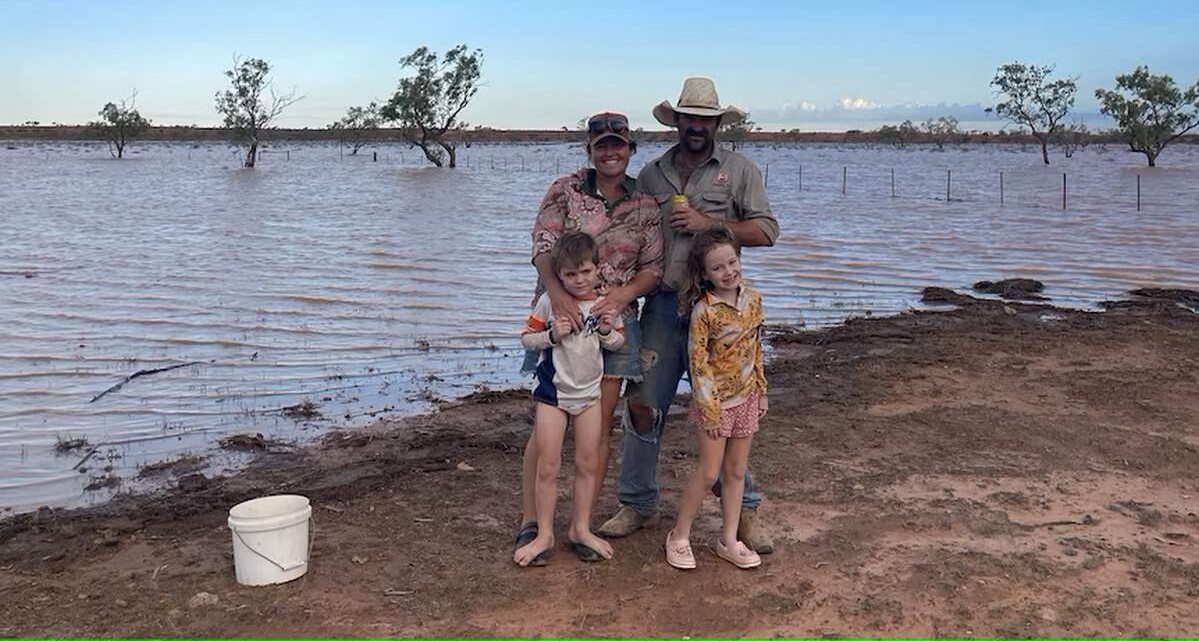
Heavy rains in Queensland, Australia, have transformed the usually red outback soil into lush green terrain with swollen rivers, ending a decade-long drought.

At its peak, the drought affected 88% of the state. Now, with Diamantina and Bulloo shires no longer under drought status, the entire state is drought-free.

The filled water holes, creeks, and rivers promise a strong 2024 for cattle and tourism, both key to the state’s economy.

“It’s remarkable how well the land here responds to rain,” said Mrs. Monique Betts, a rancher in the southwest, to ABC News Australia. “We can probably count on sufficient water for the next 18 months.”

“Our house dam was dry for most of last year,” she added, mentioning they were close to hauling water to the farm in tanks.

The cattle are already fatter, providing relief to ranchers who had been selling off their herds to avoid significant losses.

The slow-moving floodwaters of the Channel Country have spread across the flat region, greening it after late summer rains of about 150 to 300 millimeters.

82% of Queensland’s land is used for farming or ranching, with the driest areas in the south and west.

Most Amazing Close-Up Photos of the Year

The Close-Up Photographer of the Year contest celebrates the intricacies of nature, highlighting small creatures and fine details that are often overlooked.

In its fifth year, the competition attracted nearly 12,000 entries from 67 countries. A panel of 23 experts spent 20 hours reviewing the submissions to determine the winners.

Here are the incredible 11 winning images of this year.

School Dogs Boost Students’ Academics and Mental Health

To help reduce anxiety and promote learning, several elementary schools in Michigan have enlisted service dogs, and students are already seeing improvements in their academics, according to WXMI-TV 17.

In September, Priority Health, a Michigan health insurance provider, launched the Priority Pups program, placing goldendoodles in two school districts with plans for further expansion. These dogs visit different classrooms daily, providing comfort and support.

Research shows that the presence of trained dogs reduces children’s stress, encourages a positive attitude toward learning, and improves interactions between classmates. This initiative is especially timely, as a 2023 report from Mental Health America revealed that many young people in Michigan with clinical depression did not receive mental health treatment.

Shelby, a student at North Godwin Elementary School, has directly benefited from the program. Diagnosed with Fragile X Syndrome, autism, and ADHD, Shelby struggles with her emotions at school. Her mother, Laurie Uhl, described the difference the goldendoodle Meeka has made.

“When Shelby has a meltdown, Meeka’s presence immediately calms her down,” Uhl explained.

The program’s success is due in part to Canines for Change, founded in 2005 by Dr. Nikki Brown, a school psychologist for the Lansing School District. Dr. Brown noticed significant improvements in skills and behavior when she brought her Corgi to work with special education students. She then partnered with another trainer to offer service dogs for children with special needs.

The Future of Flying

Early this year we did an article about how the future with flying cars is almost here.

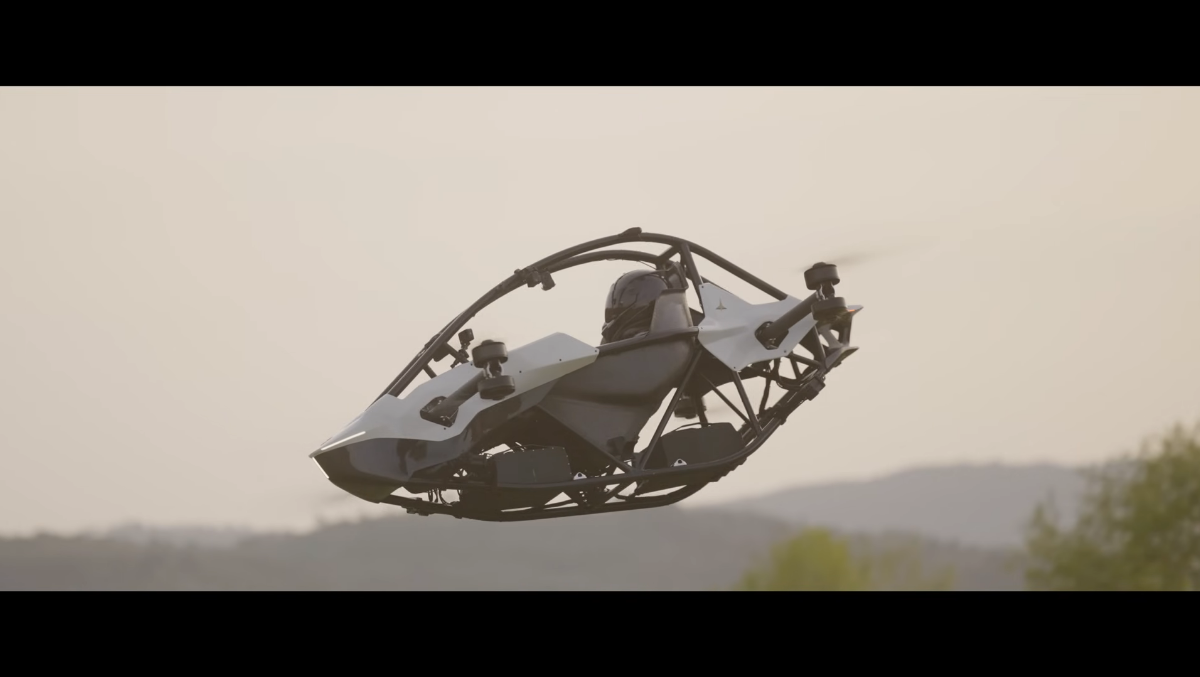
The “flying car” we featured was the Ryse Recon eVTOL (electric vertical takeoff and landing). While the acronym “eVTOL” is not the most exiting, the technology itself is very cool.

Another eVTOL maker, Jetson ONE, recently released a video showing off some formation flying with the aerial vehicles. They are very cool.

Related: Flying Hydrogen Taxi