Astronomers Fight Back

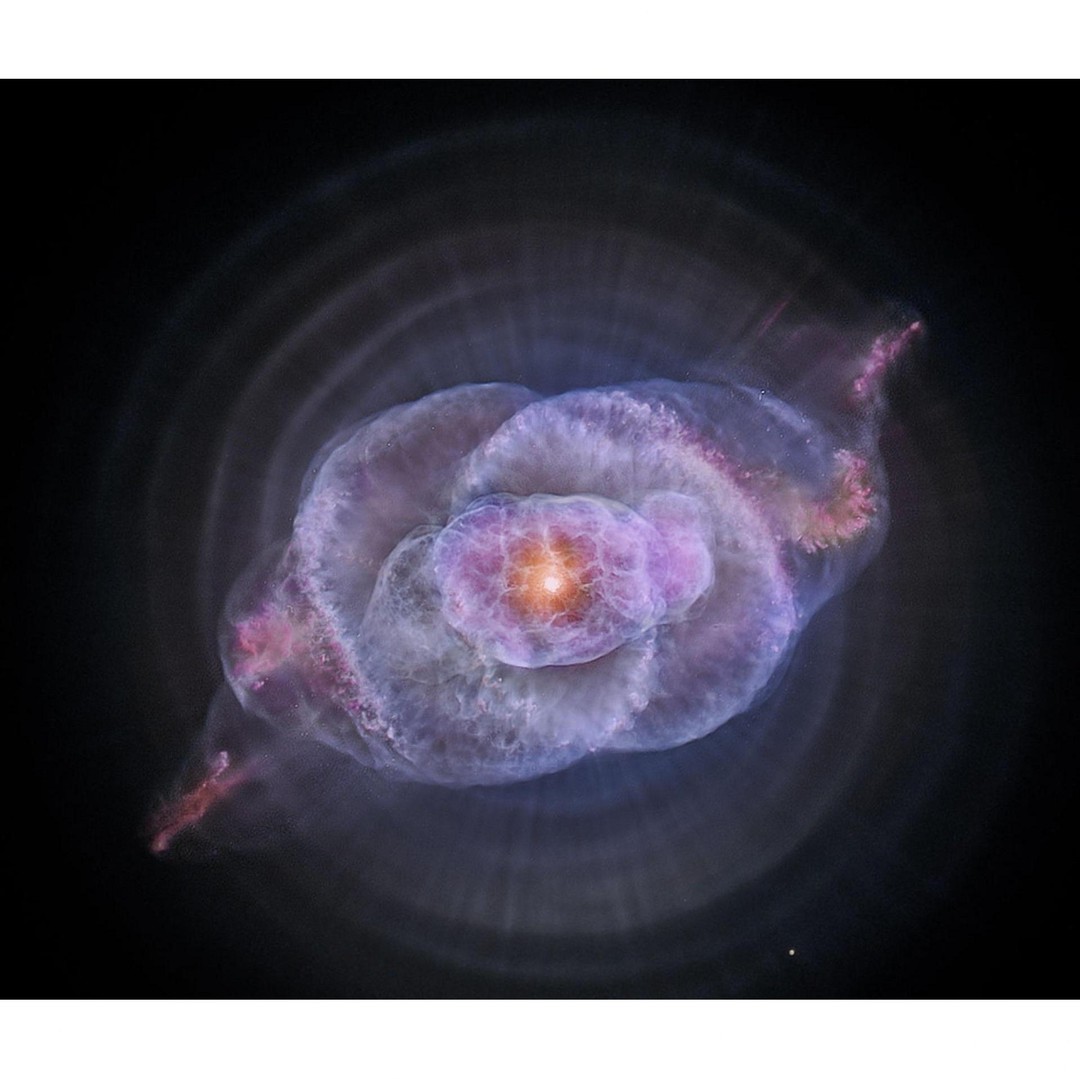
Recently we did an article on the Stunning Photos from the $2 Billion Space Telescope. In it we mentioned that the space telescope, one NASA’s Great Observatories, may soon face an untimely end.

The Chandra X-Ray Observatory, an orbiting telescope launched in 1999 aboard Space Shuttle Columbia, is under financial threat in NASA’s latest budget proposal. Significant cuts to its funding could lead to layoffs for half of its staff by October and potentially end the mission prematurely around 2026. Astronomers fear that losing this vital telescope could set back high-energy cosmic studies by decades. In response, astronomers are grouping together in an effort to save the incredible telescope.

In an open letter, a group of astronomers asserted that Chandra “is capable of many more years of operation and scientific discovery” and that reducing the budget of this flagship X-ray mission would severely impact both U.S. high-energy astrophysics research and the broader astronomy community.

Samantha Wong, an astronomer at McGill University, emphasized the importance of maintaining such observatories: “It’s a huge monetary and environmental toll to put an observatory up in space, so I think it’s really important to value that and to not treat these instruments as disposable,”. Wong continued, “People outside of astronomy contribute to the cost of these instruments (both literally and in terms of environmental and satellite pollution), so it’s in everyone’s best interest that we use Chandra to the full extent it’s capable of.”

Launched in the 90s along with the Hubble Space Telescope, the Spitzer Space Telescope (decommissioned in 2020), and the Compton Gamma Ray Observatory (which ended in 2000), Chandra was initially intended to operate for five years. However, its outstanding performance has made it a cornerstone of astronomy research for the past 25 years. Despite the natural degradation over time, Chandra continues to produce excellent scientific results. A recent NASA senior review deemed it “the most powerful X-ray facility in orbit,” with the potential to operate for another decade if the ground team can continue their work.

100 ‘Extraordinary Days’ in a Year

According to a new survey, a third of your month is bound to be ‘extraordinary.’

The survey of 2,000 Americans revealed that the average person experiences 10 extraordinary days each month, totaling 120 remarkable days every year. Those residing in Hawaii, Idaho, or South Dakota enjoy even more, with an average of 13 extraordinary days per month.

The concept of a joyful lifestyle is subjective, but there are some common themes. Majorities agreed that the following factors contribute to a joyful life:

What Defines a Joyful Life?

Feeling happy (77%)

Being healthy (71%)

Having positive personal and family relationships (69%)

Feeling comfortable (69%)

The survey, commissioned by Santa Margherita and conducted by Talker Research, aimed to determine how frequently Americans treat themselves and what occasions warrant indulgence.

The findings showed that half of the respondents believe “any day is a good day” to treat themselves. They enjoy spending their most joyful days with family and friends (62%), and 76% prefer sharing their joyful feelings with others whenever possible.

People like to treat themselves during their birthday (66%), while on vacation (59%), and when having a good day (48%).

Sixty-one percent consider a nice meal to be the perfect treat for an extraordinary day, especially when accompanied by a nice beverage.

Moreover, 71% believe that indulgences are best shared with others, particularly their significant others (75%), family members (72%), and close friends (65%).

Over three-quarters (78%) enjoy hosting family and friends for dinners at home, and 80% believe that pairing food and wine enhances the dining experience, making the meal feel more special.

Scientists Grow Micro-Diamonds in 15 Minutes

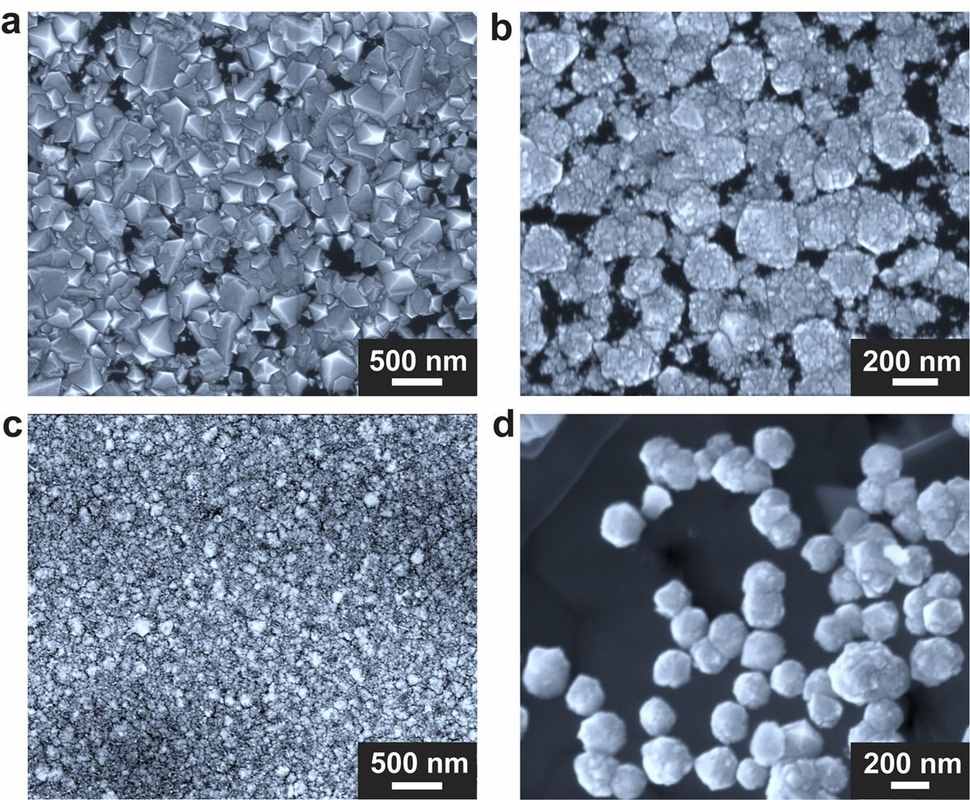
In South Korea, chemists have recently developed a method to grow artificial micro-diamonds in minutes instead of days.

Remarkably, this technique does not require high temperatures or intense pressure and creates diamonds “from scratch.” This breakthrough has the potential to revolutionize the diamond industry by providing an unlimited supply of micro-diamonds for polishing and cutting applications.

Typically, gemstones form under intense heat, pressure, natural catalysts, or a combination of these factors. Artificially manufacturing diamonds has traditionally required significant amounts of heat and pressure. However, Rodney Ruoff, a physical chemist at the Institute for Basic Science in South Korea, has found a way to eliminate these requirements.

Ruoff and his colleagues used only graphene, silicon, gallium, iron, and nickel—foregoing the need for gigapascals of pressure and temperatures as high as 2,700 degrees Fahrenheit (1,500 degrees Celsius).

Ruoff’s method began with gallium, which had previously been shown to catalyze the formation of graphene. Graphene is pure carbon, similar to a diamond, but with a straight and flat chemical structure, unlike diamond’s tetrahedral formation.

The most expensive component of the experiment was a home-built chamber designed by co-author Won Kyung Seong. This chamber housed the gallium-nickel-iron mixture in a graphene crucible and withstood the introduction of hot methane gas. When all these elements combined, along with a pinch of silicon, diamonds formed within 15 minutes at sea-level pressures inside the chamber.

The precise chemical details of the experiment’s success are still not fully understood, and it will likely be a few years before scientists can confirm whether Ruoff’s process can produce diamonds suitable for jewelry. The diamonds described in their study were thousands of times smaller than lab-grown diamonds typically used for jewelry.

However, the film of micro-diamonds could replace larger diamonds for purposes such as being crushed into powder. Diamond is used for many different cutting and grinding tools and is used from construction to cutting and polishing diamonds themselves.

World War II-Era Sub Found

The wreck of the USS Harder (SS-257), a U.S. Navy submarine known for sinking the most Japanese warships during World War II, has been found in the South China Sea off the coast of Luzon, Philippines, after being missing for 80 years.

The USS Harder, with the motto “Hit ’em HARDER,” was located at a depth of 914 meters (3,000 feet) and is relatively intact, according to the U.S. Navy’s History and Heritage Command (NHHC). “The vessel sits upright on her keel relatively intact except for the depth-charge damage aft of the conning tower,” the NHHC stated.

The submarine went missing on August 24, 1944, during its sixth and final patrol with 79 crew members onboard.

Tim Taylor, CEO of Tiburon Subsea and the Lost 52 Project, provided the data that led to the discovery. The Lost 52 Project focuses on finding and memorializing the 52 submarines lost during World War II and has found at least six others.

“Submarines by their very design can be a challenge to identify, but the excellent state of preservation and the quality of the data collected by Lost 52 allowed for NHHC to confirm the identity of the wreck as Harder,” the NHHC said.

‘STATE OF PRESERVATION’ A computer image of the sunken USS Harder. The World War II-era submarine was found at an unspecified location off the coast of Luzon, the US Navy’s History and Heritage Command (NHHC) said last week.

The wreck is protected under U.S. law and is considered a war grave. NHHC Director Samuel J. Cox, a retired U.S. Navy rear admiral, emphasized the importance of remembering the sacrifice of the Harder’s crew.

The Harder received the Presidential Unit Citation for its first five patrols and six battle stars for World War II service. Its fifth patrol was particularly successful, depleting the Japanese destroyer supply by sinking three and heavily damaging two others in four days. This led to Adm. Jisaburo Ozawa’s Mobile Fleet departing Tawi-Tawi ahead of schedule, affecting Japanese battle plans and contributing to their defeat in the ensuing battle.

The Philippines was a major battleground between the U.S. and Japan during World War II, and several shipwrecks are believed to be in the waters around the archipelago.

130-Year-Old Assumption Overturned

For over a century, scientists believed that charged particles, or ions, in seawater remained in relatively constant ratios across the ocean. However, a recent study by a group of researchers has debunked this long-standing assumption, raising concerns about the accuracy of previous seawater studies based on it.

Mario Lebrato, station manager and chief scientist at the Bazaruto Center for Scientific Studies in Mozambique, led the team that challenged this assumption about seawater ion proportions. Interestingly, the original aim of their study wasn’t to test this assumption. “Originally, we were trying to understand how plankton grew in different seawater conditions,” Lebrato said. His team collected seawater samples from various parts of the world to analyze plankton growth. Upon measuring the composition of a few samples, Lebrato noticed significant differences in ion proportions between seawater from different sources. “This really triggered the project,” he explained.

To further investigate, his team formed partnerships with international universities, governments, and environmental agencies over seven years. They knew it would be challenging to collect seawater samples worldwide without external assistance or substantial funding. “It’s almost impossible for anybody to organize over a hundred research cruises,” Lebrato said. These partnerships included organizations like the United States National Oceanic and Atmospheric Administration (NOAA) and Environment Canada, as well as small research cruises and individual scientists. Lebrato even received help from organizations that ventured into the Arctic Circle to retrieve seawater samples.

After seven years of research, Lebrato’s team concluded that the original assumption about ion proportions in seawater was incorrect. According to their findings, there were significant deviations in major seawater ion ratios between samples, especially in the open ocean. “Everybody knew it was expected to find deviations from the coast, deviations near the rivers, and deviations in the poles near the ice. But nobody was expecting significant deviations on the open ocean,” Lebrato said.

Scientist have relied on the idea of a consistent ion distribution in the ocean to calculate a multitude of factors, such as ocean temperature and acidity. It addition, it has a large effect on marine biology, affecting things like shell density and dissolution. What this means is that much of the research that has been used to determine potentially large problems like rising ocean temperatures and ocean acidification could have major flaws.