Stunning Photos from the $2 Billion Space Telescope


One of NASA’s premier space telescopes, the Chandra X-ray Observatory, might be headed for an early retirement due to significant budget reductions.

For the past 25 years, Chandra has orbited Earth, capturing the universe in X-ray wavelengths invisible to the naked eye. Its remarkable images have unveiled a universe abundant with black holes, provided concrete evidence of dark matter, and captured the luminosity of neutron stars colliding, which alters the fabric of space-time.

The observatory, which cost NASA approximately $2.2 billion to construct and launch, has proven its worth over the years. “For many years it was the most productive mission in NASA’s program if measured in publications per dollar spent,” stated Thomas Zurbuchen, former Associate Administrator of NASA’s Science Mission Directorate from 2016 to 2022, in an email to Business Insider.

However, NASA’s financial plans for 2025 have drastically cut Chandra’s funding from $68 million to $41 million. The budget is set to further decrease in the following years, stabilizing at $26.6 million annually until it drops sharply to $5.2 million in 2029.

According to Chandra’s operational team, the proposed budget will just cover the costs needed to decommission the telescope, signaling the end of its journey.

Despite it’s time coming to an end, we have gotten some truly amazing images from it. Many of Chandra’s images come from collaborating with the Hubble and James Webb space telescopes were the combined spectrum’s of the telescopes reveal the stunning universe around us.

Check out this article that has all the best photos to come out of this amazing piece of technology!

Your Coffee May be More than a Half Million Years Old

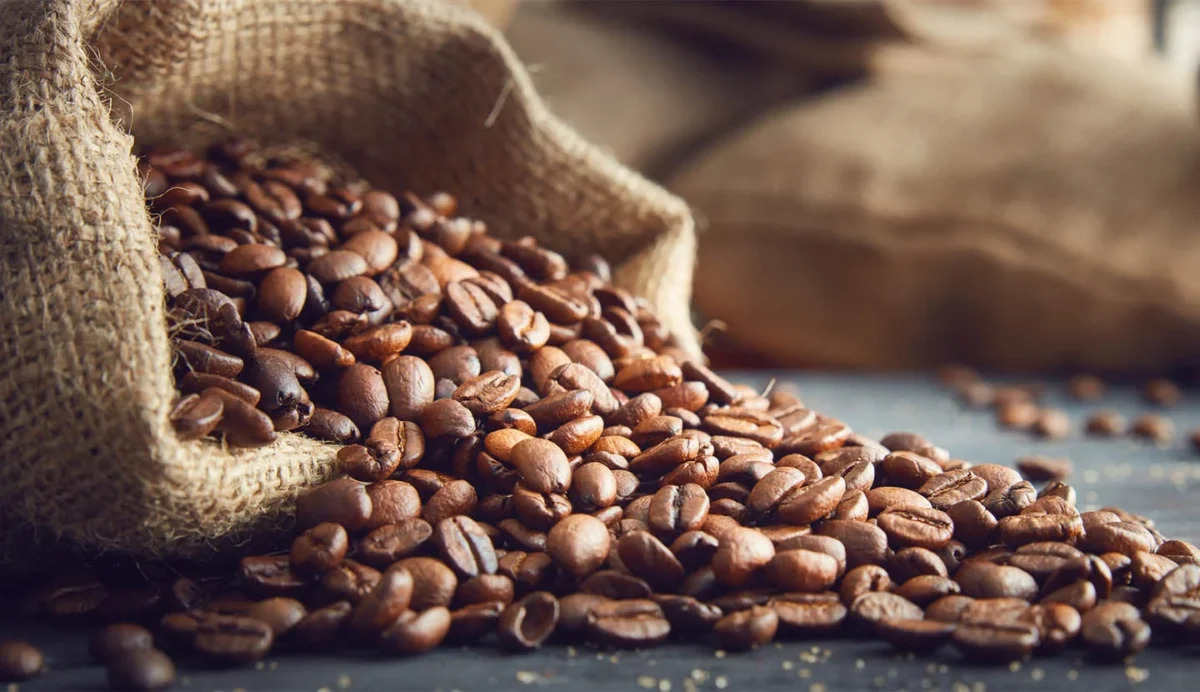
That morning cup of coffee you had? It’s been around for about 600,000 years. Researchers traced the ancestry of the world’s favorite coffee, Coffea arabica, back to its origins using genetic data from coffee plants worldwide.

Their goal was pragmatic: understanding the plant’s genetic history to bolster its resilience against pests and climate shifts. They discovered that Coffea arabica emerged naturally around 600,000 years ago, the result of crossbreeding between two other coffee species.

Before humans intervened, these wild coffee plants grew in Ethiopia and were first cultivated for brewing in Yemen during the 1400s. Legend has it that in the 1600s, an Indian monk named Baba Budan smuggled seven coffee beans from Yemen, kickstarting coffee’s global journey.
Arabica coffee, known for its smooth taste, dominates the global market, accounting for 60% – 70% of coffee consumed worldwide. The remaining portion is robusta, a more bitter coffee derived from one of arabica’s parent species.

To uncover arabica’s genetic past, researchers analyzed the genomes of its parent species, Coffea canephora and Coffea eugenioides, along with over 30 arabica plants, including a sample from the 1700s provided by the Natural History Museum in London.

Their findings, published in Nature Genetics, shed light on arabica’s evolutionary journey. They discovered that the plant’s population fluctuated over millennia, adapting to environmental changes. However, these fluctuations left arabica vulnerable to diseases like coffee leaf rust.

By identifying genetic markers associated with resistance to coffee leaf rust, researchers hope to develop strategies to protect arabica coffee from future threats. Fabian Echeverria, an adviser for the Center for Coffee Research and Education at Texas A&M University, highlights the study’s importance in safeguarding the future of coffee production.

Free Medicine

The soothing effect of touch is self-evident. A hug from a loved one can ease the nerves before a stressful event. A massage can unwind the tensions of a tough day. There are many more examples that we could go into.

Despite its significant impact on psychological health, touch has not been a primary focus of psychological research. Although numerous studies highlight the mental and physical benefits of touch, the diversity in methodologies and participant groups makes it challenging to consolidate these findings into general conclusions.

A New Meta-Analysis on Touch and Well-Being
In an effort to systematically compile and analyze existing research on touch and its effects on well-being, Julian Packheiser from the Social Neuroscience lab at Ruhr University Bochum, Germany, and his team undertook a meta-analysis (Packheiser et al., 2024). This type of study aggregates data from multiple sources to provide more reliable and robust results than individual smaller studies might offer.

The meta-analysis incorporated data from 137 studies and included a literature review of an additional 75 studies that could not be integrated numerically. With data from nearly 13,000 volunteers, the insights gained from this study are considerably substantial.

The Positive Impact of Touch on Health and Psychological Well-Being
The findings from Packheiser and his colleagues revealed several key benefits of touch:

For both newborns and adults, interventions involving touch markedly enhanced physical and mental health.

In newborns, practices such as kangaroo care not only regulated stress hormone levels but also improved temperature control, breathing, and even liver function.

In adults, touch-based interventions like hugs or massages significantly reduced symptoms of depression and anxiety and alleviated physical pain. These effects were notably stronger among patient groups than in healthy individuals. The study also explored the efficacy of robotic touch interventions, finding that while robot-performed massages could relieve physical pain, they were less effective at improving mental health compared to human touch.

Positive outcomes were reported both from touch by familiar individuals, like friends, and by professionals, such as licensed massage therapists.

These findings affirm the substantial benefits of touch for enhancing both physical and mental well-being. So next time you’re feeling down, consider the scientifically backed benefits of a simple hug—it just might lift your spirits.

I find it very interesting that they included robot studies. Though I am not at all surprised with the conclusion.

Endangered Greek Dialect: A Living Link to the Ancient World

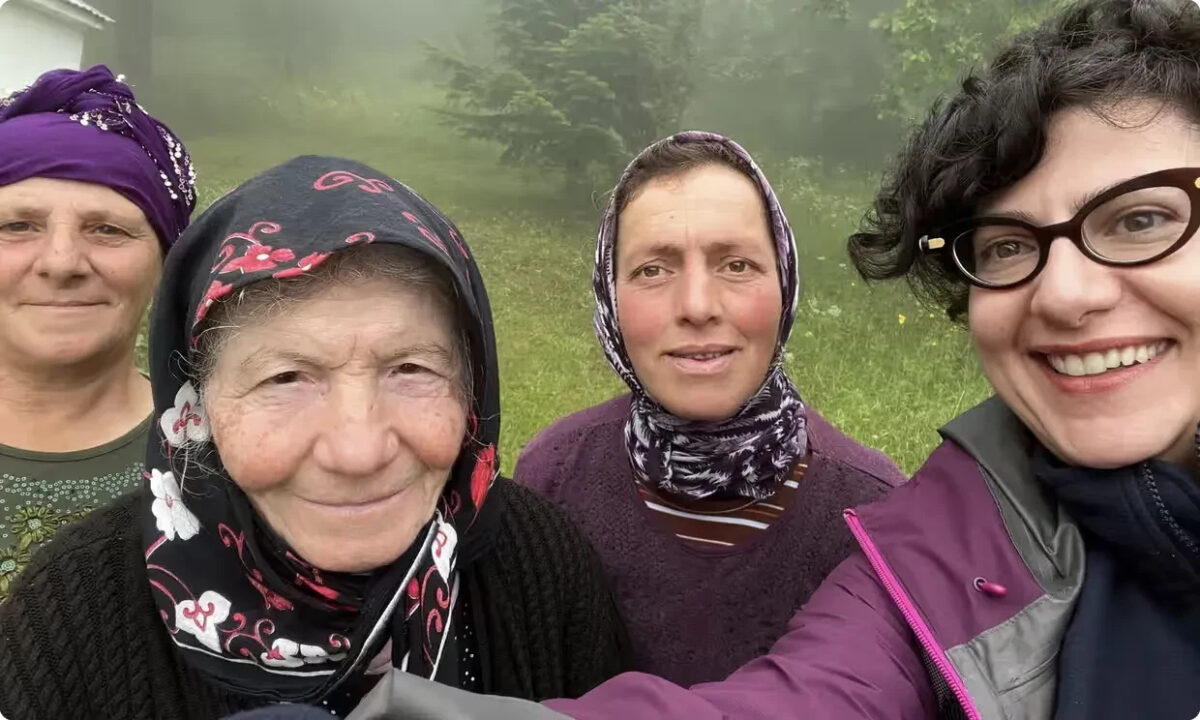
An ancient Greek dialect spoken by a dwindling population in remote Turkish mountain villages serves as a unique link to the past, according to researchers. This dialect, known as Romeyka, has characteristics more akin to the language of Homer than to modern Greek. However, with its speakers aging and no written form to preserve it, Romeyka faces the looming threat of extinction.

Quantifying the exact number of Romeyka speakers proves challenging due to its oral nature and the scattered communities around Trabzon. Recognizing the urgency, a University of Cambridge professor initiated the “Crowdsourcing Romeyka” project to document the language’s distinct linguistic traits before it disappears forever.

The project encourages native speakers worldwide to contribute recordings of themselves speaking Romeyka, with many anticipated contributors residing in the United States, Australia, and across Europe, forming a dispersed diaspora that still retains connections to their linguistic roots.

Research reveals that Romeyka traces its lineage not from modern Greek but from the Hellenistic form of Greek spoken centuries ago, sharing similarities with ancient Greek that have since vanished in other Greek varieties. This linguistic connection challenges the notion of modern Greek as an “isolate” language, suggesting a more complex linguistic evolution.

The online initiative aims to harness the power of technology to preserve Romeyka as a living language. Yet, the ultimate fate of Romeyka rests with its speakers, who must decide whether to pass it on to future generations.

The Cure to Blindness For Millions

Australian ophthalmologist and biotech entrepreneur Professor Gerard Sutton has a vision of the future where curing blindness worldwide could be achieved simply through cell replication and 3D printing technology.

Professor Sutton, co-founder of Bienco, explained that his company has developed both a physical and intellectual product that could soon revolutionize cornea transplants by enabling mass production of natural corneas. Cornea transplantation, a common method to restore sight, traditionally depends on donor availability and is technically complex. The cornea acts as the eye’s clear “windscreen,” and it being damaged or diseased is a significant portion of non-hereditary blindness around the world.

Reflecting on a poignant experience, Sutton recounted a 2004 trip to Myanmar aimed at alleviating blindness caused by the country’s civil war. He brought four donated corneas and arrived to find a thousand people waiting for treatment, having learned of his visit through local media. From this overwhelming crowd, he could only choose four individuals for transplants, prioritizing young patients. A similar overwhelming situation during a subsequent visit to Cambodia cemented his resolve to find an innovative solution.

Professor Damien Harkin from Queensland University of Technology, part of the Bienco team, highlighted the dire shortage of donor corneas, with one available for every seventy people needing a transplant. Bienco’s approach could extend one donor cornea to treat up to thirty individuals through lab cultivation.

Bienco’s synthetic corneas are crafted from collagen—a protein found in hair, skin, nails, and connective tissue—which typically forms opaque structures. The challenge was to engineer transparent collagen suitable for corneal transplants.

After successfully managing this, the team turned their focus on developing a way of layering this collagen to form a transplantable cornea structure

Sutton was able to secured AUD$35 million in funding from the Medical Research Future Fund, established by Australia’s treasurer, propelling Bienco towards its ambitious goal. Sutton is optimistic that within three to four years they will reach their goal.

You can find the full interview here. (listen or read)