Incredible Illusion Art

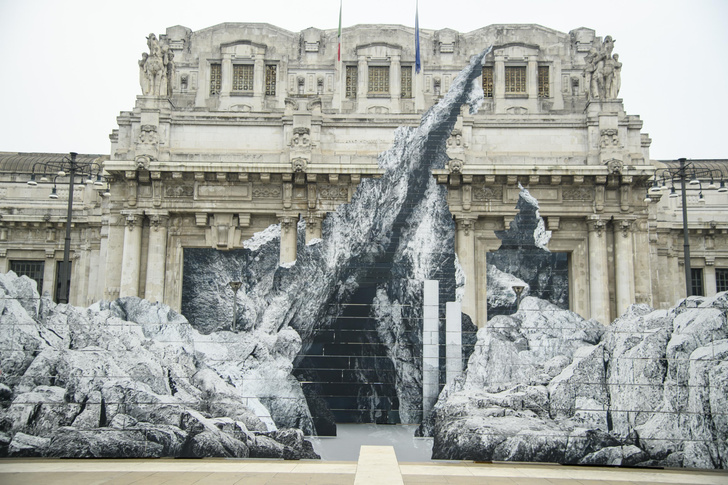
The renowned French street artist JR has recently unveiled his most intricate illusion to date, set against the bustling backdrop of Milan’s Stazione Centrale railway station.

Titled “La Nascita” (The Birth), the artwork transforms the station’s adjacent square, Piazza Duca D’Aosta, into a dramatic Alpine landscape using black-and-white imagery to create a layered visual effect. The installation not only serves as a historical nod but also acts as a social catalyst in one of the city’s most frequented and crime-prone areas.

During a launch event, JR expressed to The Art Newspaper that his work is designed to foster unexpected social interactions in places burdened with societal challenges. “In a place like this, a huge range of people come to catch the train. When they find themselves in front of an exhibition, they will suddenly have a different kind of interaction.” JR explained.

This piece, coinciding with Milan Design Week and viewable until May 1, harkens back to the era of grand rail travel initiated in the early 20th century. King Vittorio Emmanuele III laid the stations foundational stone in 1906 following the completion of the trans-Alpine Simplon tunnel.

Commissioned by Stazione Centrale, JR’s work mirrors the rugged mountains carved out for the tunnel. Paper images are pasted onto vertical slats, creating a multi-layered effect with the station’s imposing architecture in the background. “It is the first time I do something like this with many layers,” he noted. “The building is pretty intimidating; it took me a while to work out how to engage with that station.”

Nanogenerator Turns Greenhouse Gas Into Electricity

University of Queensland researchers made a notable breakthrough by accidentally discovering a method to convert the most prevalent greenhouse gas into electricity.

Using a combination of positive and negative ions of different sizes, the team successfully generated electricity from CO2.

Despite its negative reputation, it’s worth noting that carbon dioxide comprises two oxygen molecules and one carbon molecule, which are essential components of the universe and play crucial roles in various human processes and applications.

Dr. Zhuyuan Wang, a research officer at the University of Queensland’s Dow Center for Sustainable Engineering Innovation, had been working on a nanogenerator powered by ion transport for three years. One day, during experiments, he observed that the device was utilizing CO2 from the laboratory air to produce electricity.

After confirming the phenomenon, Dr. Wang envisioned the technology’s potential to transform energy production. He proposed the concept of developing portable devices capable of harnessing CO2 from the atmosphere to power everyday electronics like mobile phones or laptops.

To verify that CO2 was indeed driving the nanogenerator, Wang and his team conducted controlled experiments, sealing the device in a box and introducing CO2 into the environment. Although the devices were initially small, measuring just 4×6 centimeters, the team speculated that scaling up the technology could provide significant power supplies for office electronics.

Dr. Wang’s colleague, Xiwang Zhang, expressed their commitment to further refining the technology through the Australian Research Council’s Centre of Excellence for Green Electrochemical Transformation of Carbon Dioxide.

Ancient City— Uncovered, Rewrites History

A significant discovery was made in Tonga, revealing evidence of an ancient city through advanced laser technology. Nearly 10,000 mounds were discovered, suggesting the existence of one of the earliest Pacific cities, though they are barely visible today.

Aerial laser surveys also indicated that South and Central America could have supported large urban centers, with populations surpassing previous estimations.

Despite Tonga’s tropical setting, this ancient city lies just 12 kilometers from the capital, Nuku’alofa, challenging previous beliefs about early settlement patterns. This discovery, dating back to around AD 300, signifies significant social and economic changes as the population grew.

These findings also challenge traditional views of urbanism in the Southern Hemisphere during the European Middle Ages, suggesting that Tonga may represent a different model of ancient city development. It raises the possibility of uncovering similar cities across the Pacific.

Mound construction, typical of traditional urbanism in the Americas, is also evident in Tonga. In areas lacking stone resources, people used dirt to build mounds. However, the exact purpose of each mound remains uncertain.

New Irradiation Treatment Makes Broken Bones Grow Back 3x Stronger

A groundbreaking method for treating broken bones could significantly reduce healing time and make the bones more than three times stronger, according to a team of Japanese scientists.

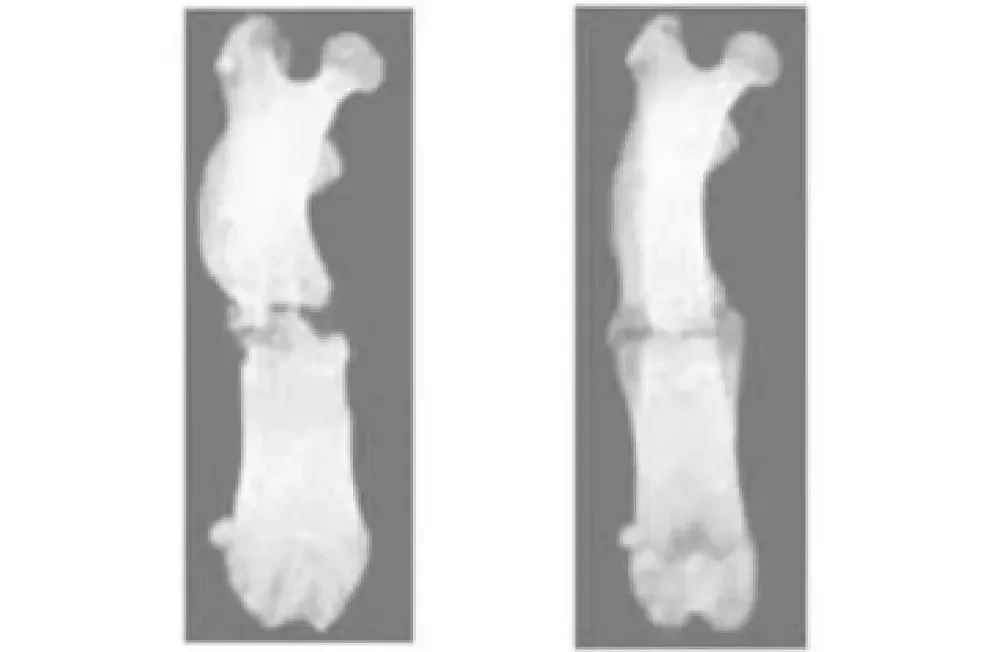
The innovative approach involves using plasma irradiation to accelerate the healing process in complex fractures. Researchers at Osaka Metropolitan University in Japan have successfully demonstrated this technique in laboratory rats.

Their findings revealed that bones treated with plasma irradiation not only healed faster but were also approximately 3.5 times stronger than those that did not receive the treatment.

Currently, complex or displaced fractures often require surgical intervention and can lead to prolonged periods of immobilization for patients. The research team’s goal is to reduce recovery times and enhance bone healing using non-thermal atmospheric-pressure plasma, which is gaining significant interest in the medical field for its tissue repair capabilities.

While the plasma treatment did not show significant benefits for the normal fracture group, it substantially improved healing and recovery times for the non-union fracture group, which are much more serious. The strength of the bone in the irradiated non-union group was found to be about 3.5 times that of the non-irradiated group, as reported in the journal PLoS One.

Further in vitro studies showed that irradiating cells with plasma for five to 15 seconds increased the activity of a protein involved in osteoblast differentiation, suggesting enhanced maturation of bone-forming cells.

This is a very exciting development for treating severe bone breaks. I hope they keep researching this verify and perfect its application.

Music Streaming for Conservation

A collaboration between major music streaming platforms and the United Nations has devised a plan to direct funds towards conservation efforts.

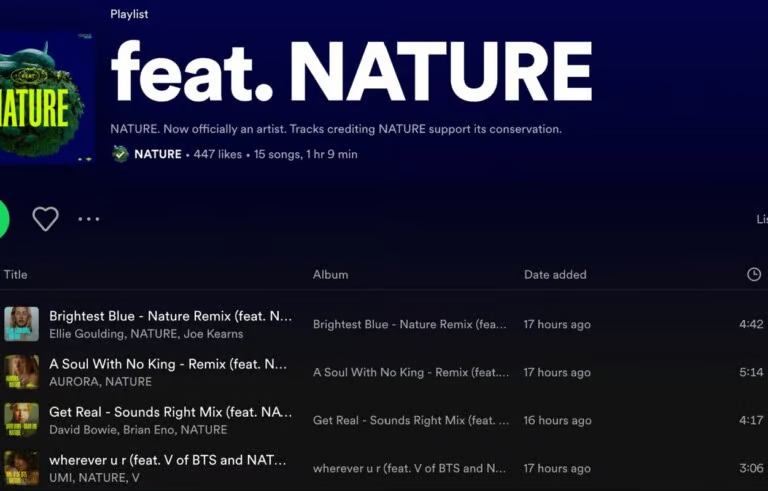
Named “Sounds Right,” this initiative allows artists using stock recordings of animals or weather in their music to credit them as ‘feat. Nature’ on platforms like Spotify and Apple Music. The royalties generated from these songs will then support various conservation, restoration, and pollution control projects.

Nature sounds have long been integrated into music, from Paul McCartney’s blackbirds to Enya’s thunderstorms. Even pop artists like Missy Elliot have incorporated them into their work. Brian Eno, renowned for his work with artists like David Bowie and Coldplay, is spearheading this initiative under the Museum of the United Nations.

The initiative has already gained support from artists like Bowie, London Grammar, and Ellie Goulding, with the aim of raising $40 million from 600 million streams. The funds will be allocated to conservation projects in critical ecosystems like Madagascar, Borneo, and the Andes Mountains, identified by a group of experts.