Type 2 Diabetes Cured by Stem Cells


Stem cells are increasingly being used in a variety of medical treatments, but a recent breakthrough from Shanghai suggests the best is yet to come.

A senior who had suffered from type-2 diabetes for 25 years hasn’t taken insulin for 33 months after receiving a regenerative islet cell transplantation.

Type-2 diabetes, often developed due to poor diet and lifestyle choices, is one of the most prevalent non-communicable diseases globally. China is particularly affected, with 140 million people suffering from diabetes-related complications such as kidney problems, blindness, amputation, and cardiovascular issues.

However, this new breakthrough, the result of 10 years of research and testing, might revolutionize the treatment of diabetes.

Yin Hao, a leading researcher and director of Shanghai Changzheng Hospital’s Organ Transplant Center, explained that they took the patient’s own peripheral blood mononuclear cells and reprogrammed them into pluripotent stem cells, which were then injected into the pancreas.

“Our technology has matured and it has pushed boundaries in the field of regenerative medicine for the treatment of diabetes,” Yin told China Daily. His team conducted the research with scientists from the Center for Molecular Cell Science at the Chinese Academy of Sciences.

Current transplant treatments for type-2 diabetes are limited by a shortage of donor cells and the complexity of pancreatic islet cell isolation technology. Pancreatic islet cells are the main insulin producers in the body, and the patient’s cells were almost completely inhibited. He relied on multiple daily insulin injections and had also undergone a kidney transplant.

After receiving the manufactured stem cells in 2021, he gradually stopped needing external insulin over 11 weeks, and his diabetes seemed largely cured.

“Follow-up examinations showed that the patient’s pancreatic islet function was effectively restored, and his renal function was within normal range,” Yin said. “Such results suggested that the treatment can avoid the progression of diabetic complications.”

The study was published in Cell Discovery on April 30th. Future research, the authors wrote, should explore pharmacological options that could provide off-the-shelf equivalents for islet transplantation.
Deep Sea Squid with ‘Headlights’

Australian marine biologists recently captured video footage of a large deep-sea squid attacking their camera over 3,000 feet below the ocean’s surface.

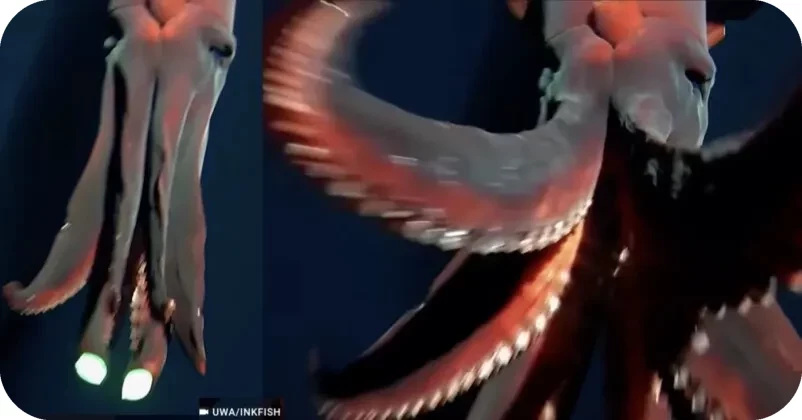
The deep-sea hooked squid, one of the largest species in its habitat, drew attention not for its size but for the glowing lights at the end of its tentacles.

A team from the University of Western Australia’s Deep Sea Research Center deployed baited, free-falling cameras to record deep-sea life.

Chief scientist Heather Stewart, working in the Samoan Passage, dropped the camera to a depth of 5 kilometers before retrieving it.

“We realized we had captured something very rare,” Stewart said, as they reviewed the footage.

They identified the squid as a Taningia danae, known for having the largest bioluminescent organs (photophores) of any known animal. These photophores are part of the squid’s hunting strategy, used to disorient prey with bright flashes of light.

“The squid, about 75 cm long, attacked our camera, mistaking it for prey, and tried to startle it with its bioluminescent lights,” Stewart added.

Professor Alan Jamieson, director of the Minderoo-UWA Deep Sea Research Center, noted the difficulty of observing deep-sea squid in their natural habitat.

“Most records of this species come from strandings, accidental bycatch, or the stomach contents of whales,” Jamieson said.

“Live observations of these squids are rare, making each encounter valuable for understanding their location, depth, and behavior. We had to share this unique sighting.”

$3 Michelin Star Taco

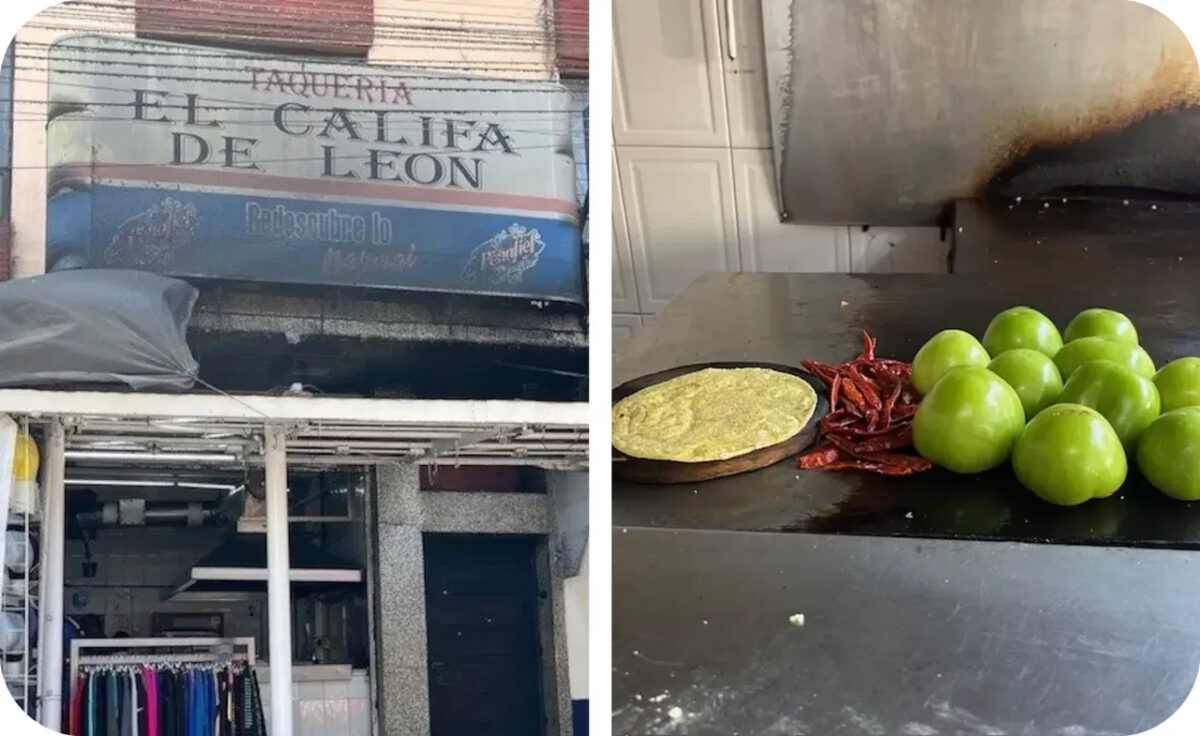
The Michelin Guide, known for awarding stars to top restaurants, has recognized a 100-square-foot taco stand in Mexico with its first-ever star. This stand, Taquería El Califa de León, is located in Mexico City’s San Rafael neighborhood and offers only four menu items with no seating available.

Taquería El Califa de León is the first taco stand in Mexico to receive a Michelin star, highlighted in Michelin’s first guide to Mexico published last week. Chef Arturo Rivera Martínez has been operating from the same stand on Avenida Ribera de San Cosme since 1968, cooking tacos on a 680-degree grill.

The preparation is simple: for the signature taco, Rivera Martínez grills a thin slice of beef with salt and lime juice, cooks a fresh tortilla, and serves them together on a plastic plate. Customers then add their choice of red or green sauce. The tacos, which include beef steak, beef rib, and pork chops, cost between 53 and 82 pesos ($3 to $5).

“The secret is the simplicity of our taco,” Rivera Martínez told the AP. “It has only a tortilla, red or green sauce and that’s it. That, and the quality of the meat.”

Michelin’s inspectors praised the stand’s food, noting, “there is a reason why El Califa de León has endured for more than half a century.”

José Luis Rodríguez Ávila, the stand’s manager, says the best way to eat their tacos is “standing up, elbow to elbow with other people and with a can of soda in hand.”

In its new guide, Michelin awarded two restaurants in Mexico two stars, 16 restaurants one star, and six “green” stars for sustainability. It also named 42 “Bib Gourmands” for affordable dining.

Michelin, originally a tire company founded in 1889, started its guide in 1900 to encourage driving. It began awarding stars in 1926 and continues to send anonymous inspectors to review restaurants. Earning a Michelin star is a significant achievement, comparable to winning an Olympic gold medal, according to chef Maxime Meilleur of La Bouitte in France.

2,200-Year-old Tomb Discovered

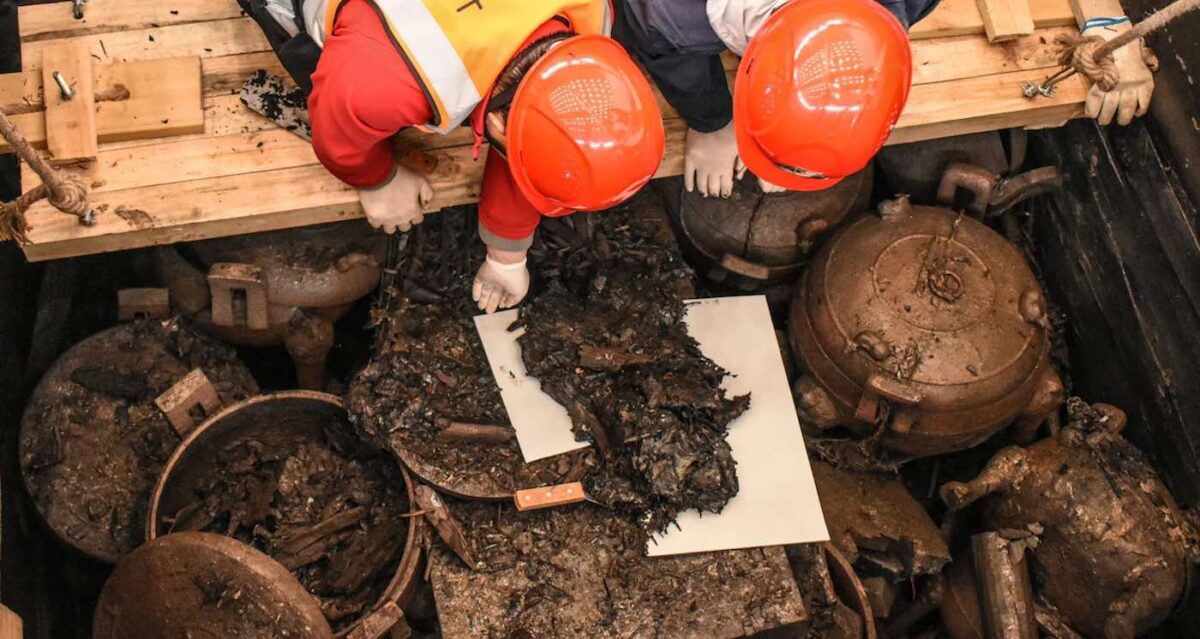
Chinese archaeologists have completed the initial phase of excavations on a royal tomb believed to originate from the state of Chu, dating back 2,200 years. Chu, a significant kingdom in early Chinese history, once dominated the birthplace of Confucius through conquest and annexation.

Situated in Anhui province, the tomb’s exploration commenced in 2019 due to reports of frequent looting attempts. The findings have revealed it as the most intricate funerary structure of its era ever uncovered in China.

Among the unearthed artifacts—over 3,000 in total—are lacquered wood items, bronze vessels, figurines, chariot and horse pits, and sacrificial remains. A woven bamboo mat provided crucial data for radiocarbon analysis, confirming the tomb’s age.

Gong Xicheng, deputy director of the Anhui Provincial Institute of Cultural Relics and Archaeology, noted that the excavation has progressed to the coffin chamber’s interior, raising hopes of uncovering the tomb owner’s identity and resolving the mystery.

Based on historical records, King Kaolie, who reigned from 262 to 238 BCE, is a leading candidate for the tomb’s occupant. Kaolie’s relocation of the Chu capital to Shouxian County aligns with the tomb’s discovery in the same region. Moreover, other Chu kings ruling from Shouxian likely faced circumstances precluding such a grand burial.

Chu’s emergence followed the disintegration of the Zhou Dynasty, a pivotal period in Chinese history marked by the genesis of foundational texts like the I Ching and the early development of Confucianism.

The Universe’s Oldest Star

The James Webb Space Telescope is designed to detect stars from the universe’s earliest periods, just a few million years after the Big Bang.

However, a team of MIT students has found that some of these ancient stars might be much closer, only thousands of light-years away instead of billions.

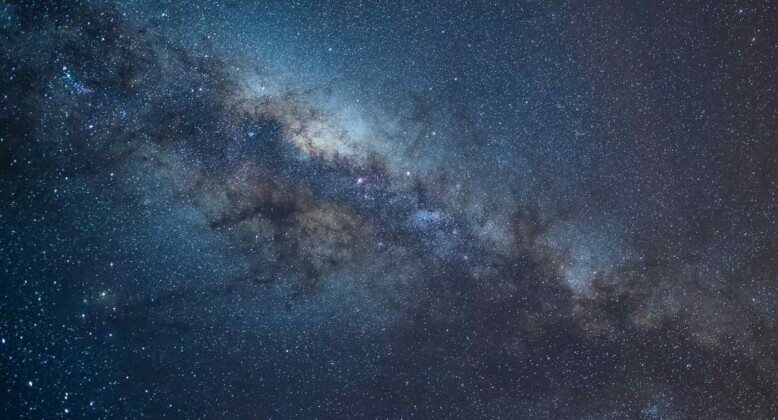
They identified about 65 stars formed 13 billion years ago in the Milky Way’s halo, a discovery that could significantly impact our understanding of the early universe. This research began when MIT physics professor Anna Frebel started a project called Observational Stellar Archaeology, where students analyzed data from the Magellan-Clay telescope at the Las Campanas Observatory.

The Big Bang occurred 13.8 billion years ago, and the first stars, mostly composed of helium and hydrogen with trace amounts of strontium and barium, formed shortly after. Frebel and her students focused on these elements in their data review.

They found 10 stars with low levels of strontium, barium, and iron, similar to ancient stars and dwarf galaxies observed in the distant universe. These stars have about 1/10,000th of the elements found in our Sun.

To support their theory that the Milky Way contains remnants of ancient dwarf galaxies, Frebel and her students examined the orbital data of these stars. They found that the stars moved in retrograde, orbiting in the opposite direction of the Milky Way’s galactic disk and halo. Frebel explained, “The only way you can have stars going the wrong way is if you threw them in the wrong way.”

They also noticed these stars were moving quickly, at hundreds of kilometers per second. Frebel and her team call these stars Small Accreted Stellar System stars, or SASS stars, theorizing they are the remnants of ancient dwarf galaxies absorbed by the Milky Way.

Frebel and her students have developed a straightforward method to identify these stars, providing astronomers with a new way to study the early universe by observing stars closer to Earth. “These oldest stars should definitely be there, given what we know of galaxy formation,” Frebel said. “They are part of our cosmic family tree. And we now have a new way to find them.”