World War II-Era Sub Found

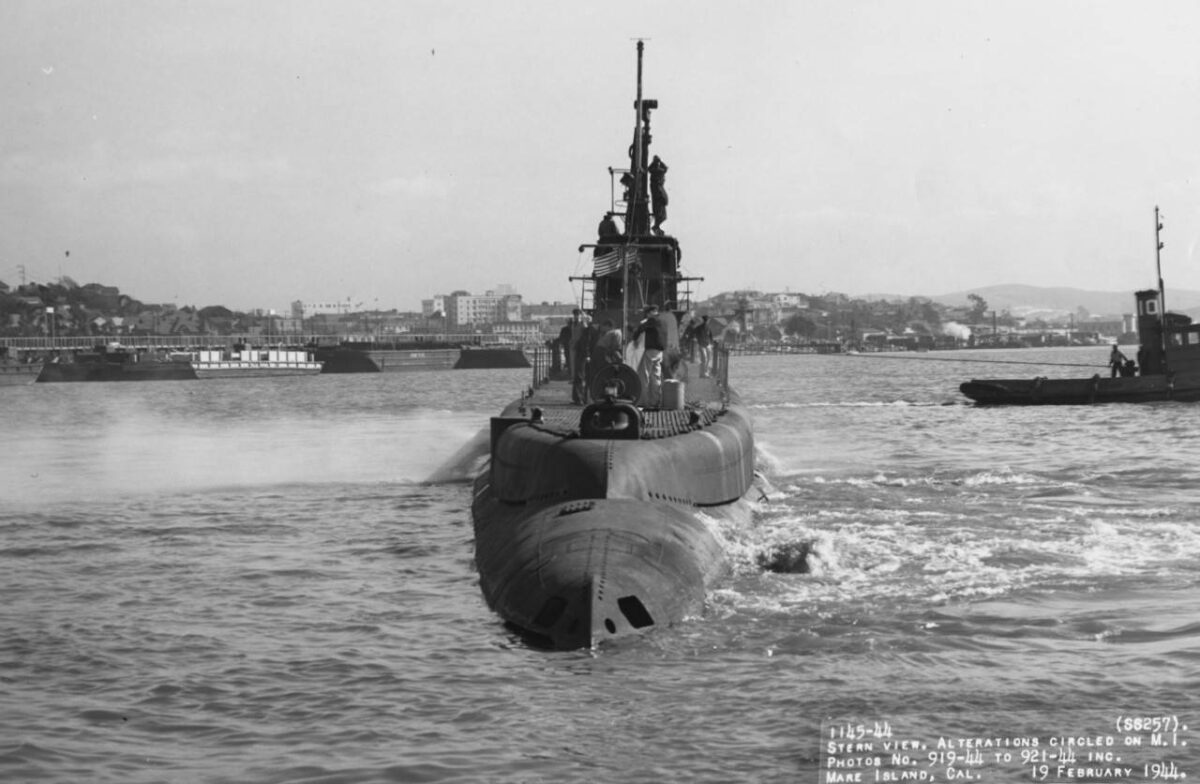
The wreck of the USS Harder (SS-257), a U.S. Navy submarine known for sinking the most Japanese warships during World War II, has been found in the South China Sea off the coast of Luzon, Philippines, after being missing for 80 years.

The USS Harder, with the motto “Hit ’em HARDER,” was located at a depth of 914 meters (3,000 feet) and is relatively intact, according to the U.S. Navy’s History and Heritage Command (NHHC). “The vessel sits upright on her keel relatively intact except for the depth-charge damage aft of the conning tower,” the NHHC stated.

The submarine went missing on August 24, 1944, during its sixth and final patrol with 79 crew members onboard.

Tim Taylor, CEO of Tiburon Subsea and the Lost 52 Project, provided the data that led to the discovery. The Lost 52 Project focuses on finding and memorializing the 52 submarines lost during World War II and has found at least six others.

“Submarines by their very design can be a challenge to identify, but the excellent state of preservation and the quality of the data collected by Lost 52 allowed for NHHC to confirm the identity of the wreck as Harder,” the NHHC said.
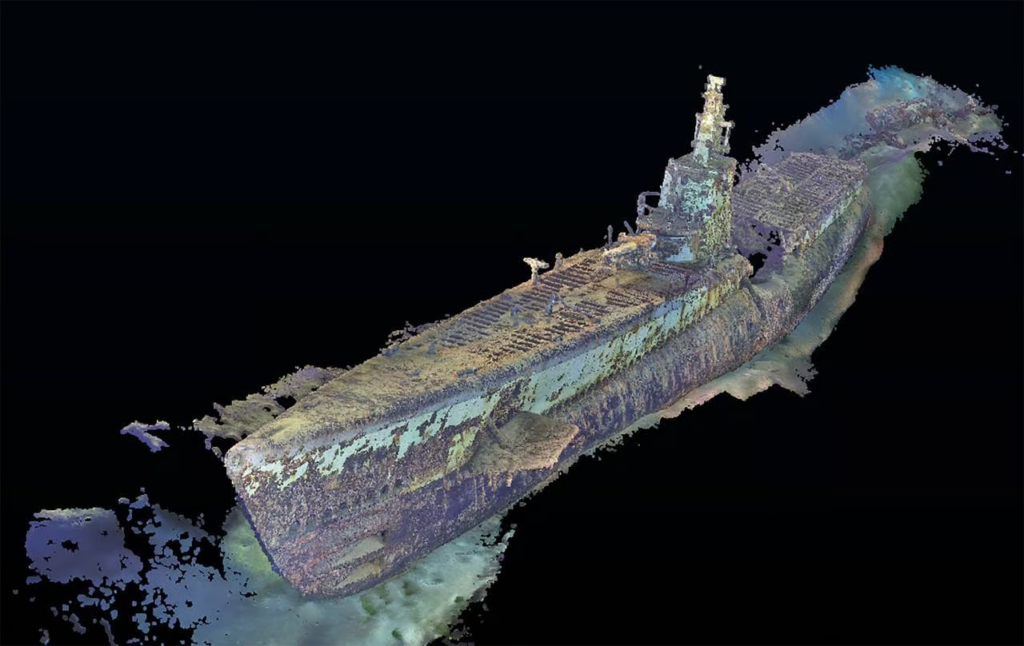
‘STATE OF PRESERVATION’ A computer image of the sunken USS Harder. The World War II-era submarine was found at an unspecified location off the coast of Luzon, the US Navy’s History and Heritage Command (NHHC) said last week.

The wreck is protected under U.S. law and is considered a war grave. NHHC Director Samuel J. Cox, a retired U.S. Navy rear admiral, emphasized the importance of remembering the sacrifice of the Harder’s crew.

The Harder received the Presidential Unit Citation for its first five patrols and six battle stars for World War II service. Its fifth patrol was particularly successful, depleting the Japanese destroyer supply by sinking three and heavily damaging two others in four days. This led to Adm. Jisaburo Ozawa’s Mobile Fleet departing Tawi-Tawi ahead of schedule, affecting Japanese battle plans and contributing to their defeat in the ensuing battle.

The Philippines was a major battleground between the U.S. and Japan during World War II, and several shipwrecks are believed to be in the waters around the archipelago.
130-Year-Old Assumption Overturned

For over a century, scientists believed that charged particles, or ions, in seawater remained in relatively constant ratios across the ocean. However, a recent study by a group of researchers has debunked this long-standing assumption, raising concerns about the accuracy of previous seawater studies based on it.

Mario Lebrato, station manager and chief scientist at the Bazaruto Center for Scientific Studies in Mozambique, led the team that challenged this assumption about seawater ion proportions. Interestingly, the original aim of their study wasn’t to test this assumption. “Originally, we were trying to understand how plankton grew in different seawater conditions,” Lebrato said. His team collected seawater samples from various parts of the world to analyze plankton growth. Upon measuring the composition of a few samples, Lebrato noticed significant differences in ion proportions between seawater from different sources. “This really triggered the project,” he explained.

To further investigate, his team formed partnerships with international universities, governments, and environmental agencies over seven years. They knew it would be challenging to collect seawater samples worldwide without external assistance or substantial funding. “It’s almost impossible for anybody to organize over a hundred research cruises,” Lebrato said. These partnerships included organizations like the United States National Oceanic and Atmospheric Administration (NOAA) and Environment Canada, as well as small research cruises and individual scientists. Lebrato even received help from organizations that ventured into the Arctic Circle to retrieve seawater samples.

After seven years of research, Lebrato’s team concluded that the original assumption about ion proportions in seawater was incorrect. According to their findings, there were significant deviations in major seawater ion ratios between samples, especially in the open ocean. “Everybody knew it was expected to find deviations from the coast, deviations near the rivers, and deviations in the poles near the ice. But nobody was expecting significant deviations on the open ocean,” Lebrato said.

Scientist have relied on the idea of a consistent ion distribution in the ocean to calculate a multitude of factors, such as ocean temperature and acidity. It addition, it has a large effect on marine biology, affecting things like shell density and dissolution. What this means is that much of the research that has been used to determine potentially large problems like rising ocean temperatures and ocean acidification could have major flaws.

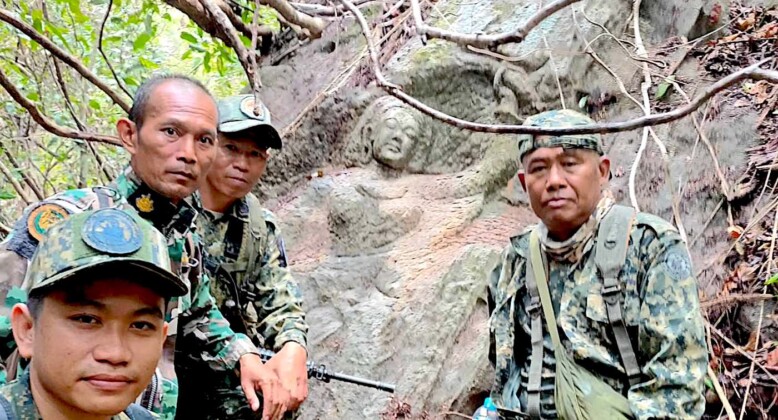
Mysterious Stone Sculpture Found

Three Thai villagers discovered a detailed boulder carving of a woman while searching for mushrooms.

“Found this while mushroom hunting,” wrote Pramul Kongkratok, one of the villagers, on social media. “I’ve lived here for so long but just learned we have this around here. It’s a blessing.”

Kongkratok reported the find to the Department of National Parks, Wildlife, and Plant Conservation, which contacted art and antiquities experts to determine the carving’s age.

Some suggest the carving dates back to the 6th century, possibly linked to the Dvaravati kingdom, located in modern-day Thailand near Cambodia. However, the carving style differs from known Dvaravati reliefs.

Another theory proposes that the carving represents Maya Devi, the mother of Lord Buddha, as the figure holds a branch of the Bodhi tree, under which Prince Siddharta Gautama attained Enlightenment. Despite this, depictions of Maya Devi are rare and usually show her lying down, leading to skepticism about this theory.

Artists during the golden age of Buddhist kingdoms in South Asia typically adhered to consistent carving styles, unlike this discovery. Additionally, a Thai Buddhist monastery with artistically inclined monks is located less than a mile from the site in Dong Yai Wildlife Sanctuary.

Regardless of its origin, the carving is a remarkable find and a reminder of the world’s hidden wonders.

Falling Into a Black Hole

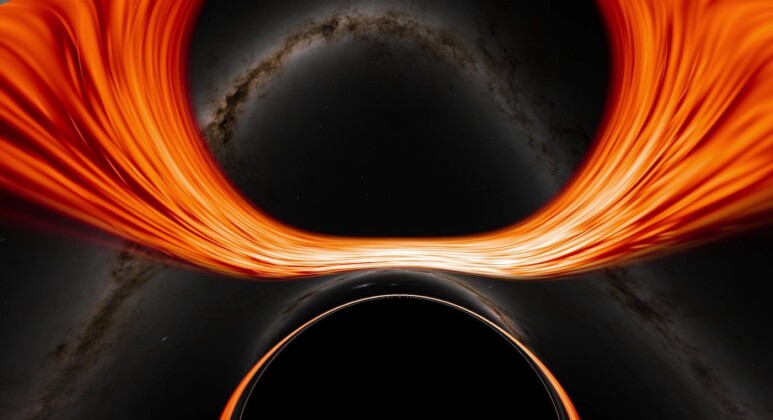
Using a supercomputer and the expertise of skilled scientists, NASA has created a video illustration showing what it might be like to float into a black hole if you were somehow invincible.

Within the event horizon of a black hole, the laws of general relativity break down, making it incredibly challenging to predict what would happen to an object. However, recent observations have provided insight into how light behaves near a black hole.

Several versions of the same simulation are explained in a 4-minute video released by NASA, providing visual aids for some extremely complex physics concepts.

“People often ask about [what it would be like to fall into a black hole] and simulating these difficult-to-imagine processes helps me connect the mathematics of relativity to actual consequences in the real universe,” said Jeremy Schnittman, an astrophysicist at NASA’s Goddard Space Flight Center in Greenbelt, Maryland, who created the visualizations. “So I simulated two different scenarios, one where a camera—a stand-in for a daring astronaut—just misses the event horizon and slingshots back out, and one where it crosses the boundary, sealing its fate.”

The video is more than just a visual treat; every feature corresponds with precise calculations that could have been published to great acclaim. The simulation targets a supermassive black hole like the one at the center of our galaxy. The camera was set 400 million miles from the 25 million mile-wide black hole. As it approaches, the hot disk of dust and gas swirling around the black hole, called an accretion disk, begins to elongate and brighten.

The project generated about 10 terabytes of data—equivalent to roughly half of the estimated text content in the Library of Congress—and took about five days, a task that would have taken a normal computer a decade.

Man Saves Forest

An Indian environmental activist has won the prestigious ‘Green Nobel’ for saving a 657 square-mile forest from 21 coal mines.

India faces frequent blackouts, affecting everyone from city residents to rural communities. The Modi government’s push for development and economic dominance has led to massive increases in power generation, including both solar and coal energy. India is a major coal consumer, and the Hasdeo Aranya forests, known as the “Lungs of Chhattisgarh,” are rich in coal deposits.

The state government was considering 21 coal mining projects across 445,000 acres of biodiverse forests that are crucial to 15,000 indigenous Adivasi people and numerous wildlife species, including tigers, elephants, and leopards. These forests, one of India’s largest intact habitats, faced destruction from 5.6 billion metric tons of mineable coal.

Alok Shukla, founder of the Save Hasdeo Aranya Resistance Committee, has spent a decade fighting to protect Hasdeo. His efforts included media campaigns, protests, and direct appeals to the legislature, emphasizing constitutional protections for tribal people and their environments.

Shukla proposed the creation of the Lemru elephant reserve within Hasdeo to protect migration corridors and cancel three mining proposals. This sparked a 160-mile protest march towards Raipur, the state capital. Midway through their march, they learned that the state legislature had unanimously agreed to protect the forest and cancel all mining proposals and existing licenses.

“We had no expectations, but the legislative assembly voted unanimously that all of the coal mines of Hasdeo should be canceled, and the forest should be saved,” Shukla recalled to the Goldman Prize media channel. “That was a very important and happy moment for all of us.”

Shukla shares the 2024 Goldman Environmental Prize with five other winners from Brazil, the US, South Africa, Australia, and Spain.