Dying Marine’s Last Wish Fulfilled


When a dying veteran’s last wish was to receive a high school diploma, a superintendent and an American Legion Outpost commander made it happen.

Their efforts ensured that Richard Remp, a marine who sacrificed his education to fight in WWII, Korea, and Vietnam, was awarded an honorary diploma. Remp, originally from Sharon, PA, and living in Poolesville, MD, had seen another elderly marine receive a diploma and wished for the same honor.

Superintendent Justi Glaros of the Sharon School District and James Cappuccilli, vice commander of Legion Post 247, teamed up to fulfill this wish. Although Remp attended a neighboring high school, Glaros obtained approval from her school board to print a diploma from their high school.

With Remp’s health rapidly declining due to stage 4 prostate cancer, Glaros drove four-and-a-half hours to personally deliver the diploma in a graduation ceremony at his home.

“The last thing he remembers is receiving the diploma,” said American Legion Post 247 Commander Julian Singh. Remp passed away on May 19th at the age of 98, having received a combat commendation ‘V’ for valor for his bravery in helping fellow Marines evacuate safely from enemy territory.


Clooney and Pitt Reunite in Action-Packed ‘Wolfs’ Trailer

George Clooney and Brad Pitt team up in the upcoming movie “Wolfs,” where they are hired as fixers for the same job. The Apple Studios film also features Amy Ryan, Austin Abrams, and Poorna Jagannathan.

This film marks their reunion after working together in “Burn After Reading” (2008) and the “Ocean’s Eleven” series.

Directed by Jon Watts, “Wolfs” is set for release in September.

Astronomers Fight Back

Recently we did an article on the Stunning Photos from the $2 Billion Space Telescope. In it we mentioned that the space telescope, one NASA’s Great Observatories, may soon face an untimely end.

The Chandra X-Ray Observatory, an orbiting telescope launched in 1999 aboard Space Shuttle Columbia, is under financial threat in NASA’s latest budget proposal. Significant cuts to its funding could lead to layoffs for half of its staff by October and potentially end the mission prematurely around 2026. Astronomers fear that losing this vital telescope could set back high-energy cosmic studies by decades. In response, astronomers are grouping together in an effort to save the incredible telescope.

In an open letter, a group of astronomers asserted that Chandra “is capable of many more years of operation and scientific discovery” and that reducing the budget of this flagship X-ray mission would severely impact both U.S. high-energy astrophysics research and the broader astronomy community.

Samantha Wong, an astronomer at McGill University, emphasized the importance of maintaining such observatories: “It’s a huge monetary and environmental toll to put an observatory up in space, so I think it’s really important to value that and to not treat these instruments as disposable,”. Wong continued, “People outside of astronomy contribute to the cost of these instruments (both literally and in terms of environmental and satellite pollution), so it’s in everyone’s best interest that we use Chandra to the full extent it’s capable of.”

Launched in the 90s along with the Hubble Space Telescope, the Spitzer Space Telescope (decommissioned in 2020), and the Compton Gamma Ray Observatory (which ended in 2000), Chandra was initially intended to operate for five years. However, its outstanding performance has made it a cornerstone of astronomy research for the past 25 years. Despite the natural degradation over time, Chandra continues to produce excellent scientific results. A recent NASA senior review deemed it “the most powerful X-ray facility in orbit,” with the potential to operate for another decade if the ground team can continue their work.

100 ‘Extraordinary Days’ in a Year

According to a new survey, a third of your month is bound to be ‘extraordinary.’

The survey of 2,000 Americans revealed that the average person experiences 10 extraordinary days each month, totaling 120 remarkable days every year. Those residing in Hawaii, Idaho, or South Dakota enjoy even more, with an average of 13 extraordinary days per month.

The concept of a joyful lifestyle is subjective, but there are some common themes. Majorities agreed that the following factors contribute to a joyful life:

What Defines a Joyful Life?

Feeling happy (77%)

Being healthy (71%)

Having positive personal and family relationships (69%)

Feeling comfortable (69%)

The survey, commissioned by Santa Margherita and conducted by Talker Research, aimed to determine how frequently Americans treat themselves and what occasions warrant indulgence.

The findings showed that half of the respondents believe “any day is a good day” to treat themselves. They enjoy spending their most joyful days with family and friends (62%), and 76% prefer sharing their joyful feelings with others whenever possible.

People like to treat themselves during their birthday (66%), while on vacation (59%), and when having a good day (48%).

Sixty-one percent consider a nice meal to be the perfect treat for an extraordinary day, especially when accompanied by a nice beverage.

Moreover, 71% believe that indulgences are best shared with others, particularly their significant others (75%), family members (72%), and close friends (65%).

Over three-quarters (78%) enjoy hosting family and friends for dinners at home, and 80% believe that pairing food and wine enhances the dining experience, making the meal feel more special.

Scientists Grow Micro-Diamonds in 15 Minutes

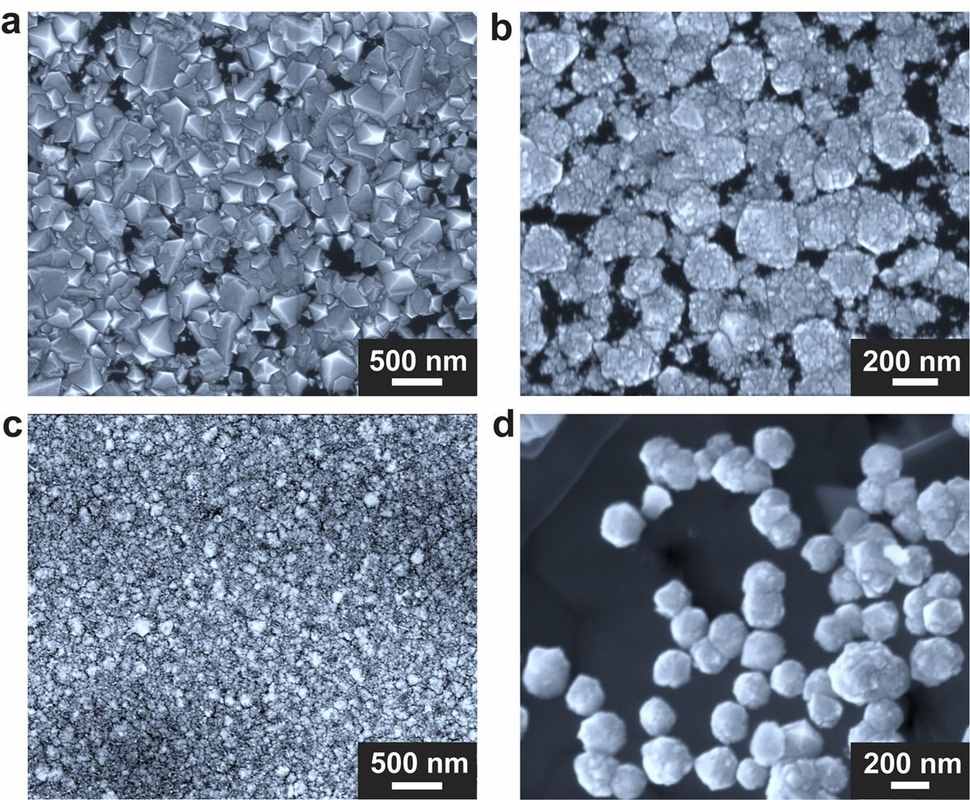
In South Korea, chemists have recently developed a method to grow artificial micro-diamonds in minutes instead of days.

Remarkably, this technique does not require high temperatures or intense pressure and creates diamonds “from scratch.” This breakthrough has the potential to revolutionize the diamond industry by providing an unlimited supply of micro-diamonds for polishing and cutting applications.

Typically, gemstones form under intense heat, pressure, natural catalysts, or a combination of these factors. Artificially manufacturing diamonds has traditionally required significant amounts of heat and pressure. However, Rodney Ruoff, a physical chemist at the Institute for Basic Science in South Korea, has found a way to eliminate these requirements.

Ruoff and his colleagues used only graphene, silicon, gallium, iron, and nickel—foregoing the need for gigapascals of pressure and temperatures as high as 2,700 degrees Fahrenheit (1,500 degrees Celsius).

Ruoff’s method began with gallium, which had previously been shown to catalyze the formation of graphene. Graphene is pure carbon, similar to a diamond, but with a straight and flat chemical structure, unlike diamond’s tetrahedral formation.

The most expensive component of the experiment was a home-built chamber designed by co-author Won Kyung Seong. This chamber housed the gallium-nickel-iron mixture in a graphene crucible and withstood the introduction of hot methane gas. When all these elements combined, along with a pinch of silicon, diamonds formed within 15 minutes at sea-level pressures inside the chamber.

The precise chemical details of the experiment’s success are still not fully understood, and it will likely be a few years before scientists can confirm whether Ruoff’s process can produce diamonds suitable for jewelry. The diamonds described in their study were thousands of times smaller than lab-grown diamonds typically used for jewelry.

However, the film of micro-diamonds could replace larger diamonds for purposes such as being crushed into powder. Diamond is used for many different cutting and grinding tools and is used from construction to cutting and polishing diamonds themselves.