Grandmother’s 29-Mile Swim

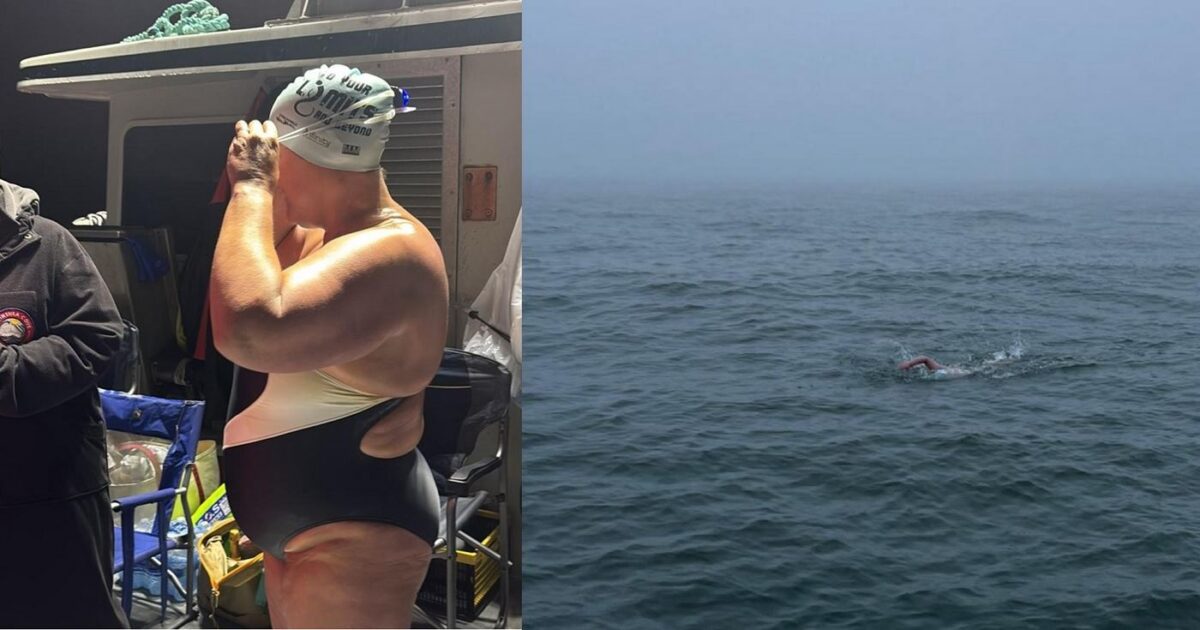
A 55 year-old grandmother, who describes herself as overweight, became the first woman to swim from San Francisco’s Golden Gate Bridge to the Farallon Islands, a distance of nearly 30 miles.

Amy Appelhans Gubser, a former collegiate swimmer, hadn’t attempted such a feat in 24 years. She faced cold waters, sharks, and jellyfish—all without a wetsuit.

Gubser started her swim at 3:27 a.m., plunging into the waters near her support vessel, and swam for 17 hours, reaching the Farallons after nightfall. An agent from the Marathon Swimmers Federation observed her swim, which is pending verification. If confirmed, she will be the first woman to complete this swim and the first person to do it from the bridge to the islands.

Despite the shark-infested waters, Gubser entered a “meditative state,” interrupted only by snack breaks every thirty minutes.

She chose not to wear a wetsuit to comply with MSF rules, despite the warmth and buoyancy it would have provided. “When you wear a wetsuit, your skin rubs against the material, and I didn’t want my skin to bleed near a shark island,” she said.

Gubser was stung twice by jellyfish during the swim.

She hopes her achievement inspires others and shows that athletic excellence is possible regardless of age and body weight.
5 Year Old, First to Receive Bionic Arms

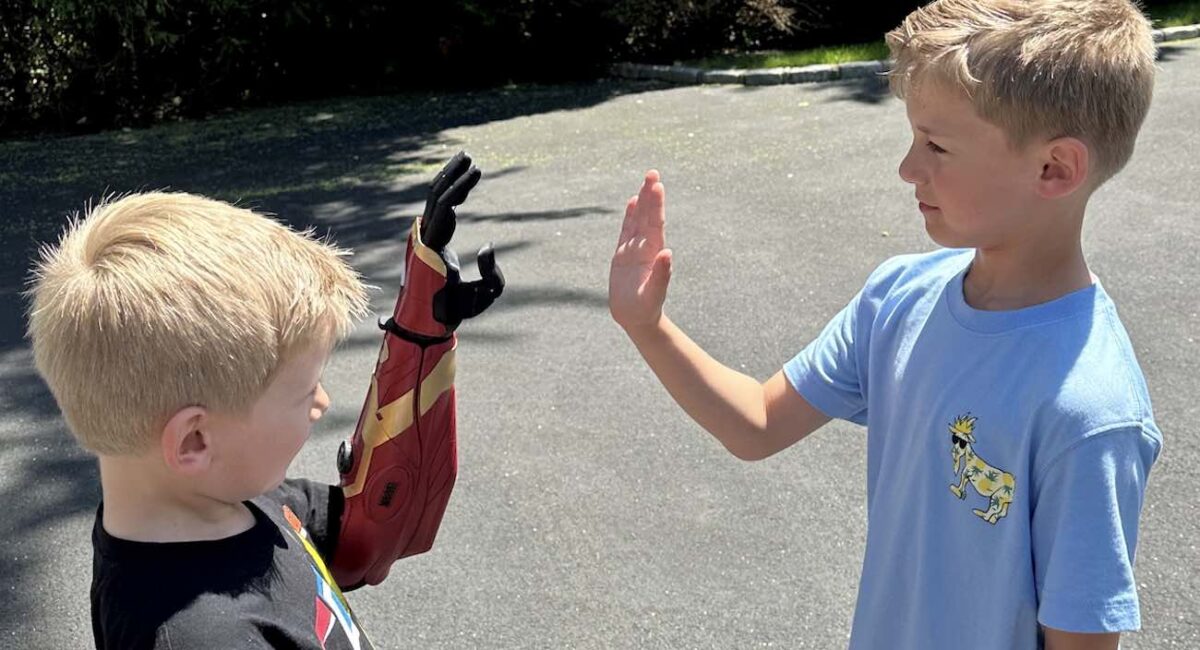
A five-year-old boy, born with one hand, has become the youngest person ever fitted with a bionic arm.

Jordan Marotta experienced “pure joy” when he received his Iron Man-themed ‘Hero Arm’ prosthetic last week. Hours after getting the arm, footage showed him riding his scooter, gripping the handlebars with the prosthetic.

“It’s really fun and it’s cool,” said Jordan. “I like to play with the hand and make it open and close.”

His mother, Ashley Marotta, contacted Open Bionics, the company that makes the prosthetics, when Jordan started asking why his hand hadn’t ‘grown back’. Despite being told he was likely too young for a mechanical limb, they let Jordan try one. Following a successful trial, they agreed to fit him with the arm at their New York City office, two years earlier than usual.

“As soon as we left with Jordan’s Hero Arm, he was running around with so much confidence, trying to hail New York taxis,” said Ashley.

“You can’t even put a number on how amazing that is. It is worth its weight in gold.”

The first thing Jordan wanted to do when he got home was ride his scooter, now able to hold on with both hands. His advice in a video: “Don’t give up. Just don’t give up.”

Ashley was fortunate that her health insurance covered the cost of the arm. Jordan quickly adapted to using it in his daily life.

Watch the first moments below…

The World’s ‘Quietest’ Room

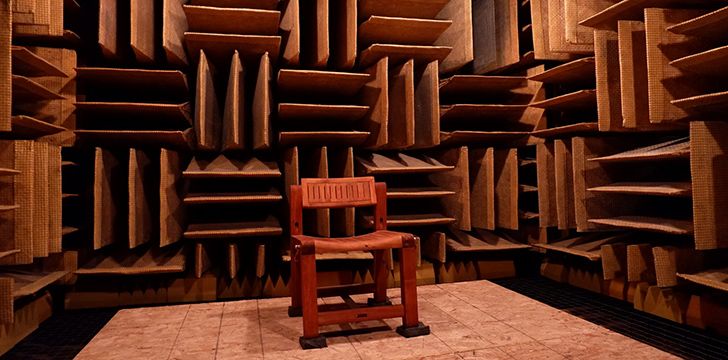
The quietest place on Earth isn’t where you might expect. It’s tucked away in Orfield Laboratory, Minnesota, within their Anechoic Chamber. This chamber is engineered to absorb sound, creating an environment where even the slightest noise can feel overwhelming.

Inside, the ambient noise level measures at an unprecedented negative decibel of minus-24.9 dBA, making it below the threshold of human hearing. Visitors often report hearing the faint sounds of their own bodily functions due to the complete absence of external noise.

Steven Orfield, the lab’s founder, explains that extended exposure to such silence can disrupt one’s sense of balance and coordination, as the usual auditory cues are absent.

The chamber itself is constructed with a steel box suspended within another steel enclosure, lined with fiberglass ridges to neutralize soundwaves.

Beyond its scientific utility, the chamber has also attracted commercial interest, being used by companies like Harley Davidson to test noise reduction and by NASA to prepare astronauts for the silence of space.

For those curious about this unique experience, a visit to the Anechoic Chamber in Minneapolis comes at a cost. A one-hour session for up to four people is priced at $400, offering a rare opportunity to immerse oneself in absolute silence.

Key to Alzheimer’s Disease in Simple Amino Acid?

For over a decade, big pharmaceutical companies have invested billions in Alzheimer’s disease drug trials without making significant progress.

However, a potential neuroprotective compound with promising early-stage results might be found in our everyday diet.

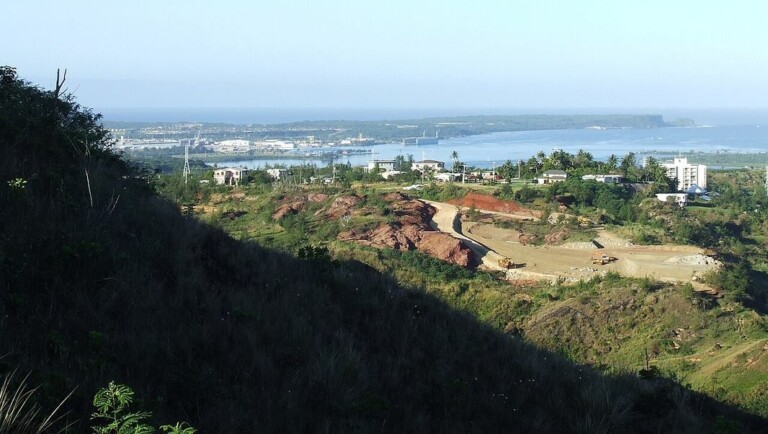
Dr. Paul Cox may have discovered this after investigating high rates of ALS and Alzheimer’s-like symptoms in Guam during the 1990s. He found that cyanobacteria, which produce a toxin called BMAA, were contaminating trees on the island. The trees’ seeds, eaten by flying fox bats, became a source of BMAA for the local population, who hunted the bats for food. This toxin was linked to widespread neurodegenerative diseases among the locals.

In 2003, Dr. Cox revealed that cyanobacteria could be a risk factor for these diseases, though not necessarily the cause of Alzheimer’s. To study BMAA’s toxicology, he conducted trials at the Brain Chemistry Labs at the Institute for Ethnomedicine in Jackson. His research showed that the neurotoxic effects of BMAA were reduced by 85% when combined with the amino acid L-serine.

L-serine, found in eggs, meat, edamame, tofu, seaweed, and sweet potatoes, is a non-essential amino acid in our diet. The protective effects observed in monkeys prompted Dr. Cox to initiate clinical trials with the FDA to explore L-serine as a potential Alzheimer’s treatment.

Interestingly, Dr. Cox is an ethnobotanist, not a neurologist. His research in Okinawa, a region known for its longevity, revealed that residents of Ogimi Village consumed about 400% more L-serine than the average American. This, combined with his lab data, gives Dr. Cox confidence that his clinical trials with Alzheimer’s patients supplementing with L-serine could yield effective results, potentially leading to a simple dietary treatment for the disease.

Majestic Sei Whales Reappears After A Century

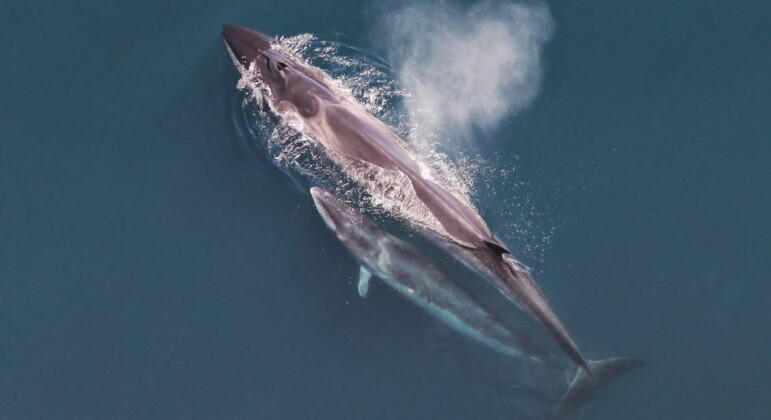
News from Argentina indicates that the 1946 International Convention for the Regulation of Whaling continues to yield benefits, as sei whales have returned to the country’s coastal waters for the first time in nearly a decade.

Overhunting in the 1920s and 1930s forced these whales to leave Argentina’s waters.

“After nearly a century of being hunted to near extinction, sei whale populations are now recovering and returning to their former habitats,” said Mariano Coscarella, a biologist and marine ecosystem researcher at Argentina’s CONICET scientific agency. He noted that sei whales reproduce every two to three years, so it took almost 100 years for their population to become noticeable again.

The sei whale, the third largest whale in the world, can grow up to 64 feet (20 meters) long and weigh up to 31 tons (28 tonnes). It is also one of the fastest whales, capable of swimming 31 mph over short distances.

Despite being listed as Endangered on the IUCN Red List, the global sei whale population is estimated at 50,000 and is increasing.

In other whale-related news, a recent survey in the Seychelles observed 10 groups of blue whales, the first such sightings since 1966. Additionally, a New England Aquarium aerial survey team sighted a gray whale off the New England coast in March, a species extinct in the Atlantic for over 200 years. Blue whales have been returning to coastal Californian waters in significant numbers, and surveys have found around 8,000 Southern fin whales in Antarctica’s Southern Ocean between 2018 and 2019.