Flying Cars… Sort Of

Movies from the late 20th century like to show a future full of flying cars. Sadly, we don’t have any flying cars yet… but we might have the next best thing.

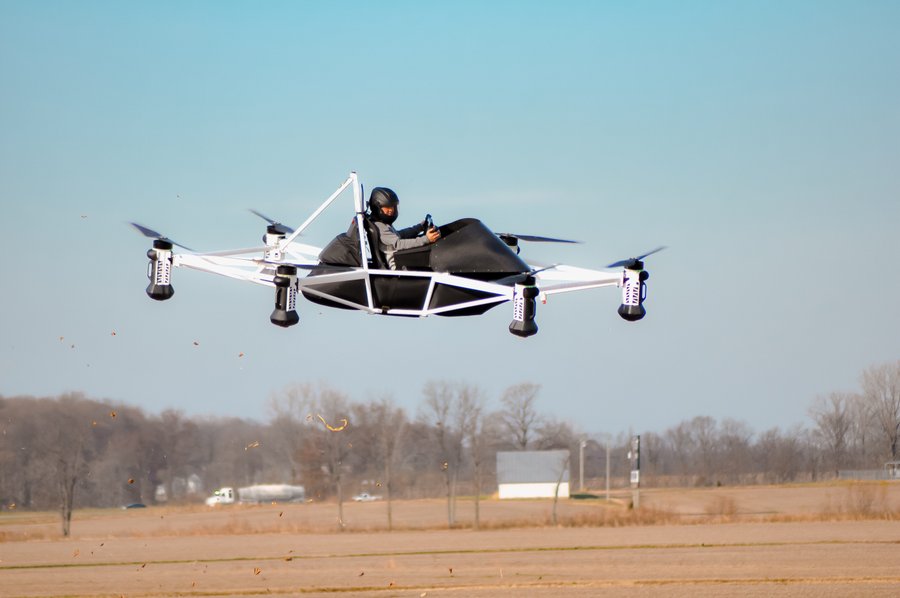
The Ryse Recon, built by Ryse Aerotech, has emerged as a pioneering vehicle in personal air mobility. This personal helicopter, or more accurately, an electric vertical takeoff and landing (eVTOL) aircraft, is designed to democratize the skies, offering an unparalleled blend of convenience, efficiency, and sustainability.

Design and Features

The Ryse Recon distinguishes itself with its intuitive design, prioritizing ease of use, safety, and practicality. Unlike conventional helicopters, the Recon is built around the principles of electric propulsion, enabling it to offer a cleaner, quieter, and more cost-effective solution for individual air travel. Its compact size and vertical takeoff and landing capabilities allow it to operate in areas with limited space, making it an ideal choice for short to medium-distance commutes.

One of the most striking features of the Ryse Recon is its user-friendly interface. Designed with the non-professional pilot in mind, it employs advanced automation technologies to simplify navigation and flight controls. This approach not only lowers the barrier to entry for personal air travel but also enhances safety by reducing the potential for human error.

Related: Flying Hydrogen Taxi

The Vision for the Future

The introduction of the Ryse Recon into the market is more than just the launch of a new product; it represents a forward-thinking vision for the future of transportation. Ryse aims to not only provide a novel mode of travel but also to inspire a shift towards more sustainable and efficient urban mobility solutions. By pioneering in the personal eVTOL space, the Ryse Recon sets the stage for a future where flying vehicles are a common and accessible means of transportation for the masses.

Challenges and Opportunities

As with any groundbreaking technology, the Ryse Recon faces its share of challenges, including regulatory hurdles, public acceptance, and the ongoing development of supporting infrastructure, such as vertiports (landing pads). However, these challenges also present opportunities for innovation, collaboration, and policy development to ensure the safe and integrated operation of personal eVTOLs within urban environments.

Who is it For?

For now, the target demographic are not your average suburban family.

Private Landowners, farmers and those with expansive properties could make the best use of it. The Ryse Recon offers a quick and convenient way to oversee land, crops, and livestock, significantly reducing the time and effort required for property management and surveillance.

Another potential use is for Emergency Responders and Law Enforcement. Its agility and ability to quickly cover difficult terrain could make it suitable for rapid response scenarios, search and rescue operations, and law enforcement surveillance, providing an aerial advantage in critical situations.

Of course, there is always the recreational users. Adventure enthusiasts and recreational users looking for a unique flying experience. Being easy to use and not requiring a flying license is a very attractive proposition for many I am sure.

Check out this awesome video showing the Ryse Recon in action!

Old Tjikko, the World’s Oldest Tree.

Nestled in the remote wilderness of Fulufjället National Park in Sweden stands the world’s oldest known living tree – Old Tjikko. Its estimated root system, over 9,550 years old, has weathered the ebb and flow of civilizations, endured severe Scandinavian winters, and even witnessed an erupting volcano.

Old Tjikko took root shortly after the last ice age, around 11,500 years ago, as glaciers retreated from Scandinavia. The exposed ground allowed seedlings like Old Tjikko’s ancestor to grow, although initial growth in the harsh environment was slow. Despite fires, droughts, insect attacks, or extreme winters, the extensive root network persisted underground. The current trunk and canopy started growing about 600-800 years ago, likely due to a more favorable climate.

Old Tjikko has survived numerous challenges, including the migration of Sami reindeer herders, the Black Death in the 1300s, and the climate impacts of the 1783 Laki volcano eruption in Iceland. Discovered by geologist Dr. Leif Kullman in 2008, Old Tjikko’s impressive longevity was confirmed through carbon dating its 75-foot-long root system.

Dr. Kullman named the tree “Old Tjikko” after his deceased dog and has chosen to protect its exact location. While a few small tours allow visitors to witness this ancient tree each summer, its humble presence serves as a reminder of the enduring cycles of nature.

Jeff Bezos Sells Billions

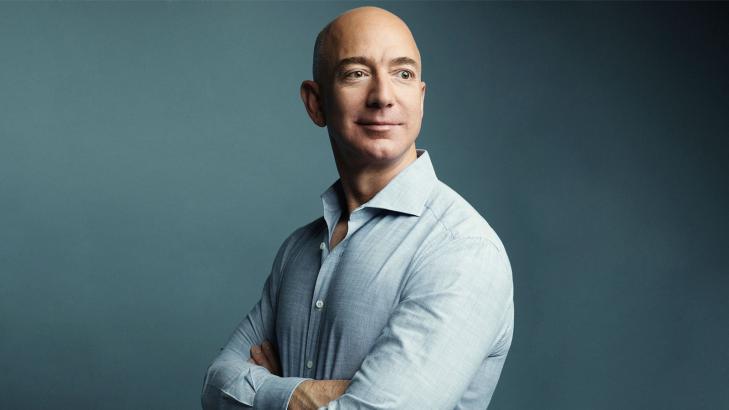
Jeff Bezos, the founder of Amazon.com Inc., recently sold approximately 12 million shares of the online retail and cloud services giant for roughly $2 billion, according to a company filing. This significant transaction marks the first major sale of Amazon stock by Bezos since 2021.

The sale comes at a time when Bezos has been diversifying his investments and focusing on other ventures, including his space exploration company, Blue Origin, and various philanthropic efforts. While the specific reasons behind this particular sale have not been detailed by Bezos, it aligns with his past actions of liquidating portions of his Amazon stock to fund these other initiatives.

As of the latest reports, Bezos remains one of the largest individual shareholders of Amazon, owning just under 10% of the company according to Forbs. He founded the company in 1994 and led to become one of the most valuable and influential tech companies in the world. Despite stepping down as CEO in 2021 to assume the role of executive chairman, Bezos continues to play a significant role in the company’s strategic direction.

This stock sale is part of a broader trend observed among tech billionaires, who periodically sell shares of their companies to reallocate assets or fund their other business and philanthropic ventures.

Let’s hope he uses the money for a good cause and not yet another mega yacht…

Artemis V and the Path to Mars (Part 5 of 5)

Artemis V: Advancing Lunar Exploration
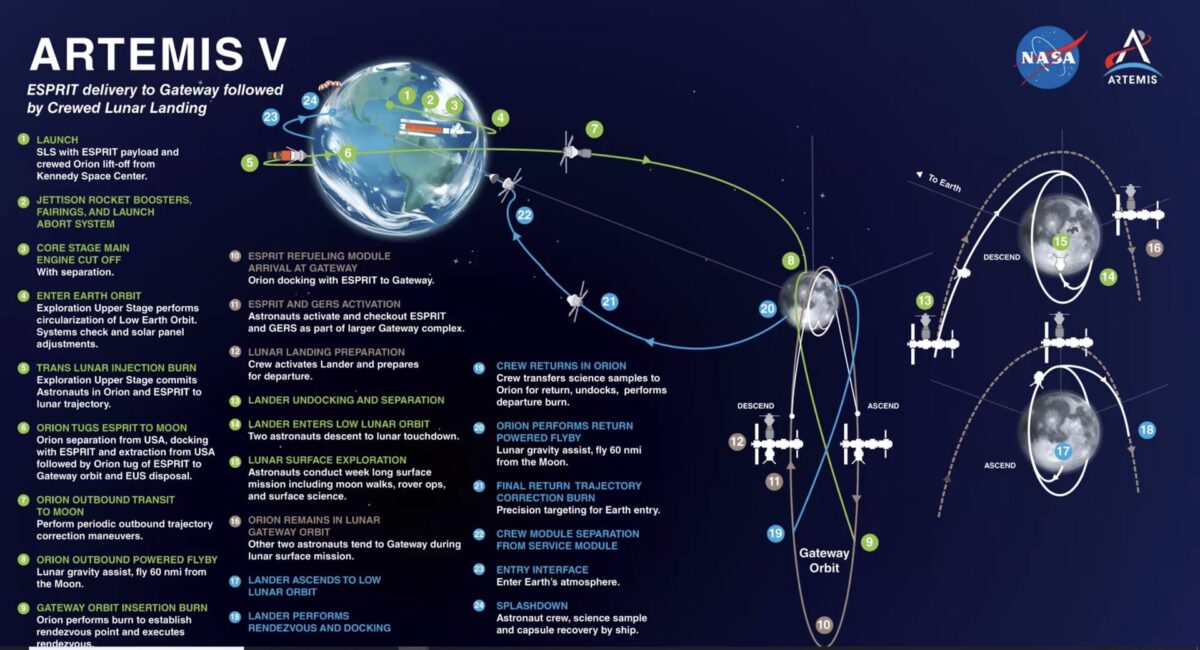
Scheduled for 2029, Artemis V continues the expansion of the Lunar Gateway with the delivery of the ESPRIT module. This mission is another crewed mission and will enhance the Gateway’s capabilities by providing additional refueling infrastructure, telecommunications, and a viewing port, akin to the cupola on the ISS. Furthermore, Artemis V includes plans for another crewed lunar landing, continuing the program’s commitment to ongoing lunar exploration and scientific discovery.

ESPRIT: Enhancing Gateway’s Capabilities
The ESPRIT module, developed by the European Space Agency (ESA), represents a significant addition to the Lunar Gateway. It stands for “European System Providing Refueling Infrastructure and Telecommunications”, its role being to support extended lunar missions and enhancing communication capabilities.

The Artemis Program: A Stepping Stone to Mars
Beyond the immediate goals of lunar exploration, the Artemis missions lay the groundwork for humanity’s next giant leap: manned missions to Mars. The technological innovations, international partnerships, and lunar experience gained through Artemis will be instrumental in planning and executing the first human journey to the Red Planet.

Looking Ahead: Artemis 6-12
NASA’s vision extends beyond Artemis V, with plans for missions Artemis 6 through 12 already in the works. These future missions will continue to build on the program’s successes, further exploring lunar resources, testing new technologies, and preparing for the eventual human exploration of Mars. Through Artemis, NASA aims to establish a sustainable presence on the Moon, creating a blueprint for future exploration of Mars.

The Artemis program represents a bold and ambitious journey back to the Moon. With each mission, we move closer to unlocking the mysteries of the Moon, Mars, and beyond, marking a new chapter in humanity’s quest to explore the cosmos.

I hope you enjoyed this 5-part series and are as excited as we are about the next few years of lunar exploration!

AI Reduces Credit Card Fraud by 300%

Mastercard has announced the development of a cutting-edge generative artificial intelligence (AI) model, designed in-house to enhance fraud detection across its extensive network of banking partners. This innovative AI tool, named Decision Intelligence Pro, aims to provide banks with the capability to more accurately evaluate suspicious activities on Mastercard’s network, facilitating real-time determinations of transaction legitimacy.

In an exclusive dialogue with CNBC, Ajay Bhalla, the president of Mastercard’s cyber and intelligence business unit, shared insights into the technology underpinning this advancement. According to Bhalla, Decision Intelligence Pro leverages a bespoke recurrent neural network, a key element of generative AI technology, meticulously crafted by Mastercard’s cybersecurity and fraud prevention teams. This model incorporates transformer models to harness generative AI’s capabilities, offering a robust solution constructed entirely in-house utilizing diverse data sources within the company’s ecosystem.

“We are using the transformer models which basically help get the power of generative AI,” Bhalla told CNBC “It’s all built in house we’ve got all kinds of data from the ecosystem. Because of the very nature of the business we are in, we see all the transaction data which comes to us from the ecosystem.”

Bhalla revealed the strategic use of open-source resources as necessary, but the bulk of the technology was developed internally. The proprietary algorithm undergoes training with data from approximately 125 billion transactions processed through Mastercard’s network each year. This vast dataset enables the AI to discern patterns between merchants, focusing on transactional relationships rather than textual analysis, to pinpoint potential fraud.

Mastercard’s algorithm uniquely assesses the likelihood of a cardholder visiting a merchant involved in a transaction, using merchant visitation history as a basis for analysis. This approach generates a predictive score through the network, akin to a heat-sensing radar, to gauge transaction authenticity within an impressive timeframe of just 50 milliseconds.

Bhalla highlighted the technology’s significant impact, with financial institutions witnessing an average fraud detection rate improvement of 20%, and in some cases, up to 300%. Over the past five years, Mastercard has allocated over $7 billion towards cybersecurity and AI technologies, including strategic acquisitions like the purchase of Swedish cybersecurity company Baffin Bay Networks in March 2023.

The company’s efforts in AI innovation parallel those of its competitors, such as Visa, which recently established a $100 million venture fund focused on generative AI startups in October 2023. Mastercard anticipates that its AI model will not only enhance fraud detection capabilities but also offer substantial cost savings for banks by reducing expenditures related to the investigation of fraudulent transactions.

Bhalla envisions the technology’s long-term potential to identify and predict emerging fraud trends within the global payment ecosystem, leveraging the comprehensive transaction data from Mastercard’s worldwide customer base. This development comes amidst a wave of AI-driven innovations in the payments and digital banking sectors, highlighted by companies like PayPal introducing new AI-based features and enhanced checkout processes.

Certain types of AI get the majority of attention, namely the Large Language Models (LLM) like ChatGPT and Grok, as well as AI art. But there is actually a whole world of AI applications and innovations that do (generally) more specific and useful tasks. We have covered some of these awesome applications such as advanced farming that could completely change monoculture farming, to a AI fire-detection system that reduced forest-fires by an amazing amount.

Overall, this is a fantastic example of AI being used for something good! Having experienced credit card fraud myself last year, I’m really glad to see Mastercard addressing this issue.