First Child Cured of Brain Stem Glioma


Medical progress in recent decades has boosted the survival rate of children with cancer to 85%, but brain stem glioma remains a severe outlier. Dr. Jacques Grill, a French doctor, initially predicted a grim outcome for 6-year-old Lucas diagnosed with this rare and deadly tumor. However, an experimental treatment, randomly assigned to Lucas, led to the complete disappearance of the tumor, a unique case globally.

Officially known as diffuse intrinsic pontine glioma (DIPG), this rare cancer affects around 300 children annually in the United States and 100 in France. The standard two-year survival rate is only 10%, with radiotherapy as the primary treatment option.

Lucas participated in the Biomede trial in France, where he was randomly assigned the drug everolimus. Remarkably, he took the medication for over 5 years, resulting in the complete disappearance of his tumor. While seven other children from the trial survived, none experienced a complete tumor disappearance like Lucas. His case is now being considered a potential breakthrough for improving long-term outcomes in DIPG cases.

Lucas’s tumors had a rare genetic mutation, making them exceptionally responsive to everolimus. Biomedical researchers are now aiming to replicate this mutation in vitro, potentially paving the way for further trials to confirm its effectiveness. Although the journey toward an approved medication may take 10 to 15 years, scientists are optimistic about the accelerated pace of technological advancements.

Gemstones on the Rise

Valentine’s Day is a peak season for jewelry purchases, with U.S. consumers projected to spend an unprecedented $6.4 billion on jewelry around this time, as reported by Ankur Daga, CEO of Angara. This expenditure accounts for a significant 10% of the annual total devoted to jewelry, indicating the holiday’s strong influence on the market.

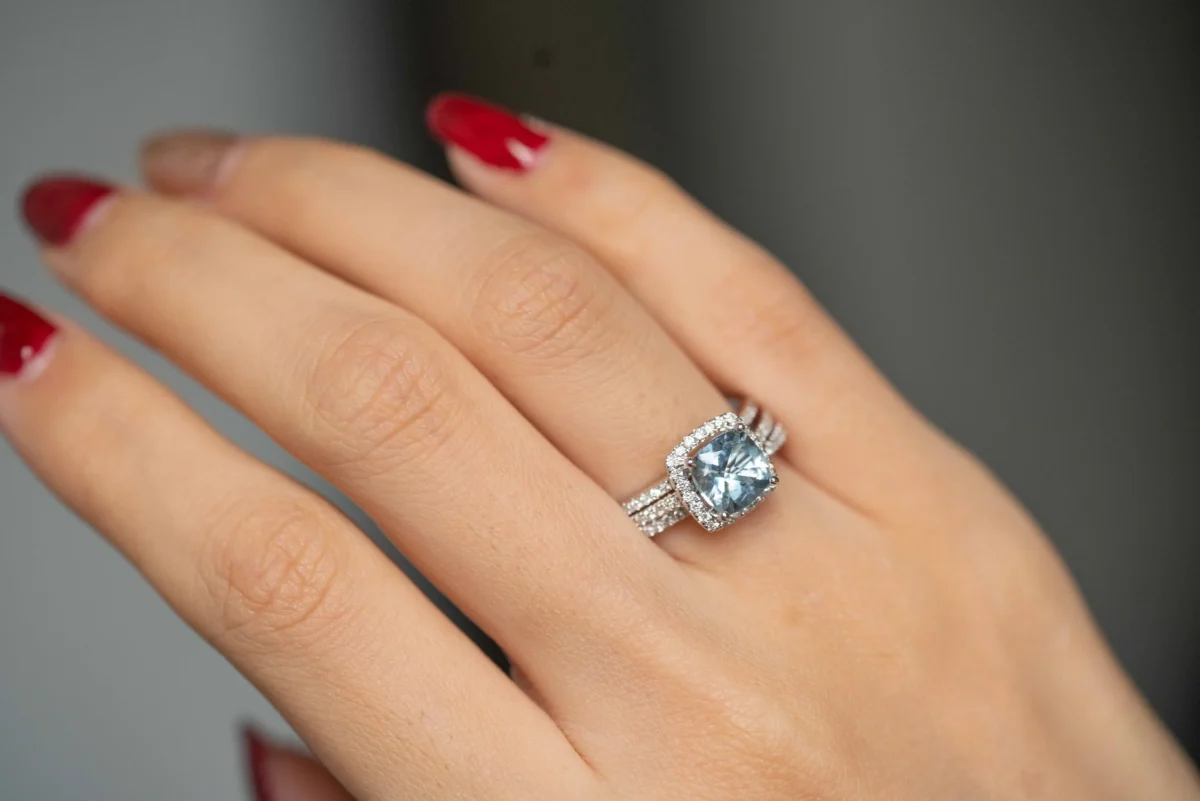
This year, however, the conventional diamond engagement ring may take a smaller portion compared to more vibrant options. “We’re seeing a shift in much larger center stone engagement rings, primarily as a result of lab-grown diamonds, and sapphires and rubies tend to be very hot,” Daga noted. The trend towards colorful gemstones in engagement rings has risen from 5% a decade ago to over 15% today, with a recent small survey revealing that over 20% of individuals would opt for a colored gemstone ring over their diamond ring if given the chance.

Signet Jewelers, a major industry player, echoes this sentiment, witnessing increased interest in gemstones like sapphire and morganite across both wedding and fashion categories. The allure of amethyst and ruby, in particular, spikes during the Valentine’s period, aligning with February’s birthstone and the symbolic color of love, respectively.

Beth Gerstein, CEO of Brilliant Earth, suggests that the trend towards colored gemstones reflects a desire for uniqueness, especially among Gen Z consumers who value personalization and distinctive style. This shift is occurring amidst growing supply constraints for natural gemstones, pushing prices upwards and making some stones harder to source. “There’s only really one mine in Madagascar that produces the bulk of the world’s rubies,” Daga mentioned, highlighting similar challenges for sapphires and emeralds.

The price of sapphires, emeralds, and rubies has been climbing, with some gemstones like tourmalines experiencing price increases of up to 36% annually. This trend contrasts with the broader market movement towards lab-grown diamonds, which now account for half of the diamond engagement ring purchases.

Despite the chemical, physical, and optical similarities between lab-grown and natural gemstones, a significant majority of customers still show a preference for natural stones, largely due to their unique inclusions that add character.

Diamonds are certainly still a very popular choice and that is not likely to change. It is, however, very interesting to see this increased interest in colored gemstone jewelry.

New Research Reveals Secret to Restore Hearing

Attending a loud concert often leaves attendees with a familiar sensation of ringing ears, with some experiencing temporary or even permanent hearing loss or significant alterations in how they perceive sound once the noise ceases. A team of scientists has now uncovered the biological underpinnings of this noise-induced hearing loss, revealing a promising pathway for prevention.

At the heart of their discovery, researchers at the University of Pittsburgh, USA, identified that loud noise exposure leads to cellular damage in the inner ear, linked to an overabundance of zinc—a mineral crucial for cellular health and auditory function.

Their groundbreaking research demonstrated that certain drugs, acting as molecular sponges, can absorb the excess zinc, offering a chance to either recover hearing lost to noise exposure or preemptively safeguard against hearing damage when administered prior to encountering loud sounds.

Professor Thanos Tzounopoulos of the Pittsburgh Hearing Research Center highlighted the severe impact of noise-induced hearing loss, stating, “Noise-induced hearing loss can be debilitating. Some people start hearing sounds that aren’t there, developing a condition called tinnitus, which severely affects a person’s quality of life.”

Preventing hearing loss is a challenging problem to tackle, due to our incomplete understanding of the biological mechanisms. This is a great step in addressing the widespread impairment that effects millions.

The study, which was featured in the Proceedings of the National Academy of Sciences, detailed their investigation into the inner ear cells of mice. They discovered that zinc levels in the inner ear surge following exposure to loud noise, leading to cellular damage and interference with normal communication between cells.

Mice treated with a compound designed to capture excess zinc showed a higher resistance to hearing loss and were shielded from the adverse effects of loud noise exposure.

This research not only proposes a potential solution to a pervasive issue but also sets the stage for the development of treatments and protective measures for individuals frequently exposed to loud environments, such as concertgoers and musicians.

With plans to further explore this treatment, the researchers aim to eventually introduce it as an accessible, over-the-counter preventative measure against hearing loss, marking a significant step forward in auditory health protection.

Marvel Reveals ‘Fantastic Four’ Cast

Marvel Studios revealed the cast for its new “Fantastic Four” movie in a straightforward manner on Instagram. The Valentine’s Day announcement introduced Pedro Pascal, Vanessa Kirby, Ebon Moss-Bachrach, and Joseph Quinn as the stars of the film. The post identified Pascal as Reed Richards (Mister Fantastic), Kirby as Sue Storm (Invisible Woman), Moss-Bachrach as Ben Grimm (The Thing), and Quinn as Johnny Storm (The Human Torch).

The film, directed by Matt Shakman, is set to release on July 25, 2025. Notable previous casts for “Fantastic Four” films include Jessica Alba, Ioan Gruffudd, Chris Evans, Michael Chiklis in 2005 and 2007, and Michael B. Jordan, Miles Teller, Kate Mara, and Jamie Bell in 2015.

Lyft’s Good News Overshadowed by Mega-Typo

It’s a well-known fact that typos can be embarrassing and frustrating, and as ride-sharing company Lyft recently discovered. They can also make people forget about the good news in a financial report.

Lyft’s press release announcing its fourth quarter and full-year 2023 financial results, published before the company’s call with investors, initially caused its stock to soar more than 60% after-hours, reaching a high of $19.70. However, the company’s CFO, Erin Brewer, quickly corrected a crucial typo in the earnings call, stating that the adjusted EBITDA margin expansion for 2024 was meant to be 50 basis points (0.5%) instead of 500 basis points (5%).

This correction caused the company’s stock to tumble, dropping to $14.05 by Tuesday evening and $12.13 in early morning trading on Wednesday, down 2.18% from the previous day’s close.

Despite the disastrous typo, the financial report itself was quite positive. Lyft reported that gross bookings grew to $13.8 billion, a 14% increase year-over-year, while revenue grew to $4.4 billion, an 8% increase from last year. The company also had more riders than ever in its history, with 40 million people using the service, and it expected to generate positive free cash flow in 2024 for the first time.

“We’ve entered 2024 with a lot of momentum and a clear focus on operational excellence,” said CFO Erin Brewer in the earnings call.

Unfortunately, the typo overshadowed the good news in the report, leaving many to wonder what could have been if not for the unfortunate mistake.