Microsoft Campus Goes Geothermal for Heating & Cooling

After four years of construction, the Microsoft’s Redmond campus modernization nears completion. Spanning 72 acres, the project incorporates numerous environmentally-conscious designs and features, with the Geothermal Energy Center (TEC) standing out as a remarkable achievement.

To regulate the campus temperature, a 6.5-acre geothermal well field was established last year, comprising approximately 900 boreholes drilled up to 550 feet deep. This initiative aims to meet 50% of the heating and cooling demands without emitting carbon.

Despite challenges such as an unmapped subsurface environment and past construction debris, GLY Construction successfully completed the drilling within budget and on schedule. Their approach included virtual design and construction techniques, ensuring precision down to 256ths of an inch.

The closed-loop geothermal system utilizes the earth’s energy to heat and cool water, with enough refrigeration capacity to cool 3,000 homes during summer. Recognized as Project of the Year by Engineering News Record, the TEC boasts a heating capacity of 28 million Btus per hour and nine chillers capable of providing 9,000 tons of refrigeration.

The well field area now hosts 2.5 miles of walking and biking trails, alongside sports facilities like softball fields, cricket pitches, and basketball courts. Enormous water tanks store exchanged water for heating and cooling purposes, all powered by renewable energy sources.

The broader Redmond East campus renovation encompasses 6.7 million square feet and incorporates various carbon-reducing measures, including an all-electric kitchen and rainwater collection cisterns. Throughout construction, Microsoft and its contractors diverted 95% of demolition waste from landfills and reduced embodied carbon in building materials by at least 30%.

Reflecting on this environmentally-focused endeavor, Michael Green building systems director of OAC, lauds it as unparalleled in his four-decade career in construction.
Volunteers Plant Million Moss Cuttings to Restore English Bog

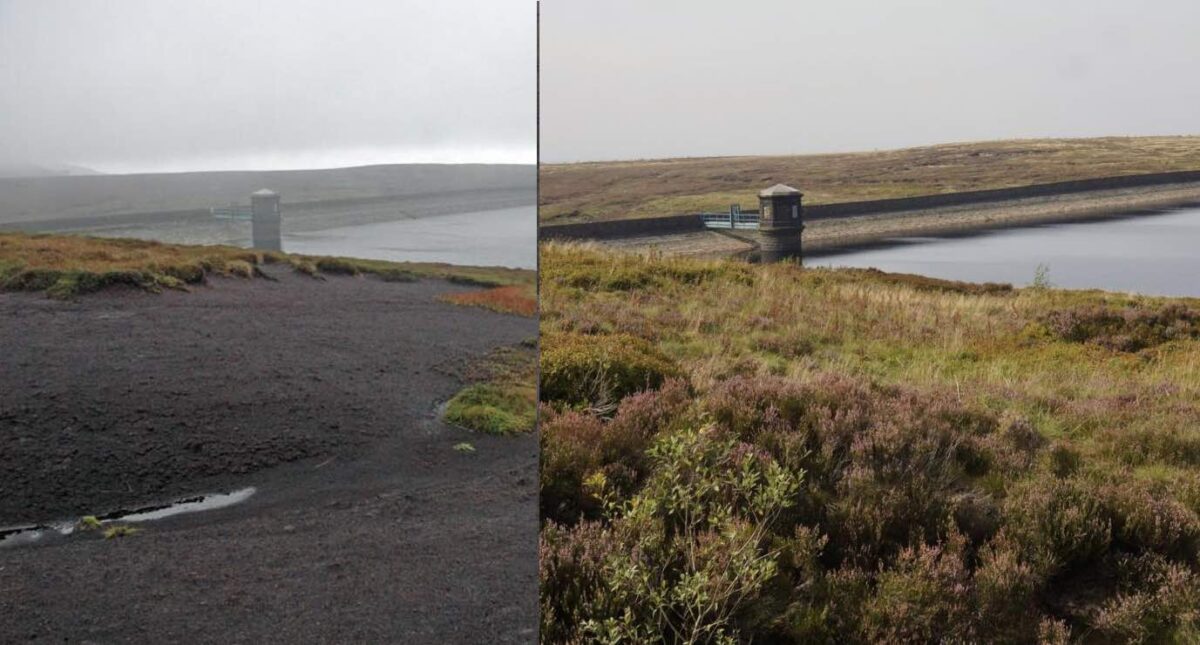
Located atop a hill in Oldham, Manchester county, a reservoir was surrounded by barren peat bogs. Rainwater would swiftly collect and carry silt, resulting in degraded river conditions.

Moreover, the absence of ground cover heightened flood risks for nearby communities as water freely flowed into the reservoir and down hillsides onto roads.

To address these issues, volunteers from the Royal Society for the Protection of Birds, alongside landowner United Utilities, tirelessly worked for ten years in various weather conditions, primarily rain and wind, planting sphagnum moss. This area had suffered from vegetation loss since ancient times.

On a rainy and windy Wednesday, the volunteers celebrated reaching a milestone by planting their one-millionth cutting.

“We aim to restore a landscape that sequesters carbon, mitigates flood risks, supports biodiversity, and promotes health and well-being benefits,” remarked site manager Kate Hanley to the Oldham Times. Hanley noted that the volunteers collectively contributed over 45,000 hours, equivalent to 20,000 labor hours.

“We’ve made significant progress from the bare, degraded peatland a decade ago to a functional blanket bog abundant with sphagnum,” Hanley added.

Additionally, peat and rock dams were installed to trap water and provide habitats for birds, amphibians, and insects. “We wanted to restore the area to its former state, benefiting wildlife, birds, and mountain hares,” explained 71-year-old volunteer Denzil Broadhurst to the Times. “It was important to contribute to improving the environment.”

Bitcoin’s Reputation is Changing

Bitcoin’s reputation as a highly volatile asset may be diminishing, as noted by Matt Hougan from Bitwise Asset Management. He points out that the cryptocurrency’s price fluctuations have significantly decreased over the last decade. Speaking to CNBC’s “ETF Edge,” Hougan attributed the current market dynamics to a straightforward demand-supply imbalance, exacerbated by the recent introduction of Bitcoin ETFs, which have led to a surge in demand against a backdrop of fixed supply.

The inauguration of the first Bitcoin exchange-traded funds on January 11 marked a pivotal moment, contributing to a more than 50% increase in Bitcoin’s value since their launch. Recently, Bitcoin approached an unprecedented peak, nearing $74,000.

However, Hougan also noted that Bitcoin might not appeal to everyone due to its price volatility and complexity.

While Bitwise is optimistic about Bitcoin’s continued growth, ProShares has introduced a Short Bitcoin Strategy ETF aimed at capitalizing on Bitcoin’s potential losses. This ETF has seen a decline of 42% this year and nearly 70% over the past twelve months.

ProShares’ Simeon Hyman, in response to critiques, humorously invoked Mark Twain, “To quote Mark Twain, ‘The reports of our death have been quite exaggerated,‘” Hyman told CNBC. “We’re happy to be here, and we think we’re serving as a key alternative.”

Hyman further commented on the sustained interest in Bitcoin, independent of the recent ETF launches, and highlighted the increasing attention from long-term investors seeking diversification and asset allocation. ProShares also has a long-bitcoin ETF.

Impossible Challenge?

What happens when you ask two southern European women to eschew their expressive hand gestures?

Quality entertainment, that’s what.

Asteroid Mining Incoming

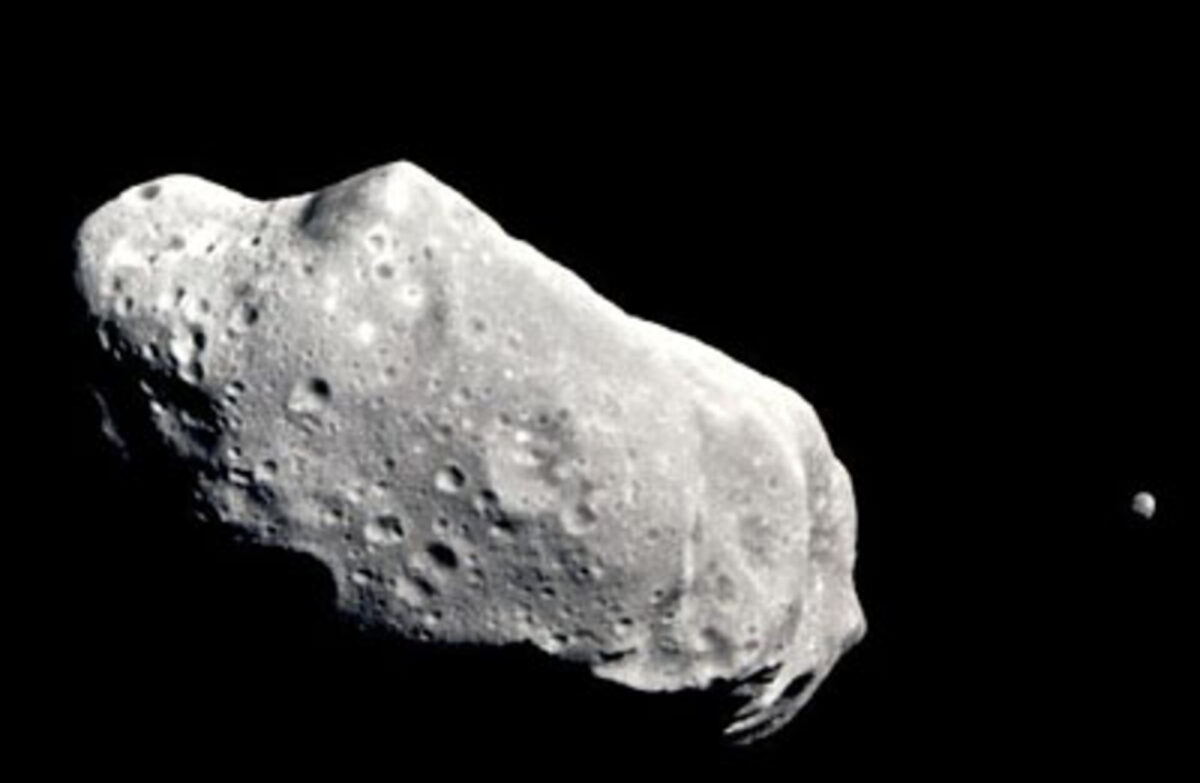
The concept of asteroid mining for critical minerals is transitioning from a theoretical idea to a practical venture, promising to revolutionize not only resource extraction but potentially offering a cleaner alternative to traditional Earth-based mining. The notion, circulating since the 1970s, has recently gained momentum. Companies such as AstroForge, Trans Astronautica Corporation, and Karman+ are preparing to deploy advanced technologies for space trials, setting the stage for asteroid mining operations.

Space missions from Japan and the U.S. have been initiated to survey asteroids and retrieve samples. Notably, NASA’s Psyche mission, launched in October 2023, is en route to its namesake asteroid located between Mars and Jupiter, with exploration activities scheduled to commence in August 2029.

This burgeoning field has captured the attention of economists who are assessing its implications for the global economy. A significant study by Ian Lange of the Colorado School of Mines, published on October 16, investigates the economic landscape of asteroid mining. This research anticipates a substantial expansion of the industry in coming decades, spurred by escalating demand for metals essential for electronics, renewable energy technologies, and electric vehicles.

Lange’s analysis highlights the rich deposits of vital metals such as nickel, cobalt, iron, and platinum in asteroids, potentially exceeding terrestrial reserves by over a thousand-fold. The advent of reusable rocket technology by entities like SpaceX and Rocket Lab has significantly reduced launch costs, rendering asteroid mining an economically feasible endeavor.

Personally, I am a big fan of sci-fi, so this whole endeavor sounds very cool to me.