Finland Remains Happiest Country for 7th Year

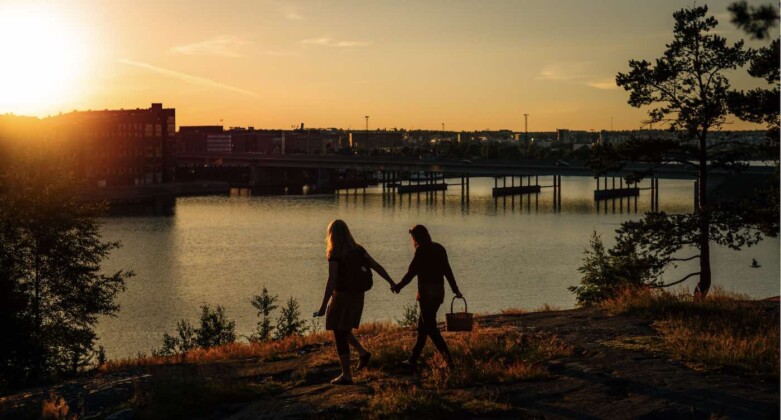
Finland consistently secures the top spot as the happiest country in the world, as per the annual United Nations World Happiness Report, a position it has maintained since 2018.

The Finnish people attribute their happiness to four fundamental factors: a strong bond with nature, a pragmatic lifestyle, emphasis on fresh and local food, and a commitment to sustainability.

They view happiness not as an enigmatic concept but rather as a set of attainable skills, cultivated through daily activities such as forest walks, sea dips post-sauna, and meals crafted from locally sourced ingredients.
To commemorate their happiness status and following the success of the 2023 Masterclass in Happiness, Finland’s official tourism board and Helsinki Partners are inviting applicants worldwide to participate in a happiness hack-a-thon. This five-day curated experience will take place in Helsinki, the world’s happiest capital.

Scheduled for June 2024, the Helsinki Happiness Hacks urban expedition offers selected participants an opportunity to learn from five Helsinki residents, each sharing their strategies for finding joy in the city.

The lineup includes Lena Salmi, a seventy-year-old skateboarder and avid swimmer, who will share insights on urban swimming; Luka Balac, a renowned chef focused on sustainability, who will discuss his approach to social gastronomy; Adela Pajunen, a well-being expert and biologist, who will shed light on Finland’s natural remedies; designer Tero Kuitunen, who will demonstrate how Helsinki’s urban and natural elements intersect; and Tapio Hakanen, also known as DJ Orkidea, who will introduce participants to the concept of a “sauna rave.”

Heli Jimenez, Senior Director of International Marketing at Business Finland, expresses enthusiasm about sharing Finnish happiness practices with the world. She states, “As the world’s happiest country, we believe in sharing our happiness. We are excited to welcome people from across the globe to discover the keys and hacks to Finnish happiness.”

Microsoft Campus Goes Geothermal for Heating & Cooling

After four years of construction, the Microsoft’s Redmond campus modernization nears completion. Spanning 72 acres, the project incorporates numerous environmentally-conscious designs and features, with the Geothermal Energy Center (TEC) standing out as a remarkable achievement.

To regulate the campus temperature, a 6.5-acre geothermal well field was established last year, comprising approximately 900 boreholes drilled up to 550 feet deep. This initiative aims to meet 50% of the heating and cooling demands without emitting carbon.

Despite challenges such as an unmapped subsurface environment and past construction debris, GLY Construction successfully completed the drilling within budget and on schedule. Their approach included virtual design and construction techniques, ensuring precision down to 256ths of an inch.

The closed-loop geothermal system utilizes the earth’s energy to heat and cool water, with enough refrigeration capacity to cool 3,000 homes during summer. Recognized as Project of the Year by Engineering News Record, the TEC boasts a heating capacity of 28 million Btus per hour and nine chillers capable of providing 9,000 tons of refrigeration.

The well field area now hosts 2.5 miles of walking and biking trails, alongside sports facilities like softball fields, cricket pitches, and basketball courts. Enormous water tanks store exchanged water for heating and cooling purposes, all powered by renewable energy sources.

The broader Redmond East campus renovation encompasses 6.7 million square feet and incorporates various carbon-reducing measures, including an all-electric kitchen and rainwater collection cisterns. Throughout construction, Microsoft and its contractors diverted 95% of demolition waste from landfills and reduced embodied carbon in building materials by at least 30%.

Reflecting on this environmentally-focused endeavor, Michael Green building systems director of OAC, lauds it as unparalleled in his four-decade career in construction.

Volunteers Plant Million Moss Cuttings to Restore English Bog

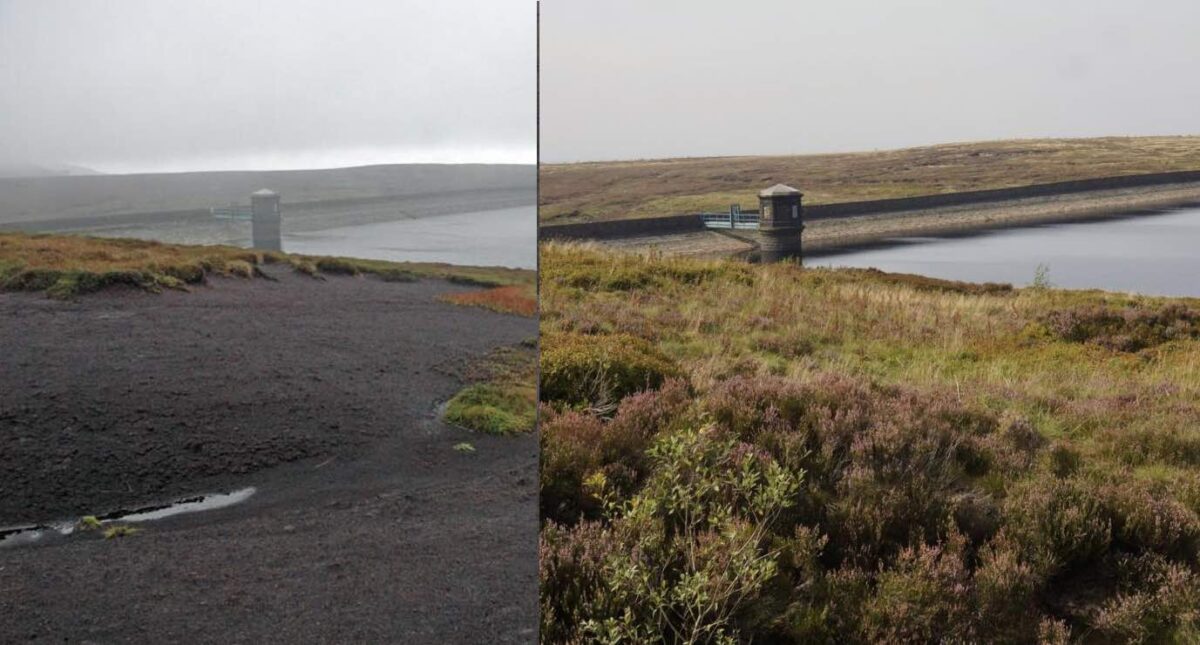
Located atop a hill in Oldham, Manchester county, a reservoir was surrounded by barren peat bogs. Rainwater would swiftly collect and carry silt, resulting in degraded river conditions.

Moreover, the absence of ground cover heightened flood risks for nearby communities as water freely flowed into the reservoir and down hillsides onto roads.

To address these issues, volunteers from the Royal Society for the Protection of Birds, alongside landowner United Utilities, tirelessly worked for ten years in various weather conditions, primarily rain and wind, planting sphagnum moss. This area had suffered from vegetation loss since ancient times.

On a rainy and windy Wednesday, the volunteers celebrated reaching a milestone by planting their one-millionth cutting.

“We aim to restore a landscape that sequesters carbon, mitigates flood risks, supports biodiversity, and promotes health and well-being benefits,” remarked site manager Kate Hanley to the Oldham Times. Hanley noted that the volunteers collectively contributed over 45,000 hours, equivalent to 20,000 labor hours.

“We’ve made significant progress from the bare, degraded peatland a decade ago to a functional blanket bog abundant with sphagnum,” Hanley added.

Additionally, peat and rock dams were installed to trap water and provide habitats for birds, amphibians, and insects. “We wanted to restore the area to its former state, benefiting wildlife, birds, and mountain hares,” explained 71-year-old volunteer Denzil Broadhurst to the Times. “It was important to contribute to improving the environment.”

Bitcoin’s Reputation is Changing

Bitcoin’s reputation as a highly volatile asset may be diminishing, as noted by Matt Hougan from Bitwise Asset Management. He points out that the cryptocurrency’s price fluctuations have significantly decreased over the last decade. Speaking to CNBC’s “ETF Edge,” Hougan attributed the current market dynamics to a straightforward demand-supply imbalance, exacerbated by the recent introduction of Bitcoin ETFs, which have led to a surge in demand against a backdrop of fixed supply.

The inauguration of the first Bitcoin exchange-traded funds on January 11 marked a pivotal moment, contributing to a more than 50% increase in Bitcoin’s value since their launch. Recently, Bitcoin approached an unprecedented peak, nearing $74,000.

However, Hougan also noted that Bitcoin might not appeal to everyone due to its price volatility and complexity.

While Bitwise is optimistic about Bitcoin’s continued growth, ProShares has introduced a Short Bitcoin Strategy ETF aimed at capitalizing on Bitcoin’s potential losses. This ETF has seen a decline of 42% this year and nearly 70% over the past twelve months.

ProShares’ Simeon Hyman, in response to critiques, humorously invoked Mark Twain, “To quote Mark Twain, ‘The reports of our death have been quite exaggerated,‘” Hyman told CNBC. “We’re happy to be here, and we think we’re serving as a key alternative.”

Hyman further commented on the sustained interest in Bitcoin, independent of the recent ETF launches, and highlighted the increasing attention from long-term investors seeking diversification and asset allocation. ProShares also has a long-bitcoin ETF.

Impossible Challenge?

What happens when you ask two southern European women to eschew their expressive hand gestures?

Quality entertainment, that’s what.