Teacher Fulfills 50-Year-Old Eclipse Party Promise.

Retired high school science teacher Patrick Moriarty kept his word by hosting a gathering to watch the 2024 solar eclipse with his former students.

Back in 1978, Moriarty, a young earth science teacher at Spry Junior High School in Webster, New York, noticed Rochester would be in the path of totality for the 2024 eclipse. He told his students to mark their calendars and join him to watch it together.

Over the years, Moriarty invited each new class to join him, eventually using social media to organize the event. More than 100 former students, some from far away, showed up at his home for the reunion.
Despite time passing, Moriarty’s care for his students was clear as they shared memories and watched the eclipse.

Moriarty thanked everyone for coming, saying the event was about more than just the eclipse—it was about the connections formed through education. Reflecting on the gathering, attendees like Kendra Denson saw it as more than just watching an eclipse—it was a chance for different classes to come together.

For Moriarty, the event was a reminder of the power of teaching and the bonds it creates between educators and students.

Add Years to Your Life!

Incorporating vigorous physical activity into your exercise regimen could significantly extend your lifespan, suggests research published in JAMA Internal Medicine.

The study analyzed data from over 403,000 adults, gathered through the National Health Interview Survey from 1997 to 2013, focusing on their self-reported exercise habits. Findings indicated that individuals who engaged in a greater proportion of vigorous activity within their overall workout routine had a lower risk of mortality from all causes, implying that intense exercise contributes to a longer life. Notably, 150 minutes of vigorous exercise per week was identified as the optimal amount for health benefits.

However, Carol Mack, D.P.T., C.S.C.S., points out a few limitations to consider. The reliance on self-reported data may lead to inaccuracies, as participants could overestimate the intensity of their workouts without objective measures like heart rate monitoring. Additionally, the definition of “vigorous” activity was somewhat vague, described as any exercise causing significant sweating or increases in breathing or heart rate for at least 10 minutes.

Despite these limitations, Mack isn’t surprised by the findings, highlighting that vigorous exercise is known to offer substantial benefits over moderate activities. This includes improvements in cardiorespiratory fitness, functional capacity, oxygen consumption, blood pressure, and body composition, all of which contribute to reduced chronic disease risk and potentially lower early mortality rates.

Mack emphasizes that while vigorous activity is beneficial, it doesn’t mean you should abandon moderate, steady-state cardio exercises like running. Instead, incorporating some high-intensity work into your routine could enhance overall health benefits. Vigorous exercise challenges the body’s cardiovascular and musculoskeletal systems more intensely than moderate activity, making it a valuable component of a balanced fitness program.

If you want to incorporate some vigorous exercise into your life but are not sure what you want to do, try short sprint intervals. The usual recommendations for intervals is 20 seconds of sprinting or running as fast as you can. Then about 2-4 minutes of walking in-between sprints. Do this 3-5 times and that is a pretty good amount for most people. Of course, if you are wanting do something a little closer to the 10 minutes they described in the study, cycling or some other type of vigorous cardio like pushing a weighted sled also works great.

Not Everything is as Bad as it Seems Part 2

This is the second installment in a series we are writing on how not everything is as bad as it seems. You can check out part one here!

Malthusianism is a theory that states that population growth is potentially exponential while the growth of food supply or other resources is linear. This discrepancy may lead to a Malthusian catastrophe, where population growth surpasses agricultural production, resulting in famine or war and, consequently, poverty and population reduction.

This idea is closely associated with Thomas Robert Malthus, an early 19th century political economist. However, it is still a very popular sentiment held by many. After all, on the surface it seems to make since. We had a population of 1 billion during 1800, now we have over 7 billion. But is this idea actually true?

When viewing the global picture, reconciling Thomas Malthus’ theory with reality presents a challenge. In fact, famine-related deaths have dramatically decreased since the 1800s. This contrast is stark and somewhat counterintuitive given the historical increase in population.

One might initially attribute this trend to advancements in agricultural productivity. Indeed, food availability on a per capita basis has seen a significant rise in recent decades, as evidenced by the increase in food production which has not only kept pace with but exceeded the growth in global population—primarily through enhanced yields per hectare.

Yet, this perspective oversimplifies the issue. A mere lack of food per capita is only one of several factors that can lead to famine deaths. Modern studies on famine suggest that the availability of food is not as critical as one might assume. Instead, these studies point to the pivotal role of public policy and violence. The majority of famines in the 20th and 21st centuries were significantly influenced by conflict, political repression, corruption, or economic mismanagement by authoritarian or colonial rulers.

This observation holds for the most severely food-insecure regions today, including the 2011 famine in Somalia, where food aid was severely limited or misdirected by the militant Islamist group al Shabaab and other groups.

Famine expert Stephen Devereux from the Institute of Development Studies at the University of Sussex encapsulates the evolution of famines across the 20th century, noting that the development of a global capacity to ensure food security coincided with governments’ increased ability to enforce harmful policies.

Consequently, the recent history of famine does not align well with the Malthusian narrative. Against Malthus’ predictions for rapidly growing populations, the per capita food supply has increased across all regions as populations have expanded. Furthermore, famines have become less frequent, not more. In the contemporary world, the presence or absence of famine and the effectiveness of prevention efforts are more significantly influenced by political actions and policy decisions than by mere population dynamics.

This is a very positive development, as it removes one of the big factors in causing famines. While famines are still undoubtedly a problem to be addressed in areas of the world. This steady decline is likely to continue and fears that we will run out of food is, luckily, unfounded.

If you want an in-depth look at how this all works, check out this great article.

Vampire Drones?

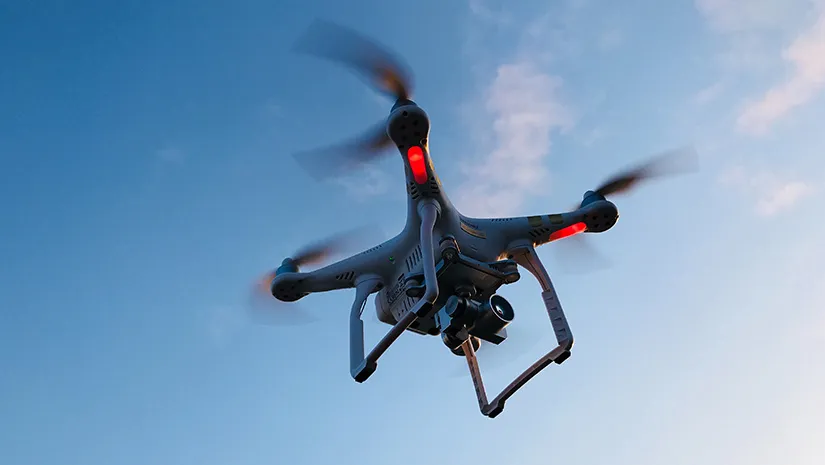
Drones, especially quadcopters, have undeniably revolutionized various aspects of contemporary life, despite ongoing debates around privacy and safety.

They have transformed photography and videography with dramatic perspectives and enabled the delivery of food and essentials to remote locations. Yet, one significant limitation often overlooked is their relatively brief flight times, constrained by small battery capacities. This limits their range and the weight of their payloads unless they can land for a recharge. To address this, a novel approach has been explored that leverages a common and powerful energy source found in urban environments: the electrical power lines crisscrossing the sky.

The innovation comes from a team including Viet Duong Hoang, Frederik Falk Nyboe, Nicolaj Haarhøj Malle, and Emad Ebeid, who recognize that current battery technology forces drones to travel light, typically allowing for about an hour of flight. This sharply restricts how far and how long drones can operate unless they find a way to recharge during their missions, similar to how vehicles refuel or recharge while on the road. However, establishing drone “charging stations” could be impractical or costly.

Researchers at the University of Southern Denmark have proposed a solution that bypasses the need for solar power, which they deemed too slow and insufficient for drones. Their design enables drones to attach themselves to power lines using a clamping mechanism. When the drone’s battery dips below a certain level, it seeks out the nearest power line, positions itself underneath, and then ascends until it securely attaches to the cable. It then draws power through induction to both charge its battery and power the clamping mechanism.

This concept was put to the test with a drone designed for inspecting power lines, equipped with custom sensors and a gripper, operating autonomously. The drone successfully recharged itself five times during its mission, extending its operation time to two hours. This demonstrates the potential for delivery drones to utilize nearby power lines for recharging.

However, this recharging method is not without its challenges, given the current state of drone technology. The reliability of fully autonomous drones remains a concern, raising fears about potential accidents that could disrupt electrical services. While public drone charging stations might be a more straightforward solution, this is nonetheless a very interesting, and potentially useful, invention.

Children Lead Water Conservation Efforts in India

Bengaluru, a bustling Indian megacity, experiences scorching summers where water conservation is crucial. However, one individual’s initiative within the school system has had a significant impact, conserving millions of gallons of water this year alone.

Dr. Hariharan Chandrashekhar, an environmentalist, initiated the Rain Reach program in Bengaluru schools in response to a crisis triggered by extensive well digging, which rapidly depleted water supplies for 8.5 million residents and approximately 40 schools in the city.

Targeting students aged 9 to 15, the program aims to instill early awareness about water conservation, fostering lifelong habits. Through practical measures such as rainwater collection and storage, monitoring rainfall with rain gauges, and treating wastewater for non-potable uses like irrigation and toilet flushing, the program has saved over 9 million gallons (34 million liters) of water.

Water conservation has emerged as a focal point in both private and public sectors in India. Initiatives like Jal Jeevan, launched nationwide in August 2019, have provided tap water connections to nearly 79 million households, extending access to 56% of rural households across the nation.