Waste Heat Warms Finnish City

Underground caverns in Finland are being utilized for a groundbreaking seasonal energy storage initiative. This facility near Helsinki, set to become the world’s largest, will store heat during the summer for later use in the winter, providing enough thermal energy to heat a medium-sized city.

Systems like underground thermal exchange heating and domestic heat pumps are viewed as highly effective in reducing the environmental impact of heating and cooling. These systems operate by harnessing natural forces or recycling energy to regulate water temperature, which is then used to provide heating or cooling to buildings.

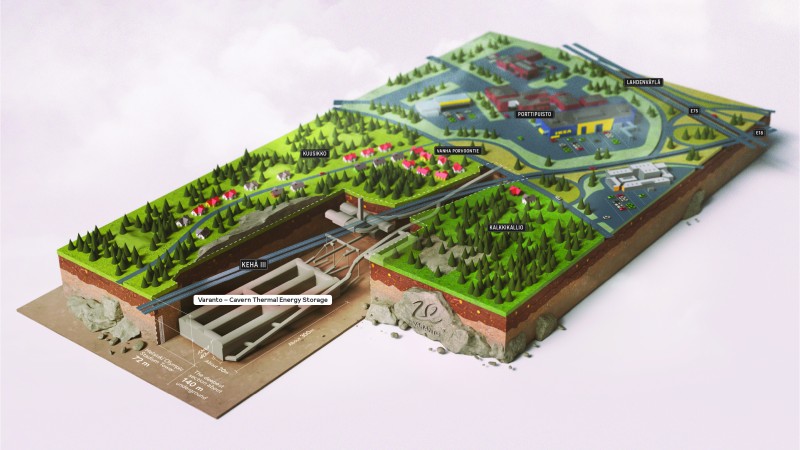
In Vantaa, neighboring Helsinki, the Varanto project aims to store excess heat from data centers, cooling processes, and waste-to-energy facilities underground. This stored heat will be tapped into during colder months to heat buildings via the district heating network.

The scale of Varanto is immense, with underground caverns equivalent to two Madison Square Gardens filled with water heated by waste heat. This innovative approach enables water temperatures to reach up to 300 degrees Fahrenheit without boiling or evaporating.

According to Vantaa Energy CEO Jukka Toivonen, the Varanto project addresses a critical challenge in the energy transition by providing large-scale storage solutions for intermittent renewable energy sources like wind and solar power. The project, supported by an investment grant from Finland’s Ministry of Economic Affairs and Employment, is poised to set a global example.

The fully charged storage capacity of 90 gigawatt-hours could sustain a medium-sized Finnish city for a year, equivalent to 1.3 million electric car batteries. To complement renewable electricity, the project includes the installation of 60-MW electric boilers, offering flexibility and efficiency in heat production.

With construction slated to begin in 2024 and operational targets set for 2028, district heating remains a cornerstone of Finland’s heating infrastructure, with Vantaa boasting extensive underground networks serving the majority of its residents. In 2023, Finland produced 37.3 terawatt-hours of district heat, with over half sourced from renewable and waste heat.


Ancient Book Set to Sell for Over $2.6M

An ancient book, the Crosby-Schøyen Codex, written in Coptic on papyrus in Egypt, is set to be auctioned by Christie’s in London on June 11. It’s estimated to fetch between $2.6 million and $3.8 million. The codex, consisting of 52 leaves made by a single scribe over 40 years, dates back to the 3rd or 4th century, containing the first epistle of Peter and the Book of Jonah.

Preserved behind plexiglass in wooden boxes, the codex is part of the Bodmer Papyri, discovered in the 1950s. It was acquired by the University of Mississippi in 1981 and later purchased by Norwegian collector Martin Schøyen. Eugene Donadoni from Christie’s notes its significance in textual transmission and the history of the book, likening it to Gutenberg’s printing press.

The codex, a testament to early Christianity, is well-preserved due to Egypt’s favorable climate. It’s part of The Schøyen Collection, comprising manuscript masterpieces spanning 1,300 years of cultural history.

US Removes “Forever Chemicals” from Drinking Water

Despite significant opposition from the chemical industry, the US Environmental Protection Agency (EPA) has announced its initial regulations aimed at limiting the presence of PFAs, known as ‘forever chemicals,’ in American drinking water.

PFAs, also known as Polyfluoroalkyl substances, have been extensively used for their fire, oil, stain, and water-resistant properties in various products such as waterproof clothing, stain-resistant furniture, and non-stick cooking surfaces. Despite their widespread use, PFAs are associated with health risks, prompting the EPA to take action.

The new regulations mandate water utilities to test for six different classes of PFAS compounds, aiming to reduce exposure and lower health risks for an estimated 100 million people in the US. To support this effort, a $1 billion fund for treatment and testing will be allocated to water utilities nationwide, part of a broader $9 billion investment under the 2021 Bipartisan Infrastructure Law aimed at assisting communities affected by PFAS contamination.

EPA Administrator Michael S. Regan emphasized the urgency of addressing PFAS contamination, stating that communities have suffered from contaminated drinking water for too long. Under Regan’s leadership, the EPA has been actively working since 2021 to address PFAS contamination, gathering data and requiring increased reporting from businesses regarding the use of these unregulated substances.

Scientific studies have shown that exposure to certain levels of PFAS may lead to various health issues, though the exact effects can be challenging to specify due to the diversity of compounds and sources. Nonetheless, the EPA is giving water utility operators five years to test for PFAS pollution and implement necessary treatment technologies, with an estimated 6%–10% of facilities needing such upgrades.

From Rubble to Cyborg Reef

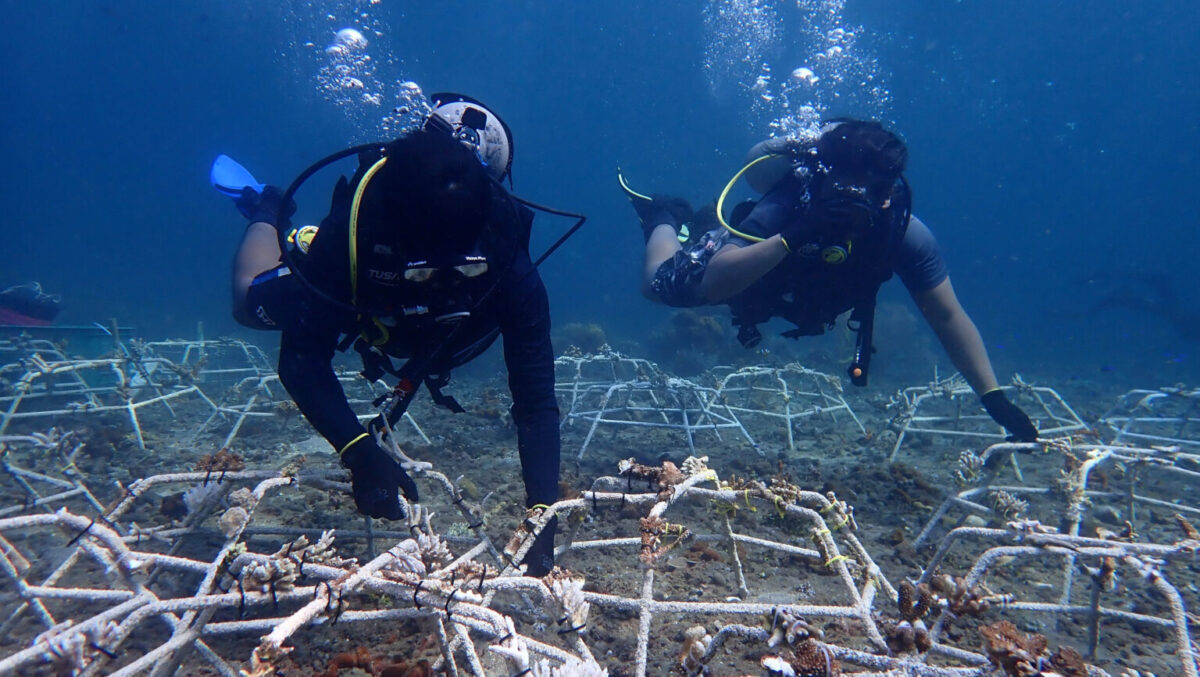
Four decades ago, fishermen in the southern regions of Sulawesi Island, Indonesia, employed a destructive fishing method: blasting the reefs with dynamite to stun fish and easily collect them. This practice severely damaged the vibrant coral ecosystems, leaving behind rubble where new coral larvae struggled to take root.

Despite such drastic devastation, these reefs are experiencing a revival, thanks to the collaborative efforts of local residents, Indonesian and British scientists, and the introduction of an innovative device known as the “Reef Stars.” These structures, resembling six-legged spiders the size of coffee tables, have played a pivotal role in the reef’s recovery, showing results so promising that new research indicates these rehabilitated areas closely resemble their healthy neighboring reefs.

The interconnected metal stars create a steel and coral lattice that covers significant areas, effectively forming a hybrid, cyborg-like reef. Recent research indicates that these hybrid reefs show promising signs of recovery, resembling healthy reefs in various key indicators.

The findings, published in March in Current Biology, showed that reefs replanted just four years prior exhibited similar levels of carbonate exoskeleton production as natural reefs, and the coral cover increased from 17% to over 50%—comparable to healthy reefs.

The reliance on specific, fast-growing coral types preferred by restorationists has been a weakness in places like Florida, where a recent underwater heatwave decimated many transplanted corals. Fortunately, the Indonesian approach benefits from greater genetic diversity among the corals used and more favorable ocean conditions. While other global reefs have suffered from this problem, the corals in Indonesian waters have remained comparatively healthy.

Converting Plastic Into Fuel

Researchers at the University of Cambridge have made a groundbreaking advance in addressing two of today’s environmental issues: carbon dioxide emissions and plastic waste. They have developed a solar-powered method that transforms plastic bottles and carbon dioxide into sustainable fuels and useful chemicals, potentially paving the way for a circular economy. This innovation was detailed by chemistry professor Erwin Reisner and his team in a study published in the journal Nature Synthesis.

The challenge has been to convert these waste streams into valuable products simultaneously in an integrated process. While there have been efforts to develop catalysts for efficiently converting captured carbon dioxide into plastics and fuels, and separate initiatives to convert plastic waste into sustainable fuels using light-driven processes, the Cambridge team’s approach combines these processes in one solar-powered reactor.

This reactor features two compartments separated by a membrane, each with its own electrode. Carbon dioxide is converted into carbon-based fuels like carbon monoxide or formate using a negative electrode. On the other side, with the positive electrode, plastics from recycled sparkling water bottles are transformed into glycolic acid, a valuable chemical in the pharmaceutical and cosmetic industries. The process involves cleaning, chopping, freezing, and grinding the plastic bottles before they enter the reactor.

To harness sunlight to drive these reactions, the electrode dealing with carbon conversion is coated with a perovskite material, known for its efficiency in absorbing sunlight and converting it into electricity. The choice of catalysts is crucial; the team experimented with cobalt, a copper–indium alloy, and a biological enzyme to trigger the carbon dioxide conversion. Different catalysts resulted in different end products. For the conversion of plastics, a combination of copper and palladium is used at the anode.

The reactor operates with high efficiency, producing chemicals and fuels at rates significantly faster than traditional light- and catalyst-driven processes, without the need for external electricity. “Generally, [carbon dioxide] conversion requires a lot of energy, but with our system, you just shine a light at it, and it starts converting harmful products into something useful and sustainable,” explained co-author Motiar Rahaman in a press release.

As the researchers continue testing different catalysts, their goal is to refine the reactor’s capabilities to produce an even broader array of complex products. This innovative technology could offer an excellent sustainable solution to waste management.