Startup’s Secret for 80% Less Food Waste

Food waste in the U.S. is a significant issue, with about one-third of all food produced ending up in landfills. This is compounded with the additional waste from production, packaging, storage, and transportation.

Meal delivery services like HelloFresh, Blue Apron, and EveryPlate are attempting to mitigate this problem by providing consumers with exact portions needed for specific recipes, reducing waste. However, a New York-based startup called Hungryroot is taking an even more personalized approach by leveraging artificial intelligence to offer a curated grocery experience tailored to individual customer preferences.

Hungryroot customers complete a detailed questionnaire covering their food preferences, allergies, health goals, and cooking habits. The company’s AI then uses these responses to suggest recipes and groceries that exactly match the customer’s needs. This approach not only personalizes the shopping experience but significantly cuts down on food waste.

Additionally, Hungryroot’s AI helps reduce waste in its own operations. For example, if the AI determines that a customer is indifferent between broccoli and Brussels sprouts and there is an excess of broccoli in stock, the system will suggest broccoli to help balance inventory levels. This process has led to 80% less food waste at Hungryroot’s facilities compared to traditional supermarkets.

The business model has not only been environmentally beneficial but also profitable, attracting investors and proving financially sustainable. “They have been profitable for three or four years now, which is unusual for a lot of these e-commerce, food businesses,” Jeremy Liew of Lightspeed Venture Partners noted, attributing the profitability to operational efficiency and customer satisfaction.

Hungryroot has raised a total of $75 million from various investors including L Catterton, Crosslink Capital, KarpReilly, and Lerer Hippeau.

Its great to see another positive use-case for AI.

Amazing 93 Year Old Athlete

John Starbrook, affectionately known as “the Legend” among his friends, exemplifies the remarkable benefits of staying active well into one’s later years. At the age of 93, he is possibly the oldest water polo player at Hampton Pool in southwest London, and likely across the UK.

His sporting journey extends back nearly eight decades, beginning just after he left school at the end of World War II. Over the years, Starbrook has maintained a vigorous routine that includes swimming three times a week and participating in various sports, which he credits for his robust health in his 90s.

Starbrook’s athletic prowess was evident early on when he competed in national swimming championships as a young man. Although he didn’t win, the experience fueled a lifelong passion for water sports. This passion was highlighted when, at 80, he celebrated by swimming across the Gulf of Corryvreckan, a challenging stretch of water between the Scottish islands of Jura and Scarba.

Apart from his aquatic exploits, Starbrook has an impressive marathon history, having completed 52 marathons, including international races in places like Denmark and Barbados. Even more amazingly, all those marathons are from after he took up running at the age of 53.

His fastest marathon, a very respectable 4 hours and 14 minutes, was achieved in Snowdonia, a feat he humorously credits to being chased by sheep. His marathon journey continued well into his eighties, with his most recent 26-miler occurring in 2019 when he was 88.

Despite some skepticism from doctors and even his own family about the sustainability of his intense physical activity, Starbrook has continued to thrive, demonstrating the profound impact of a lifetime of fitness.

Type 1 Diabetes Drug Protects Pancreas

Johns Hopkins scientists have reported promising results regarding an experimental antibody drug that could potentially prevent and reverse the onset of type 1 diabetes in mice, potentially extending their lifespans. The drug, known as mAb43, is distinguished by its direct targeting of insulin-producing beta cells in the pancreas, aiming to protect them from attacks by the body’s immune system cells.

Researchers highlight mAb43’s specificity for these cells, suggesting it could be used long-term in humans with minimal side effects. Monoclonal antibodies like mAb43 are produced by replicating animal or human cell lines.

Published in the May issue of Diabetes, these findings offer hope for a new treatment for type 1 diabetes, an autoimmune condition affecting around 2 million Americans with no current cure or prevention method.

Unlike type 2 diabetes, where the pancreas produces insufficient insulin, type 1 diabetes occurs because the immune system targets and destroys pancreatic cells responsible for insulin production, disrupting blood sugar regulation.

Dr. Dax Fu, leading the research team at the Johns Hopkins University School of Medicine, explains that mAb43 binds to a specific protein on beta cells’ surfaces, providing a shield against immune system attacks.

Initial trials involved administering weekly doses of mAb43 to non-obese mice predisposed to type 1 diabetes. By 35 weeks, all treated mice showed no signs of diabetes. Even when doses were delayed until later stages, only one out of five mice developed diabetes, with no adverse effects noted.

Moreover, mice treated with mAb43 lived significantly longer than untreated mice, showcasing the drug’s potential longevity benefits.

Further analysis revealed that mAb43 prompted beta cells to multiply while reducing inflammation in the pancreas, suggesting a potential reduction in insulin dependence with continued use.

The researchers are now focused on developing a humanized version of mAb43 for future clinical trials to assess its safety and efficacy in preventing type 1 diabetes.

Revolutionary New ‘Living Plastic’

Scientists claim to have developed a method to enhance the durability and biodegradability of plastics by incorporating bacterial spores that have undergone evolutionary selection. This innovation, dubbed “living plastic,” can decompose within approximately five months without requiring additional microbial assistance.

Led by researchers from the University of California San Diego (UCSD), the team engineered this living plastic using thermoplastic polyurethane (TPU), a common material in various consumer products like footwear and cushions.

The plastic contains bacterial spores that, when exposed to nutrients found in compost, activate and break down the material at the end of its life cycle. Specifically, the spores originate from Bacillus subtilis, a strain known for its ability to degrade plastic polymers.

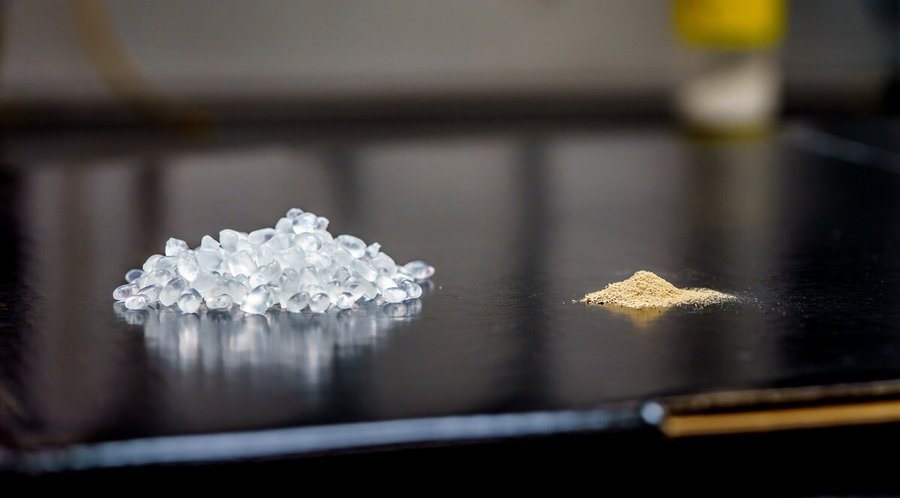
By utilizing bacterial spores instead of active bacteria, which are more resilient to harsh conditions, the team ensured the material’s stability. This biodegradable plastic was created by combining Bacillus subtilis spores with TPU pellets and extruding them into thin strips.

In experiments conducted in both microbial-rich and sterile compost environments, the plastic strips degraded by up to 90% within five months without the presence of additional microbes. This self-degradation property enhances the versatility of the technology, making it applicable even in microbe-free settings.

While further research is needed to assess any residual effects after degradation, the team believes that any remaining bacterial spores are likely harmless. Bacillus subtilis is a safe strain commonly used in probiotics and agriculture.

The study, published in Nature Communications, also highlights the evolutionary refinement of the bacterial spores to withstand the high temperatures involved in TPU manufacturing. This process not only enhances the material’s mechanical properties but also ensures its suitability for industrial-scale production.

Moving forward, the researchers aim to expand the range of biodegradable materials that can be produced using this technology. However, the widespread adoption of such innovations hinges on their cost-effectiveness and scalability in mass production—a challenge that the team is actively addressing.

Spain’s Newly-Found Sword’s Secrets Revealed

A relic from a millennium past recently emerged in Spain: a sword found wedged in a stone, reminiscent of the legendary Excalibur of King Arthur. However, unlike Arthur’s tale of questing for the Holy Grail alongside his knightly brethren, this sword belonged to a Muslim wielder.

Unearthed three decades ago at an archaeological site in Valencia, the sword, dubbed ‘Excalibur’, has undergone restoration and analysis, revealing its secrets for the first time.

Measuring 18 inches (46 centimeters) with an ornate handle clasping the blade with bronze plates, ‘Excalibur’ bears resemblance to Visigoth swords, though its sedimentary context places it firmly in Islamic times. Its modest size and lack of a hand guard suggest it may have been wielded by a horseman during the Andalusian caliphal era.

This find marks the first appearance of an Islamic sword in Valencia, with only one similar sword discovered in the excavations of Madinat al-Zahra, the caliphal city of Abd al-Rahman III, in Córdoba. Uncovered in what was likely a domestic dwelling north of Valencia’s Roman-era central square, or forum, this discovery underscores the city’s rich tapestry of cultures.

Islamic rule in the Iberian Peninsula spanned over 600 years, following the reigns of the Byzantines, Visigoths, Romans, and Carthaginians. Known as Al-Andalus, this era shaped the region, contributing to its modern identity as Andalusia. Among its legacies, the Arabs gifted Spain iconic landmarks such as the Alhambra, alongside establishing prominent cities like Cordoba, Malaga, and Almeria.