From Landfill Gas to Jetfuel

University of Sydney researchers have pioneered a groundbreaking chemical method utilizing plasma to transform methane gas from landfills into sustainable jet fuel. This innovation holds promise for establishing a low-carbon aviation sector.

The process not only addresses environmental concerns but also offers a dual solution by potentially repurposing all global landfills into energy reservoirs if it proves cost-effective and widely applicable.

Methane, a potent greenhouse gas, poses a significant environmental threat with its concentration in the atmosphere surpassing pre-industrial levels by two-and-a-half times. The steady increase in methane emissions, primarily from waste and fossil fuel combustion, underscores the urgency for mitigation efforts.

Australia’s recent participation in an international methane mitigation agreement signals growing global recognition of the issue.

Lead author Professor PJ Cullen from the University of Sydney’s School of Chemical and Biomolecular Engineering emphasized the significance of their innovation. He highlighted that while modern landfill facilities already harness their gas emissions for electricity generation, their process yields a more environmentally beneficial and economically valuable outcome.

Global landfill emissions, estimated at 10–20 million metric tonnes of greenhouse gases annually, rival those of the entire energy sector. Considering aviation’s contribution to emissions—around 3% globally—the prospect of utilizing landfill methane for jet fuel production presents a promising solution.

The proposed process involves extracting methane from landfill sites through methane wells, which provide an ideal composition for the conversion process.

Professor Cullen explained that non-thermal plasma technology, driven by electricity, enables the conversion of methane into value-added products at low temperature and atmospheric pressure. This approach minimizes energy consumption, aligning well with renewable energy sources.

Japan’s First 6G Device

A group of Japanese tech companies has introduced a high-speed 6G prototype device capable of transmitting data at an ultra-high speed of 100 Gbps. Operating in the 100 GHz and 300 GHz bands, the wireless device boasts a range of up to 100 meters, marking a significant leap forward from current 5G networks.

With the increasing adoption of 5G technology, the industry is already looking ahead to the next generation of cellular technology.

The consortium behind this advancement includes DOCOMO, NTT Corporation, NEC Corporation, and Fujitsu Limited. The development of this device, underway since 2021, reflects anticipation for the forthcoming 6G era.

While the prototype demonstrates impressive speeds, it’s important to note that 6G is still in its early stages of development. Significant work lies ahead before it can achieve mainstream adoption. Researchers suggest that commercially available 6G connectivity may emerge by 2030, requiring optimized hardware to support the higher band frequencies, as well as the deployment of new cell towers and integration of 6G phone antennas.

Leech-Inspired Blood Collection

Researchers in Zurich have developed a new blood-draw device aimed at addressing the shortcomings of traditional methods. Needle phobia can trigger adverse reactions like exhaustion and fainting, while conventional finger prick devices often yield imprecise measurements due to the small amount of blood they collect.

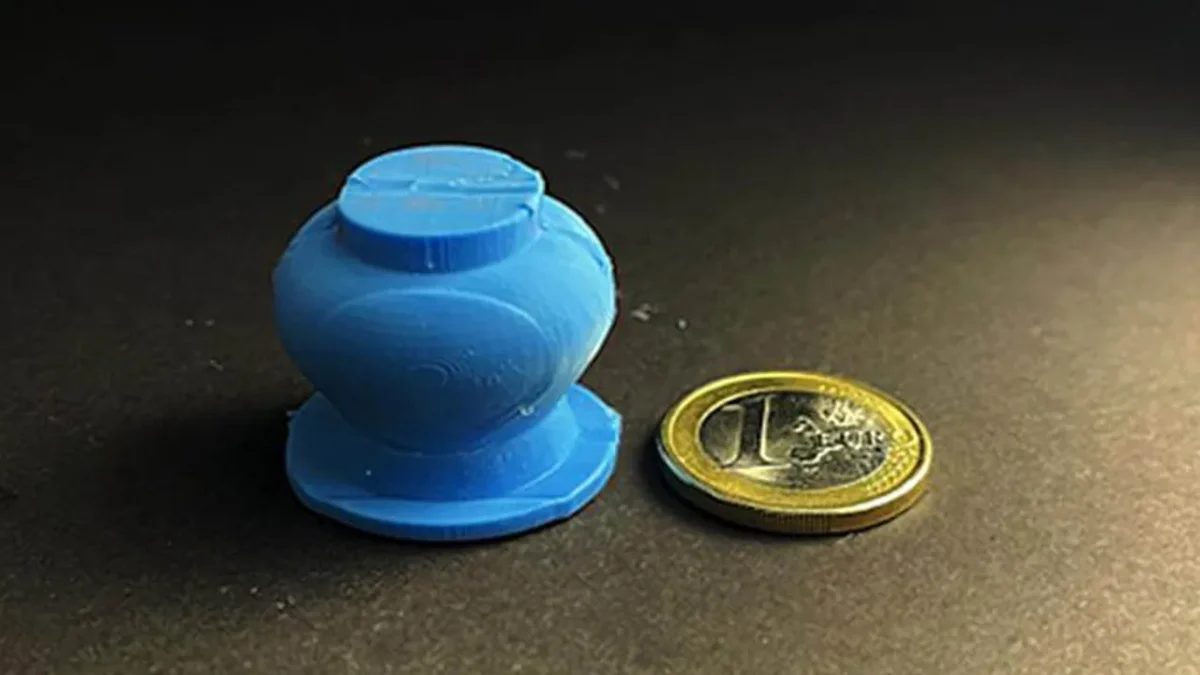
This innovation, which employs suction cups and microneedles, aims to alleviate both issues simultaneously. Inspired by the suction mechanism of leeches, the device gently draws blood without causing significant discomfort or requiring specialized training.

The design, featuring microneedles within a small suction cup, minimizes penetration into the skin when placed on the upper arm. According to Nicole Zoratto, a postdoc at ETH Zurich and the lead author of the project, this approach is not only effective but also cost-efficient.

Zoratto envisions the device being particularly beneficial in low-income regions like sub-Saharan Africa, where diseases such as malaria are diagnosed through blood samples. Its user-friendly nature and reduced risk of needle-related injuries make it a promising tool for widespread use.

However, before deployment, further optimization of the device’s material composition and thorough safety testing with a small group of subjects are essential. The research team is actively seeking additional funding partnerships to support these crucial steps.

Harry Potter Book Cover Art Expected to Break Auction Record

J.K. Rowling’s novel “Harry Potter and the Philosopher’s Stone,” published in 1997, marked the genesis of a global phenomenon. Now, the original illustration for the first edition of the book is set to be auctioned.

Expected to fetch up to $600,000 at Sotheby’s auction next month, it holds the highest presale valuation ever for a Harry Potter-related item, as reported by the auction house.

The cover art, a watercolor creation by author and illustrator Thomas Taylor, depicts the iconic image of Harry Potter, complete with his distinctive features of dark, tousled hair, round glasses, and lightning bolt scar, preparing to embark on his journey to Hogwarts School of Witchcraft and Wizardry aboard the Hogwarts Express.

Originally auctioned at Sotheby’s in London in 2001, the illustration fetched a staggering £85,750 (approximately $106,000), surpassing its estimated value by four times, according to a Sotheby’s press release.

Now, over two decades later, it returns to auction with the potential to not only surpass its previous sale value but also set a new record for any Harry Potter-related item, the auction house notes.

The current record for an item related to the book series stands at $421,000, held by an unsigned first edition of “Harry Potter and the Philosopher’s Stone,” sold at Heritage Auctions in Dallas, Texas, in 2021, according to Sotheby’s.

The illustration will be up for auction on June 26 at Sotheby’s in New York, alongside other works of English and American Literature.

Surprising Scientific Mystery Solved

Not every year sees a big discovery in Earth’s basic natural sciences, but MIT has made one using precise measurements, shedding new light on something many thought they knew well: evaporation.

This discovery might clarify puzzling data about clouds in scientific literature, potentially refining climate models and aiding industries.

In their study, MIT found that evaporation can happen just with light, no heat required, a surprising finding tested rigorously 14 times to validate. One key finding was that the air cools briefly above the evaporating water, proving heat isn’t necessary.

Professor Gang Chen noted various potential applications, including better understanding cloud effects on climate. The study also noted that evaporation is strongest when light hits at a 45° angle or is green, despite water being most transparent to green light.

They suggest that light particles hitting water molecules at certain angles can cause evaporation, calling it the photomolecular effect, akin to the photoelectric effect discovered in 1887.

As seen in satellite and flight data, clouds absorb more sunlight than expected which has been a mystery for decades and could possibly be linked to this effect.

The team thinks this effect could also explain anomalies in solar desalination research.

Since publishing in Proceedings of the National Academy of Sciences, Chen has been contacted by companies interested in using this effect for various purposes, from drying paper to evaporating maple syrup.