Shots Fired: 13th-Century Missiles Unearthed


During construction on the grounds of Kenilworth Castle in England, researchers have unearthed eight stone balls that were once hurled from catapults. These artifacts, dating back to the 13th century, are remnants of one of England’s longest sieges: when Henry III attacked Kenilworth Castle, which was held by rebels.

The catapult shots vary in size, with weights ranging from “that of a cabbage to that of a giant panda,” (1kg and 105kg) as described by the London Times’ Jack Blackburn. These projectiles were fired during the 172-day siege on the central England castle in 1266.

“It’s not every day we get lucky enough to stumble across historical remains like this by chance. … Imagine the surprise of the team when we unearthed these impressive stone projectiles that are nearly 800 years old.” says Will Wyeth, properties historian for English Heritage, per BBC News.

Henry III’s siege on Kenilworth was part of the Second Barons’ War, which erupted in 1264 when a group of noblemen seized power from the monarchy. Several years earlier, the lords had tried to limit Henry III’s authority by creating the Provisions of Oxford, which established the monarch’s accountability to a council of barons. When the king failed to honor the provisions, the lords—led by Simon de Montfort, the Earl of Leicester—took control.

During the conflict, royal forces used nine siege engines, including catapults, and fired some 60,000 crossbow bolts. However, behind the castle’s 14-foot-thick walls, the rebels had siege engines of their own. The recently found catapult shots came from both sides of the conflict.

English Heritage describes the battle:

“The king’s stone-throwing machines, erected all around the castle, bombarded it with a continuous stream of missiles. They were thwarted, however, by the superior range of the weaponry inside—one chronicler described the stone projectiles from the two sides ‘clashing in the air.’ The king had to send to London for larger machines”

The rebels held Kenilworth through six months of attacks before surrendering due to starvation and disease. The siege became one of Henry III’s most significant military campaigns, and the newly discovered remnants serve as reminders of the battle’s intensity.

Records indicate that a single well-aimed missile destroyed one of Henry III’s wooden siege towers, which contained approximately 200 crossbowmen.

Something you might be surprised to find out, what you are thinking of as a catapult, is most likely not what was actually used in the siege. If you are curious to find out what it most likely was, check out this great video by Shadiversity.
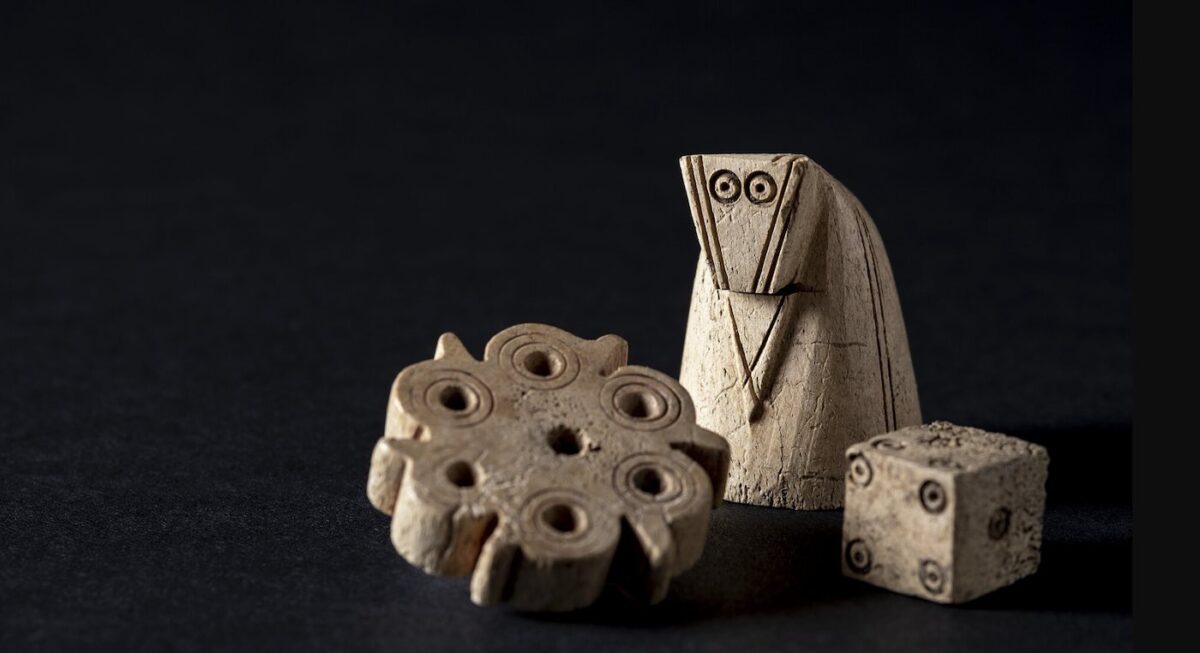

1,000 Year Old Gaming Pieces Found in German Castle

A set of 1,000-year-old game pieces discovered in a German castle provides new insights into medieval pastimes. The set includes four flower-shaped pieces, a six-sided die, and a knight chess piece, all carved from antler.

The knight piece, showing wear from frequent use, indicates it was used extensively in chess games. The flower-shaped pieces retain traces of red paint, suggesting a two-player game with different colored sides.

These pieces were found under a wall segment in Stahleck Castle in Baden-Württemberg, Germany, and date back to the 11th century. The excavation was conducted by experts from the University of Tübingen, the State Office for the Preservation of Monuments Baden-Württemberg (LAD), and the German Archaeological Institute (DAI).

Dr. Jonathan Scheschkewitz from LAD noted that chess was one of the seven skills a knight should master in the Middle Ages, explaining why chess pieces are commonly found in castles. Chess, introduced to Europe from Persia in the early Middle Ages, has largely retained its original rules.

Dr. Lukas Werther from DAI highlighted the unexpected discovery of a complete game set from the 11th/12th century, emphasizing the significance of the knight piece.

An exhibition featuring the Stahleck findings and other medieval artifacts will be held at Pfullingen Schloss from June 15th to August 30th, showcasing the game pieces and exploring medieval gaming practices.

Washington State Bans Single-Use Foam

In 2021, Washington state passed a law banning single-use polystyrene food and drink containers, which has now taken effect.

Polystyrene, made from fragile hollow beads of various plastics, is considered one of the most environmentally harmful plastics. Despite its lightweight, durable, and insulating properties, it remains in use for packaging and other applications. Polystyrene can take over 1,000 years to decompose, releasing microplastics into soil and water throughout that time.

According to Oceana, at least 11 states have enacted laws to phase out expanded polystyrene foam. The environmental group advocates for nationwide bans on the material. Seattle prohibited foam food containers approximately 15 years ago, and Oregon Governor Tina Kotek signed a similar law last year.

Although recycling polystyrene is possible, Washington’s Department of Ecology notes it is costly and most residential recycling programs do not accept it. Food residue complicates recycling further, which is why the ban targets takeaway containers. Polystyrene can also blow around and contaminate other materials during transport and at recycling facilities.

Violators of the ban will face fines but also receive support and resources to help them find alternative container options. Possible replacements include aluminum containers, which are reusable and provide better insulation for food.

First Human to Spend 1,000 Days in Outer Space

Oleg Kononenko has become the first human to log 1,000 days in space over a 16-year career on the ISS.

This achievement comes during his fifth spaceflight and third term as ISS commander. In February, he surpassed the previous record of 878 days set by fellow Roscosmos cosmonaut Gennady Padalka.

Kononenko arrived at the ISS last September aboard the Soyuz MS-24 with cosmonaut Nikolai Chub and NASA astronaut Loral O’Hara. He is set to return in four months, at which point his long-term space exposure will make him an invaluable subject for human biology research.

As space missions grow longer with initiatives like the Artemis Accords and the International Lunar Research Station, understanding the effects of prolonged space travel on the human body is critical. Kononenko’s extended periods in low-Earth orbit will provide essential data for studying the impacts on eye health, bone density, blood flow, radiation exposure, and space motion sickness.

Emmanuel Urquieta, former chief medical officer at the Translational Research Institute for Space Health, emphasized the importance of this research, noting the need for comprehensive data from missions extending up to 900 days. This information is crucial for ensuring the health and safety of astronauts on future missions to Mars.

Born in Turkmenistan, Kononenko has completed over 18 hours of spacewalks, conducting experiments, repairs, and maintenance on the ISS. His distinguished career includes a rare nighttime re-entry in December 2015 and accolades such as the NASA Distinguished Public Service Medal and the NASA Space Flight Medal.

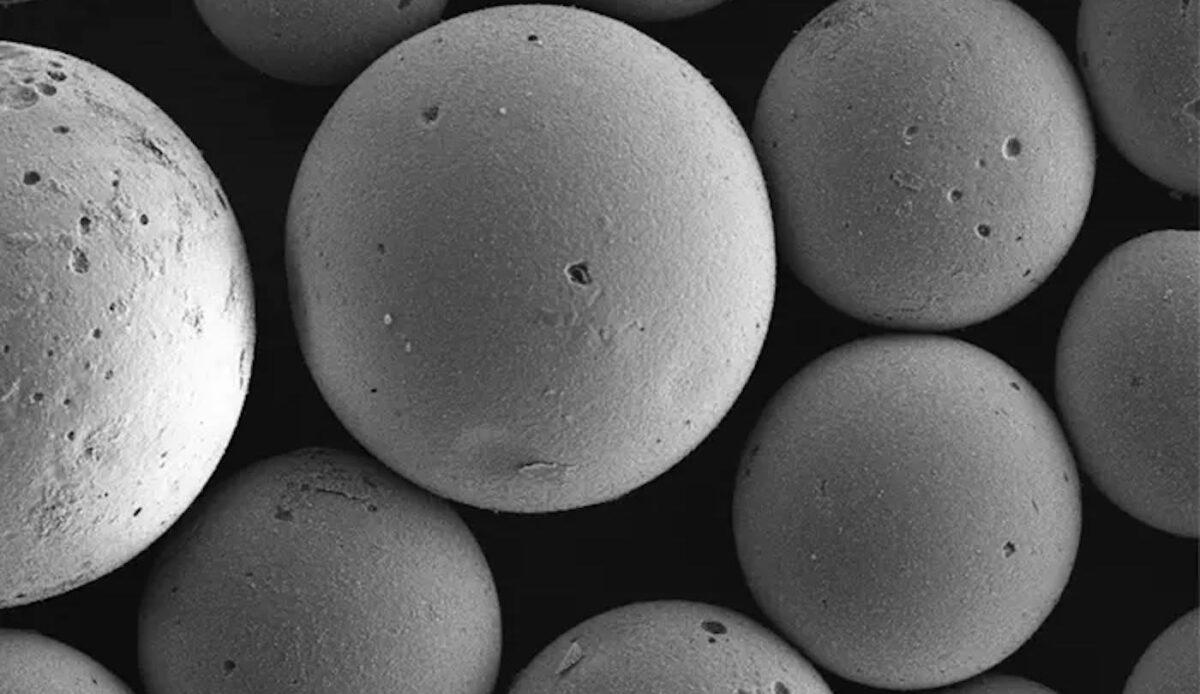
Edible Carbon Beads Reduce Liver Cirrhosis

Researchers at University College London have developed innovative carbon beads that reduce harmful bacteria and inflammation in animal models, addressing issues linked to liver cirrhosis and other serious health problems.

Published in the journal Gut, the study found these carbon beads effectively restored gut health and improved liver, kidney, and brain function in rats and mice. The beads were also deemed safe for human use.

Professor Rajiv Jalan from the UCL Institute for Liver and Digestive Health explained that an imbalance in the microbiome allows harmful bacteria to outcompete beneficial bacteria, leading to gut inflammation and organ damage.

In liver cirrhosis, characterized by liver scarring affecting 100 million people globally, inflammation from endotoxins worsens liver damage. Standard treatments like antibiotics pose risks of resistance and are used only in advanced stages.

To address this, UCL scientists developed oral carbon beads, designed to adsorb harmful molecules in the gut. Known as CARBALIVE, these beads were tested on liver, kidney, and brain function in rats and mice. Daily ingestion for several weeks prevented liver scarring progression and reduced mortality in acute liver failure.

Licensed to UCL-spinout Yaqrit, the beads were tested on 28 cirrhosis patients, proving safe with minimal side effects. If human trials replicate animal model results, the beads could significantly combat liver disease.

“These carbon beads, smaller than a grain of salt, absorb endotoxins and harmful metabolites in the gut, preventing damage to other organs,” said Michal Kowalski, CARBALIVE product lead at Yaqrit. “Animal model results show reduced gut permeability and improved liver, brain, and kidney function.”

Further human trials are planned to confirm efficacy. If successful, these beads could be a valuable treatment for liver disease and other conditions related to poor microbiome health, such as irritable bowel syndrome.

With funding from a European Union innovation program, a factory was built to manufacture the beads and continue research into their potential uses.

“I am hopeful that these beads will soon be approved to treat liver disease and other conditions,” added Jalan, a Hepatology professor at UCL.