Light Therapy for Brain Injuries

Research has long examined how different wavelengths of light aid wound healing. A recent study in the journal Radiology indicates that low-level light therapy (LLLT) may also help heal significant brain injuries. Massachusetts General Hospital researchers conducted LLLT on 38 patients with moderate traumatic brain injuries, which affect cognition or show up on brain scans. Using a helmet that emits near-infrared light, they administered the therapy within 72 hours of injury.

“Near-infrared light penetrates the skull well,” said Dr. Rajiv Gupta, co-lead author from the Department of Radiology at Mass General. “The helmet bathes the entire brain in light.” The researchers used functional MRI to measure the therapy’s impact, focusing on the brain’s resting-state functional connectivity—communication between brain regions when at rest.

They compared MRI results across three recovery phases: acute (within one week), subacute (two to three weeks), and late-subacute (three months). Of the 38 patients, 21 did not receive light therapy to serve as controls. Patients who received LLLT showed greater changes in resting-state connectivity in seven brain region pairs during the acute-to-subacute phase compared to the control group.

“Increased connectivity was seen mainly in the first two weeks,” said study coauthor Nathaniel Mercaldo, Ph.D. The next step is to study long-term effects. The exact mechanism of LLLT’s effect on the brain remains unknown, but previous research suggests it alters an enzyme in the cell’s mitochondria, leading to more production of adenosine triphosphate (ATP), a key energy molecule. LLLT is also associated with blood vessel dilation and anti-inflammatory effects.

The 810-nanometer-wavelength light used in the study is safe, easy to administer, and does not require surgery or medications. The helmet’s portability allows for use outside hospital settings. According to Dr. Gupta, LLLT may help treat other neurological conditions, such as PTSD, depression, and autism. As more research emerges, the role of light therapy is likely to expand.

(SOURCE: Radiology, published by the Radiological Society of North America)
How Millennial Parents Find Joy Daily

A recent poll reveals that small moments of joy can transform an ordinary day into memorable family time for parents. The survey, conducted by Talker Research on behalf of Hostess, involved 2,000 American millennial parents.

The results indicate that parents try to have fun with their kids outside the normal schedule five days a week. Eighty-six percent of parents feel confident in their ability to create small moments of joy for their family throughout the day, and 91% believe that these moments positively impact their own and their children’s well-being.

The top activities parents engage in to make their days more joyful include making their kids laugh, being silly with their kids, and cuddling. Additionally, some enjoy doing something spontaneous and fun. When faced with mundane tasks, parents often inject joy by singing along to music, being silly, or dancing with their kids.

On average, parents attempt to surprise their kids with fun activities three times a week. Parents also enjoy treating their kids to spontaneous activities such as giving them a special treat or snack, buying them something new, or playing games together. However, most of the parents prefer planning fun activities for their kids ahead of time. Weekends are preferred creating spontaneous moments of joy, as they allow more time for relaxation without the pressures of school or work. Nine in 10 parents believe that the more time families spend playing together, the happier and closer they will feel.

Eighty-eight percent of parents believe it’s important to have family outings outside the home at least once per week.

Sunbeam-Powered Portable Factory

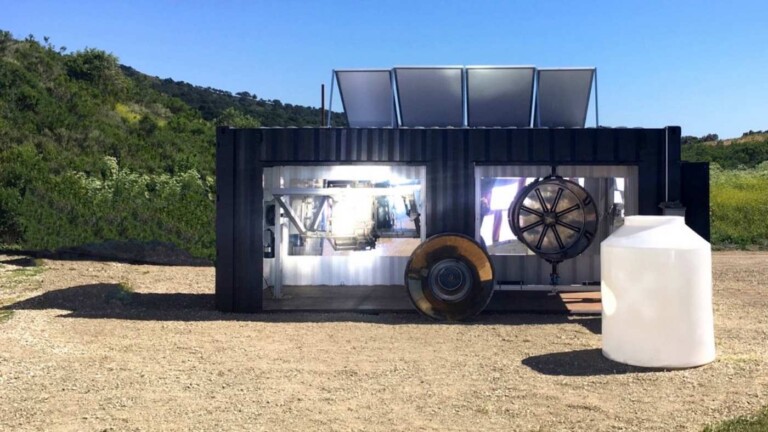
A startup has developed a portable factory that uses solar energy to produce high-quality plastic products such as water tanks and boat frames. This factory, which can be transported globally via shipping containers, offers speed and flexibility, making it ideal for various applications from disaster relief to rural development.

The technology, called Solar Rotational Molding (SRM), involves placing raw plastic in a mold and heating it with concentrated sunlight using 30 heliostats. These mirrors adjust automatically to follow the sun, ensuring continuous exposure.

Karl von Kries, the founder of Light Manufacturing and inventor of SRM, started his entrepreneurial journey after noticing high energy costs at a Massachusetts-based company where he previously worked. Inspired by the potential of solar heat, he established Light Manufacturing to explore solar rotational molding, despite initial skepticism about its feasibility.

To his surprise, the solar molding process proved successful. By 2014, the company was producing high-quality plastic parts and had secured several patents. Von Kries sees SRM as a valuable tool for providing essential infrastructure in rural areas of developing countries, such as pipes and rainwater tanks.

The SRM system, housed in a shipping container, includes a rotational axis, control panels, and electrical components, requiring only an acre of flat land for setup. This setup is significantly cheaper than traditional molding systems, costing one-tenth as much. With minimal operating costs and a two-person crew, the system produces finished products at 20-30% lower costs than conventional methods.

Light Manufacturing has already deployed a system in Hawaii, demonstrating the practical application of their technology.

Pomegranates Can Help Alzheimer’s Patients

A recent study has found that urolithin A, a natural compound found in pomegranates, may enhance memory and potentially aid in treating Alzheimer’s disease. Researchers at the University of Copenhagen observed significant improvements in memory in mice with Alzheimer’s who were treated with urolithin A.

Alzheimer’s disease manifests through symptoms like forgetfulness, difficulty with words, and confusion about time and place. The study’s findings suggest that urolithin A could mitigate these symptoms and other consequences of dementia, according to Vilhelm Bohr, Affiliate Professor at the University’s Department of Cellular and Molecular Medicine.

While the study was conducted on mice, the results are promising enough to warrant upcoming human clinical trials. Previous research from the same team highlighted the role of nicotinamide riboside in facilitating the removal of damaged mitochondria from the brain, a process crucial for addressing neurodegenerative diseases like Alzheimer’s and Parkinson’s.

Bohr explained that many patients with these conditions experience mitochondrial dysfunction, hindering the brain’s ability to clear out weak mitochondria. Stimulating this clearance process, known as mitophagy, has shown positive effects on brain function. Interestingly, urolithin A appears to stimulate mitophagy similarly to nicotinamide riboside supplements, potentially offering therapeutic benefits.

Despite these promising findings, researchers are still determining the optimal dosage of urolithin A for humans. Bohr emphasized the need for further investigation but expressed optimism that urolithin A could be used preventively with minimal side effects, as observed in previous studies on related compounds.

The study, titled “Urolithin A improves Alzheimer’s disease cognition and restores mitophagy and lysosomal functions,” has been published in Alzheimer’s and Dementia.

AI Finds Elephants Use Names

Researchers from Colorado State University, Save the Elephants, and ElephantVoices used machine learning to study how elephants communicate. They found that elephants use unique calls akin to names to address specific individuals within their herds, rather than addressing the entire group uniformly.

This discovery sheds light on the sophisticated social dynamics and communication abilities of elephants, crucial for managing human-elephant conflicts in shared landscapes. By analyzing recorded calls, the team observed that elephants responded more distinctly to calls directed at them personally, highlighting the personalized nature of these vocalizations.

George Wittemyer, a study co-author, emphasizes that such naming practices in animals reflect complex communication systems essential for navigating social interactions, paralleling human evolutionary pressures.

WATCH a video explainer below…