Mysterious Parallel Jets of Light


Astronomers using the James Webb Space Telescope (JWST) have observed a new stellar phenomenon: a group of baby stars emitting high-speed gas jets in the same direction.

This discovery provides the first direct image of protostellar outflows—huge jets of gas from newborn stars that interact with surrounding molecular gas clouds. However, it also introduces a puzzle: Why are these jets aligned, despite coming from widely separated stars? The observations, detailed in a study in the Astrophysical Journal, could offer new insights into star formation and evolution.

“Astronomers have long assumed that as clouds collapse to form stars, the stars will tend to spin in the same direction,” principal investigator Klaus Pontoppidan of NASA’s Jet Propulsion Laboratory said. “However, this has not been seen so directly before. These aligned structures are a historical record of how stars are born.”

The newly imaged stars are in the Serpens Main nebula, a star-forming gas cloud in the Serpens constellation, about 1,300 light-years from Earth. Using JWST’s Near-Infrared Camera (NIRCam), astronomers noted the ionized gas trails in the star-forming cloud.

They identified at least 20 newborn stars actively emitting protostellar outflows. A group of 12 stars (seen in the upper left of the JWST image) drew attention because their jets were oriented almost identically, “like sleet pouring down during a storm,” according to NASA. These outflows began between 200 and 1,400 years ago.

Such alignment is unlikely to be random. Researchers suggest these stars formed around the same time along a dense gas filament, with a powerful magnetic field influencing the jet directions. Over time, interactions with other objects could alter the spin axes of individual stars, explaining why such alignments are rarely seen.

Further study of these coordinated outflows could provide new details about star formation. Researchers plan to use JWST’s Near-Infrared Spectrograph (NIRSpec) to study the chemical composition of the Serpens Main nebula, which could reveal how elements transfer from stars to young planets.


Portable Fingernail Scanner for Cancer Patients

Each year, one million people in the U.S. undergo chemotherapy. Globally, cancer is the leading cause of death, claiming 10 million lives in 2020.

Inspired by the need to improve cancer treatment, researchers at MIT developed a portable monitor to help patients track their white blood cell count. This device could potentially reduce hospitalizations by 50% in cancer cases.

Leuko Labs was founded at the Madrid-MIT M+ Vision Consortium (MIT linQ), an initiative that promotes medical entrepreneurship by connecting researchers with MIT faculty to address critical medical issues. Leuko’s founders targeted the challenge of monitoring white blood cell count, which currently relies on blood draws.

Cancer patients receive chemotherapy about every 21 days, which lowers their white blood cell count and increases infection risk. Leuko co-founder Carlos Castro-Gonzalez highlighted that one in six cancer patients undergoing chemotherapy develops an infection due to critically low white blood cell levels, sometimes resulting in death from treatment rather than the disease.

Monitoring white blood cell count could prevent many infections in chemotherapy patients. Leuko developed a noninvasive device allowing patients to frequently check their white blood cell count, improving the precision of chemotherapy dosages. Castro-Gonzalez found that many patients could tolerate higher chemotherapy doses during his clinical rotations, leading him to the MIT linQ health care innovation program.

PointCheck, an optics-based device, checks white blood cell count through the fingernail. It resembles a futuristic fingerprint scanner and can detect white blood cells as they pass through the narrow capillaries at the base of the nail. Although it can’t provide an exact count, it can determine if patients are above or below the dangerous threshold of 500 neutrophils, the most common type of white blood cell.

Leuko Labs plans to measure other blood components in the future but must first pass a rigorous FDA approval process. PointCheck is still investigational, with a study to be submitted to the FDA this year. Previous studies showed the device was 95% accurate.

PointCheck could significantly improve cancer treatment and reduce major complications, benefiting millions of patients and doctors worldwide.

Mystery Monolith in Nevada

A monolith appeared in the Nevada desert, prompting speculation about its origin. The Las Vegas Police Department discovered the structure during a search and rescue mission north of Las Vegas Valley.

“We see a lot of weird things … but check this out!” the police posted on social media.

The monolith resembles those that appeared globally in 2020. Located near Gass Peak, a hiking area in the Nevada desert about an hour north of Las Vegas, the tall, rectangular, reflective structure was photographed in rugged terrain.

“HOW did it get up there??” the Las Vegas Police Department questioned on social media.

The monolith resembles those in “2001: A Space Odyssey,” a 1968 film by Stanley Kubrick, featuring imposing black structures created by an unseen alien species, based on Arthur C. Clarke’s writing.

Similar monoliths appeared around the world four years ago, including in the Utah desert, Romania, California, and the Isle of Wight. Their discovery puzzled local authorities, and speculation arose about their purpose, possibly as part of an art installation. However, no one has claimed responsibility.

Unlike the Utah monument, which was around 12 feet, this one is at six feet, five inches and has three faces. The monolith was made of folded sheet metal and held together with rebar and concrete, authorities said.

A monolith also appeared on a hilltop in Wales in March. It also offered no clues about its origin.

A Safer Insecticide

A new pesticide specifically targeting the Colorado potato beetle has proven effective, killing the pest while leaving other species unharmed, including its close relatives. This beetle, originating from the Rocky Mountains, causes over $500 million in annual damage across the Northern Hemisphere.

GreenLight Biosciences has developed Calantha, a spray that uses RNA interference technology to target the PSMB5 gene, which is essential for removing damaged proteins in cells. Blocking this gene causes protein buildup, killing the larvae within six days. The beetle, which also harms eggplant, tomatoes, and bell peppers, has developed resistance to 50 pesticide formulas.

Similar to bacteria developing antibiotic resistance, crop pests have become immune to many pesticides, necessitating ongoing innovation. In 2001, farmers in Maine found that neonicotinoids were no longer effective against the potato beetle. Andrei Alyokhin, an entomologist at the University of Maine, observed that the beetles were unaffected by treated plants.

RNA interference is praised for its precision and safety, targeting only the potato beetle’s genetic relatives and sparing beneficial insects like pollinators. Subba Reddy Palli, an entomologist at the University of Kentucky, highlighted its precision and effectiveness.

Calantha, produced at about $1 per gram, was approved by the FDA after proving harmless to non-target species. GreenLight conducted safety trials comparing PSMB5 in the potato beetle with other insects, finding that only two other agricultural pest species were affected.

The Supersonic Factory is Here

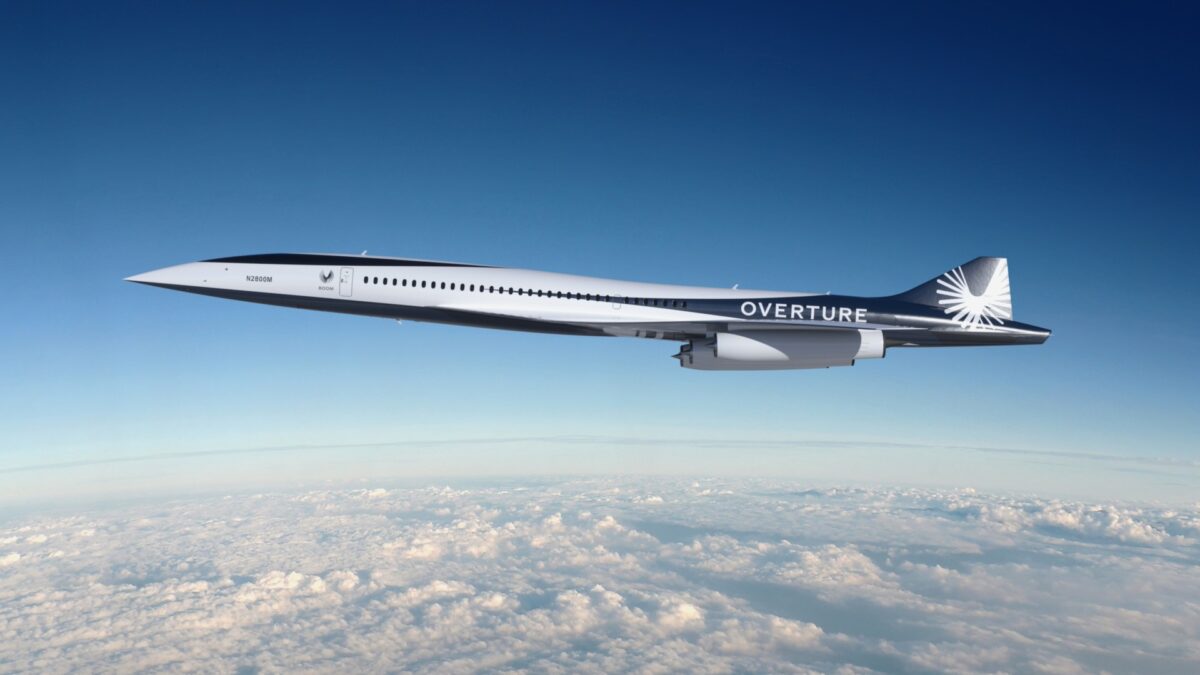
Last month, Boom, an aviation technology company, celebrated the completion of the Overture Superfactory, the first supersonic airliner factory in the United States. This facility, located at Piedmont Triad International Airport in Greensboro, North Carolina, will serve as the final assembly line for Boom’s Overture supersonic airliner, enhancing American leadership in aerospace manufacturing.

With the construction phase complete, Boom will now focus on operationalizing production. The initial assembly line can produce 33 Overture aircraft annually, with plans to build an additional line to double the capacity to 66 aircraft per year. The campus will also feature a delivery center for global airlines, including United, American, and Japan Airlines. Overture aircraft built here will serve millions of passengers worldwide.

The Superfactory’s construction, completed just 17 months after breaking ground in January 2023, is expected to significantly impact North Carolina’s economy. Economists project the full Boom manufacturing program will contribute at least $32.3 billion over 20 years, with the Superfactory directly creating more than 2,400 jobs.

I am guessing it will be pretty expensive to get a flight on one of those. But they are very cool looking!